Should you source your next modular camp building from a factory-direct modular building manufacturer or from a trading company? The right answer depends on your project size, budget, customization needs, and how much control you want over production. A large remote camp order often points one way. A small mixed order may point another.
This comparison covers five dimensions: price, minimum order quantity, customization, quality control, and communication. Each dimension shifts the balance between the two supplier types. Understanding these trade-offs helps you match the supplier to your project instead of guessing.
Key Takeaways
-
Factory-direct suppliers offer lower prices and direct quality control for large orders.
-
Trading companies help with small orders and mixed product needs by combining orders.
-
Check if a supplier owns a factory by asking for a tour or production photos.
-
Choose a factory-direct manufacturer for big projects needing strict quality and fast communication.
-
Choose a trading company for small orders or when you need many types of buildings from one source.
What Is a Factory-Direct Modular Building Manufacturer?
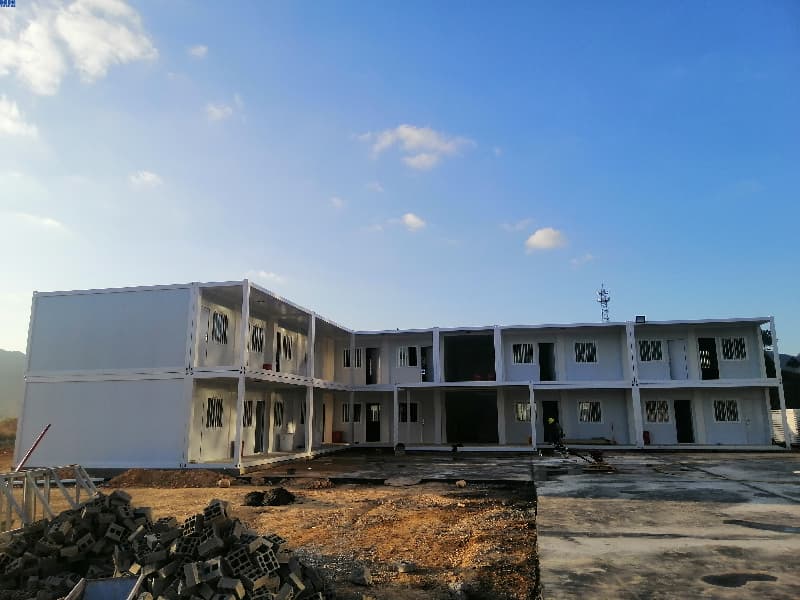
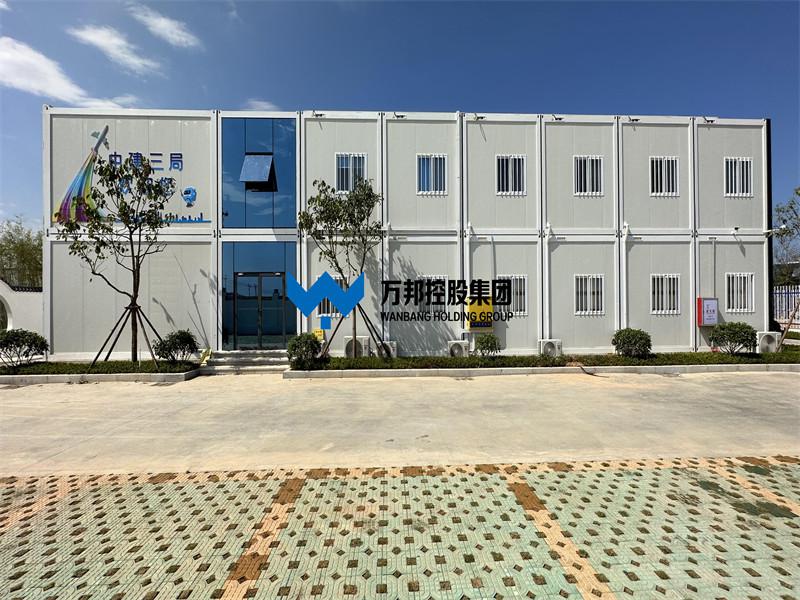
A factory-direct modular building manufacturer owns its production facility and sells its products without intermediaries. This business model gives you direct factory access to the company that actually builds your modular camp buildings. You deal with the people who control the production line, the materials, and the schedule. A factory direct prefab house supplier, for example, manufactures the units in its own plant and ships them to your project site. Wanbang Modular Building is one such supplier. The company produces flat-pack, expandable, and folding container dormitories, modular offices, and ablution units for mining, construction, energy, and infrastructure projects. Its container house factory builds each unit using galvanized steel frames and rock wool sandwich panels.
How a Factory-Direct Supplier Operates
The factory-direct supplier manages the entire production process under one roof. Raw materials arrive at the plant, workers assemble the frames and panels, and quality inspectors check each unit before shipment. You can request a live factory tour or ask for production line photos and video. This transparency separates a true manufacturer from a trading company. Sourcing from a factory means you can discuss technical details directly with the production team. You can also request custom dimensions, material changes, or specific documentation without a middleman filtering your requests.
Who Benefits Most from Factory-Direct Sourcing
Factory-direct purchasing can offer advantages in time, risk, and long-term value compared to buying through a dealer. You benefit most from this model when your project requires large volumes, strict quality control, and fast communication. A mining camp with 200 dormitory units, for example, needs a supplier who can scale production and maintain consistent quality across every building. You also gain long-term value when you build a direct relationship with the manufacturer. Future orders, spare parts, and technical support become easier to manage. However, this model is one option among several. A trading company may serve you better for small, mixed orders.
What Is a Trading Company?
A trading company is a middleman. It sources modular buildings from factories but does not manufacture them. The company negotiates with one or more container house factory partners, buys the units, and resells them to you. It may also handle export paperwork, shipping, and payment terms. The trading company owns no production line and employs no assembly workers. Its value comes from coordination, not fabrication.
This distinction matters when you compare a China manufacturer vs trader. The manufacturer controls steel cutting, frame welding, and panel installation. The trader controls quotes, contracts, and logistics. Both models exist for good reasons, and neither one is automatically better.
How a Trading Company Operates
A trading company builds a network of factory contacts. When you place an order, the trader forwards your specifications to a suitable plant. The plant produces the units, and the trader manages the handoff. You receive one invoice and one point of contact for the whole transaction.
This structure offers real flexibility. The trader can split your order across several factories. One plant might build dormitories while another produces ablution units. You avoid managing multiple suppliers yourself. The trader also absorbs currency risk, customs procedures, and shipping coordination. For buyers without an import department, these services carry genuine value.
Who Benefits Most from a Trading Company
Trading companies suit small order quantities. A factory often sets a minimum order that a small buyer cannot meet. A trader can combine your order with other clients' orders and reach that threshold. You get the units without committing to volume you do not need.
Traders also help when you need multiple product categories from one source. You might want container dormitories, site offices, and toilet units in a single purchase. A trader can source each type from a specialized plant. Flexible sourcing becomes the main advantage. Wanbang Modular Building serves buyers who prefer direct factory contact, but a trading company remains a reasonable choice for mixed, low-volume purchases. The right fit depends on your order profile, not on a universal rule.
Factory vs Trading Company: Key Differences
You can compare these two supplier types across five dimensions. Each one changes how much you pay, how much you must order, and how much control you keep. The table below summarizes the core trade-offs between a factory-direct modular building manufacturer and a trading company.
| Dimension | Factory-Direct | Trading Company |
|---|---|---|
| Price | Lower, no intermediary margin | Higher, includes markup |
| MOQ | Higher factory MOQ | Can consolidate smaller orders |
| Customization | Limited to one factory's capability | Can source across multiple factories |
| Quality Control | Direct oversight | May rely on third-party inspection |
| Communication | Faster, more accountable | Adds a layer, manages complexity |
Price and Minimum Order Quantity
A factory-direct supplier often cuts out middlemen and reduces your cost. You pay a factory price that reflects raw materials, labor, and overhead. No intermediary margin inflates the quote. A trading company adds a markup to cover its coordination work. That markup may bundle services you value, such as export paperwork, shipping, and payment terms. You trade a higher unit price for convenience.
The minimum order quantity works in the opposite direction. Factories typically require larger volumes to justify a production run. A factory MOQ might start at dozens of units. Trading companies can consolidate smaller orders from multiple buyers and reach that threshold. If you need ten units, a trader may serve you better. If you need two hundred, a factory will negotiate. Factory MOQs also vary by product type and customization level.
Customization, Quality Control, and Communication
Customization and OEM/ODM development depend on the supplier's reach. A single factory has limits. It can adjust dimensions, materials, and layouts within its production line. A trading company can source across multiple factories. You might get dormitories from one plant and ablution units from another. That flexibility helps mixed orders. However, a factory-direct supplier like Wanbang Modular Building can tailor dormitory, office, and ablution units within its own production scope.
Quality control access differs sharply. Factory-direct sourcing allows direct oversight. You can request a live factory tour, review production line photos, and speak with the inspection team. In a controlled factory environment, every module undergoes stringent inspections at each stage of production. Project teams can prototype, test, and verify systems before anything ships to the site. A trading company may rely on third-party inspection instead. That adds a layer of separation between you and the production line.
Modular buildings are built to meet or exceed the same building codes and standards as site-built structures, and the same architect-specified materials used in conventionally constructed buildings are used in modular construction projects – wood, concrete and steel.
Communication follows the same pattern. Factory-direct contact is faster and more accountable. You reach the people who control the schedule. A trading company adds a layer, but it can manage complexity across multiple factories and product categories. The China manufacturer vs trader comparison often comes down to this: do you want a production partner or a coordination partner? Both models work. Your order profile decides which one fits.
Modular and Manufactured Homes: Quality and Speed
Modular and manufactured homes offer distinct advantages over traditional new construction. You save money and time when you choose a factory-built solution. The quality of your modular home depends on the manufacturer you select.
Why Build Quality Varies by Manufacturer
Build quality depends heavily on the manufacturer. Some factories use better materials and more precise methods. A reputable container house factory like Wanbang Modular Building demonstrates this through documented specifications. Wanbang uses galvanized steel frames with bolted structural systems. Rock wool sandwich panels form the walls and roofs. The published specification for their flat-pack container house lists A1 grade non-combustible rock wool as the wall panel material.
Certifications also separate manufacturers. Wanbang holds ISO 9001, ISO 14001, and ISO 45001 management system certifications. EU CE marking applies to relevant products. These credentials show a commitment to quality processes. However, management system certificates are not product fire ratings. Wanbang does not present them as such. You should always request specific product documentation for your manufactured home or modular home project.
Speed, Cost, and Occupancy Advantages
Modular homes are typically more affordable per square foot than site-built homes. They also offer faster construction and installation. A factory direct prefab house can cost 10-20% less than a stick-built equivalent. The table below shows typical cost ranges.
| Home Type | Cost per Sq. Ft. |
|---|---|
| Modular (structure package) | $80–$160/sf |
| Site-built (all-in) | ~$150–$300+/sf |
Speed matters too. Modular construction can begin simultaneously with site prep and foundation work. This parallel process cuts timelines significantly. McKinsey reports speed gains of 20% to 50%. The Modular Building Institute cites 30-50% timeline reductions. S2A Modular notes 30-60% faster delivery for most projects.
A manufactured home or modular home still needs a permanent foundation for full code compliance. You must plan for site work, utilities, and permits. These steps fall outside the factory scope. A permanent foundation ensures your manufactured home meets local building standards. With proper planning, your factory-constructed homes can reach occupancy weeks ahead of traditional construction.
How to Tell Them Apart
Practical Checks Before You Sign
You can separate a real manufacturer from a middleman with a few direct questions. Start by asking for the factory address and the scope listed on the business license. A genuine container house factory will share this information without hesitation. Next, request production line photos or a short video. Better yet, ask whether the supplier can host a live factory tour. A factory-direct modular building manufacturer will welcome the visit. A trading company will often deflect.
Ask one more question: do you manufacture the modular building units yourselves, or do you source them from other factories? The answer reveals the business model immediately. You can also request a factory audit before placing a large order. A supplier with nothing to hide will cooperate with your audit team. Wanbang Modular Building, for example, produces its units in its own plants and supports buyer verification. These checks help you tell a factory from a trading company without relying on guesswork.
Red Flags to Watch For
Certain warning signs should stop you from signing. Watch for these patterns during your evaluation:
-
Offers that appear too good to be true
-
Reluctance or refusal to give a detailed cost breakdown
-
A large gap between the initial quote and the final contract amount
-
Price changes introduced after the contract is signed
-
Early termination fees
Vague answers about production form another red flag. A supplier who cannot describe the manufacturing process or name the materials likely does not own a production line. Refusal to show the factory is a serious concern. Prices far below market deserve scrutiny too. No documentation for materials or inspections signals risk. Research each supplier and avoid companies with poor reputations or quality issues. A second factory audit on a shortlisted supplier costs little compared to a failed project. A factory direct prefab house order should come with clear paperwork, not excuses.
Which Supplier Should You Source From?
Your project profile decides which supplier should you source from. No single model wins every time. You match the supplier type to your order size, quality needs, and communication preferences. The factory vs trading company decision becomes clear once you weigh your own priorities.
Choose a Factory-Direct Manufacturer If...
You need large volumes. A factory-direct modular building manufacturer scales production to meet big orders. You get consistent quality across every unit because one production team builds them all. Direct quality control matters when your project demands strict specifications. You can visit the container house factory, review production line photos, and speak with inspectors. Communication runs faster without a middleman. You reach the people who control the schedule. Long-term value grows from a direct relationship. Future orders, spare parts, and technical support become simpler to manage.
Wanbang Modular Building serves buyers who fit this profile. The company delivered 150 modular housing units for a power transmission camp in Chile's Atacama Desert. In Suriname, Wanbang supplied 200 container houses and 12 toilet houses for a road construction crew camp. The company also shipped 40FT expandable container houses to Australia for remote workforce accommodation. These projects show factory-direct fit. Each one required large volumes, direct oversight, and reliable delivery to a remote site. A factory direct prefab house order at this scale rewards direct factory contact.
Choose a Trading Company If...
You have small order quantities. A factory minimum order quantity often exceeds what you need. A trading company consolidates smaller orders and reaches the factory threshold. You also benefit when you need multiple product categories from one source. A trader can source dormitories from one plant and offices from another. Flexible sourcing helps mixed, low-volume purchases. The China manufacturer vs trader comparison favors the trader when coordination matters more than production control.
Your choice also depends on the building type. Buyers of manufactured homes often place smaller orders than camp developers. A manufactured home buyer may need one or two units. A trading company can serve that need without a factory minimum. The same logic applies to a modular home purchase. One modular home does not justify a full production run. A trader can bundle your order with others. For manufactured home projects at scale, though, a factory-direct supplier usually offers better value. You should weigh your volume against the factory minimum before you commit.
These recommendations stay direct but not absolute. A large order can still go to a trader if you value bundled services. A small order can go to a factory if you negotiate well. Match the supplier type to your situation. The best choice fits your project, not a general rule.
The Hybrid Approach: A Balanced Option
Some suppliers combine factory-direct manufacturing with trading-style sourcing across categories. They own a production line for their core products and partner with other plants for everything else. This hybrid model gives you one contract, one point of contact, and documented factory production for the units that matter most. You avoid the coordination burden of managing several vendors yourself.
How Hybrid Suppliers Work
A hybrid supplier manufactures its main product line in its own container house factory. For adjacent categories, it sources from vetted partner plants. Wanbang Modular Building follows this pattern. Its supply scope covers modular building units plus project documentation, including layout drawings, material lists, inspection reports, and installation manuals. Site preparation, foundations, utilities, and on-site installation fall outside standard scope. Wanbang provides the documentation your local team needs to handle those steps.
This split keeps responsibilities clear. You receive the buildings and the paperwork that supports them. Your ground crew manages the civil work. The table below shows the division.
| Included in Standard Scope | Outside Standard Scope |
|---|---|
| Modular building units | Site preparation |
| Layout drawings | Foundations |
| Material lists | Utilities |
| Inspection reports | On-site installation |
| Installation manuals |
When a Hybrid Model Makes Sense
A hybrid model suits buyers who want one supplier for dormitory, office, and ablution units but still need documented factory production. You get a single order covering multiple building types. You also keep the transparency of a factory direct prefab house purchase for the core units. The China manufacturer vs trader question becomes less pressing when one supplier handles both roles.
Consider a camp that needs 80 dormitory units, four office blocks, and ten ablution units. A pure factory may not build all three types. A pure trader may not document its production. A hybrid supplier covers the range and shows you the factory behind the main line. You weigh your mix of building types against your need for verified manufacturing. When both matter, the hybrid route offers a workable balance.
No universal answer exists for which supplier should you source from. Project size, budget, customization needs, and risk tolerance decide the fit. Weigh price, MOQ, customization, quality control, and communication against your own priorities. Verify factory credentials, request specific certification numbers, and ask direct questions before you commit. A container house factory like Wanbang Modular Building welcomes that scrutiny. Whether you buy modular and manufactured homes or a single modular home, the best supplier fits your needs. Manufactured homes, a manufactured home, manufactured homes at scale, and manufactured homes in camps all reward the same diligence. Buyers of manufactured homes should treat every manufactured home order alike. Choose the partner who earns your trust.
FAQ
How do I verify a supplier actually owns a factory?
Ask for the factory address, business license scope, and production line photos or video. Request a live factory tour. A genuine container house factory will welcome your visit. A trading company will often deflect these requests. Wanbang Modular Building supports buyer verification and produces units in its own plants.
Can a trading company offer lower prices than a factory?
Not usually. A trading company adds a markup to cover coordination work. That markup may bundle services you value, such as export paperwork and shipping. A factory direct prefab house order often costs less because you skip the intermediary margin. However, bundled services can offset the higher unit price for small orders.
What if I need both dormitories and offices in one order?
A hybrid supplier can cover multiple building types. Wanbang Modular Building manufactures dormitory, office, and ablution units within its production scope. You get one contract and documented factory production. This approach suits buyers who want variety without managing several vendors. The China manufacturer vs trader question becomes less pressing.
Are manufactured homes cheaper than site-built homes?
Manufactured homes typically cost less per square foot than site-built equivalents. Factory construction reduces labor and material waste. You also save time because production runs parallel with site prep. However, you must still budget for foundations, utilities, and permits. These steps fall outside the factory scope.
How long does factory-direct communication take?
Factory-direct contact is faster and more accountable. You reach the people who control production and scheduling. A trading company adds a communication layer. That layer can manage complexity across multiple factories. Your choice depends on whether you value speed or coordination more. Both models work for different project profiles.