Creating a high-quality home studio is not just about having the right microphone or speakers—it’s also about achieving the right acoustic environment. Even the best equipment can underperform in a room with poor acoustics.
This is where acoustic panels come in. They help control sound reflections, reduce echo, and improve recording and mixing accuracy. But with so many options available, many users ask:
How do you choose the right acoustic panels for a home studio?
In this guide, we’ll walk you through everything you need to know to make the right choice—while ensuring optimal performance and a professional-looking space.
Why Acoustic Panels Are Essential for Home Studios
Home studios are often set up in bedrooms, offices, or small rooms that were not designed for audio production. These spaces typically have:
- Hard walls and ceilings
- Parallel surfaces
- Limited sound treatment
This leads to:
- Echo and reverberation
- Sound coloration
- Poor recording clarity
- Inaccurate monitoring
Acoustic panels help absorb unwanted reflections, allowing you to hear and record clean, accurate sound.
1. Understand Your Acoustic Goals
Before choosing panels, define what you want to achieve.
For Recording:
- Reduce echo and background reflections
- Improve vocal clarity
For Mixing:
- Achieve accurate sound monitoring
- Reduce frequency imbalances
For General Use:
- Improve overall room comfort
- Minimize noise distractions
Your goal will influence the type, thickness, and placement of acoustic panels.
2. Choose the Right Material
The material of the panel plays a major role in its performance.
Common Options:
- Foam Panels
Affordable but limited in performance, especially for mid-low frequencies. - Polyester Fiber Panels
Durable, eco-friendly, and widely used for balanced sound absorption. - Mineral Wool Panels
Excellent absorption but may require proper sealing and handling. - Wood Slat Acoustic Panels
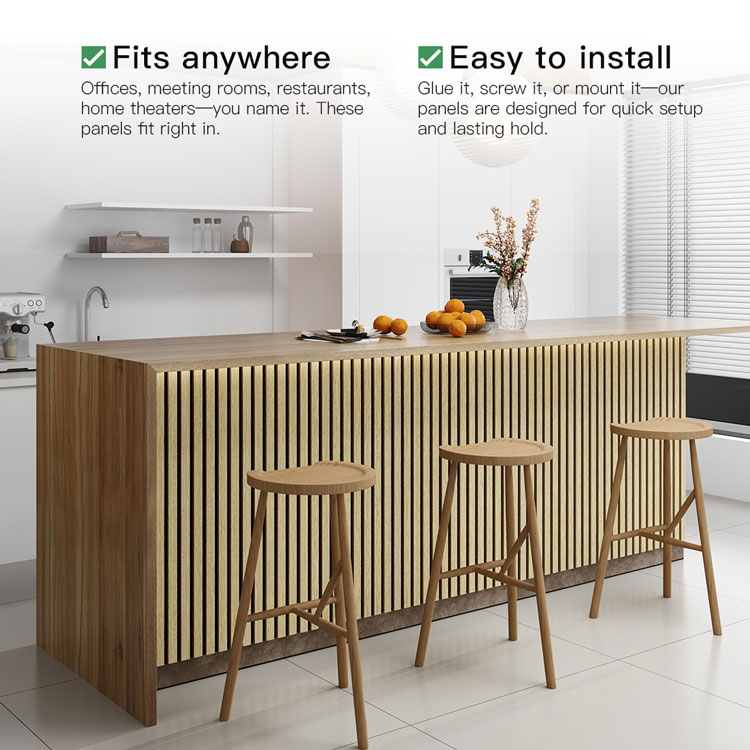
Combine acoustic absorption with modern design, ideal for users who want both performance and aesthetics.
👉 For home studios, high-density materials are recommended for better sound control.
3. Consider Panel Thickness and Density
Thickness directly affects how well panels absorb sound.
- 25–50mm (1–2 inches): Good for high frequencies
- 50–75mm (2–3 inches): Balanced performance
- 75mm+ (3 inches and above): Better for low frequencies
Higher density panels provide more consistent absorption across frequencies.
👉 For most home studios, 50mm–75mm panels are a great starting point.
4. Focus on Key Placement Areas
Even the best panels won’t work effectively if placed incorrectly.
Important Placement Zones:
- First reflection points (side walls)
- Behind studio monitors
- Rear wall
- Ceiling (above listening position)
Strategic placement ensures maximum acoustic improvement with fewer panels.
5. Balance Absorption and Design
A common mistake is over-treating a room, making it sound “too dead.”
Instead, aim for a balance between:
- Absorption (acoustic panels)
- Reflection (natural room surfaces)
Modern solutions like wood slat acoustic panels are ideal because they offer:
- Controlled sound absorption
- Partial diffusion
- Aesthetic enhancement
This creates a more natural and professional sound environment.
6. Consider Aesthetic Integration
Your home studio is also part of your living space, so design matters.
Acoustic panels are now available in:
- Different colors
- Fabric finishes
- Wood textures
- Custom patterns
Wood slat panels, in particular, are highly popular for home studios because they provide:
- A modern, professional look
- Warm natural textures
- A studio-grade appearance
7. Evaluate Installation and Flexibility
Choose panels that are easy to install and adjust.
Options include:
- Wall-mounted systems
- Adhesive installation (no drilling)
- Modular panels for flexible layouts
This is especially important for renters or users who frequently upgrade their setup.
8. Prioritize Quality Over Price
While budget options may seem attractive, low-quality panels often result in:
- Poor sound absorption
- Short lifespan
- Inconsistent performance
Investing in high-quality acoustic panels ensures:
- Better recording results
- Long-term durability
- Improved studio experience
Why Wood Slat Acoustic Panels Are Ideal for Home Studios
Among all options, wood slat acoustic panels are becoming increasingly popular in home studio design.
They offer:
- Effective sound absorption
- Balanced acoustic performance
- Premium visual appeal
- Multi-functional design (acoustic + decorative)
They are perfect for creators who want a professional studio look with high acoustic performance.
Guangdong Leeyin Acoustics: Your Trusted Acoustic Panel Manufacturer
At Guangdong Leeyin Acoustics, we specialize in manufacturing high-quality wood slat wall panels and acoustic panels for global markets.
As a leading exporter of wood slat acoustic panels in China, we provide reliable solutions for home studios, commercial spaces, and architectural projects.
Our Advantages
- 20,000㎡ modern production facility
- Advanced automated manufacturing technology
- Strict quality management aligned with international standards
- Strong production capacity for bulk and custom orders
- Extensive global export experience
We are committed to delivering acoustic panels that combine:
- Excellent sound absorption
- Modern design aesthetics
- Long-lasting durability
Our products help customers create professional-grade acoustic environments with stylish interiors.