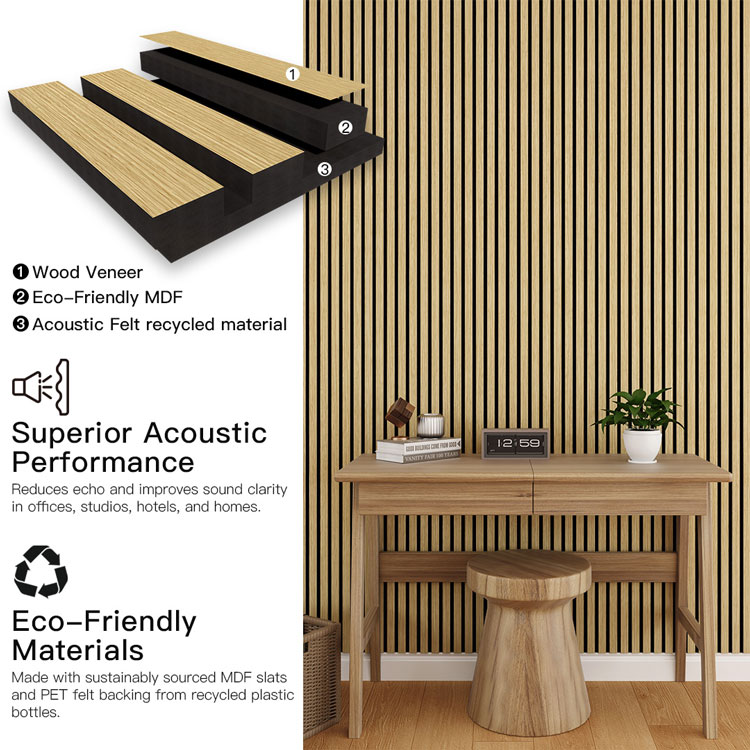
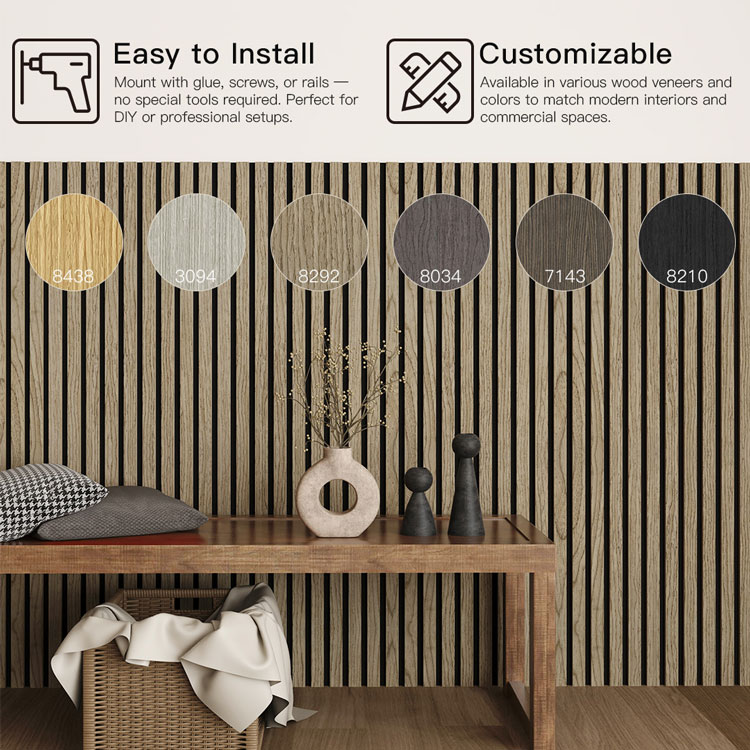
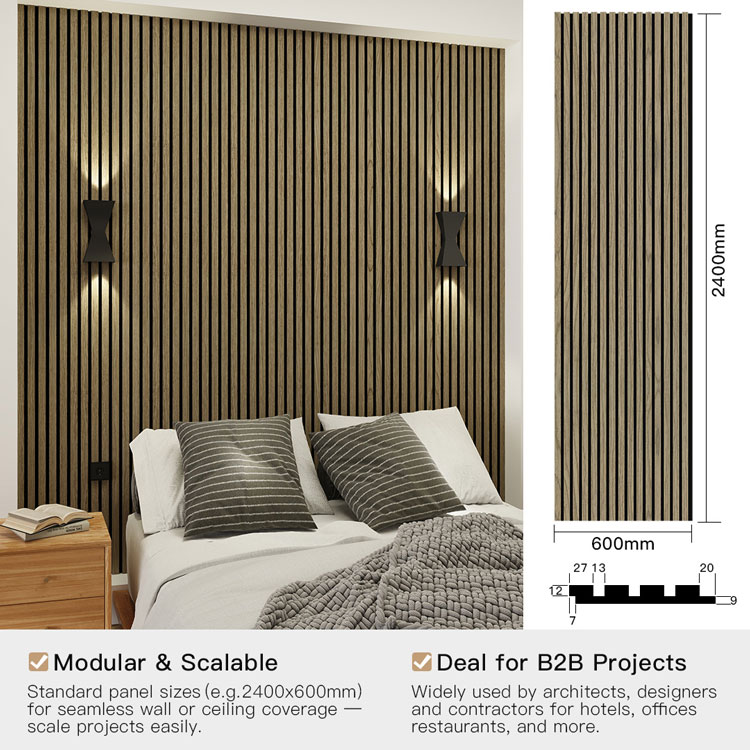
When choosing acoustic panels, most buyers focus on surface design, thickness, or installation. However, one of the most critical factors affecting acoustic performance, durability, and application suitability is the panel core material.

Two of the most commonly used cores today are MDF (Medium-Density Fiberboard) and Polyester Fiber (PET Fiber). But which one is better?

The answer depends on how the panel is used, where it is installed, and what level of performance is required. In this article, we compare MDF and polyester fiber cores in detail to help you make the right decision.
 Custom Solutions Acoustic Wood Slat Panels


Understanding Acoustic Panel Core Materials

The core material of an acoustic panel directly influences:

  • Sound absorption efficiency

  • Structural stability

  • Durability and lifespan

  • Fire resistance and safety compliance

  • Visual and architectural applications

Let’s look at how MDF and polyester fiber perform across these key factors.


What Is MDF in Acoustic Panels?

MDF (Medium-Density Fiberboard) is a highly engineered wood-based material made from compressed wood fibers bonded under high pressure.

In acoustic applications, MDF is commonly used in:

Key Characteristics of MDF:

  • High density and uniform structure

  • Excellent dimensional stability

  • Strong load-bearing capacity

  • Ideal for precision machining and slat spacing


What Is Polyester Fiber in Acoustic Panels?

Polyester fiber (often PET fiber) is a synthetic, non-woven acoustic material made from recycled or virgin polyester.

It is widely used in:

  • Fabric-wrapped acoustic panels

  • Felt acoustic boards

  • Lightweight sound absorption panels

Key Characteristics of Polyester Fiber:

  • Lightweight and flexible

  • Good mid-to-high frequency absorption

  • Easy to install

  • Often eco-friendly (recycled PET)


MDF vs Polyester Fiber: Acoustic Performance Comparison

1. Sound Absorption Efficiency

  • Polyester Fiber
    Excellent at absorbing mid and high frequencies due to its porous structure.

  • MDF (in wood slat panels)
    MDF itself is reflective, but when combined with slat spacing and acoustic backing, it creates a hybrid system that offers controlled diffusion and absorption.

👉 Best Result:
MDF-based wood slat panels with PET felt or mineral wool backing provide balanced acoustic control, not just absorption.


2. Structural Strength and Stability

  • MDF
    High-density MDF offers superior rigidity, ensuring panels remain flat, aligned, and stable over time—especially important for large wall installations.

  • Polyester Fiber
    Lightweight but less rigid; prone to bending or deformation if unsupported.

👉 Winner: MDF
Ideal for architectural wall systems and long-term commercial use.


3. Aesthetic and Design Flexibility

  • MDF
    Perfect for wood veneer finishes, CNC cutting, and precise slat designs. Creates a premium architectural look.

  • Polyester Fiber
    Limited design options; typically flat panels or felt shapes.

👉 Winner: MDF
Preferred for modern interiors where design and acoustics must coexist.


4. Fire Safety and Compliance

  • MDF (treated)
    Can meet international fire standards when produced with certified treatments and finishes.

  • Polyester Fiber
    Fire performance varies significantly by grade and manufacturer.

👉 Key Point:
Fire performance depends heavily on manufacturing standards, not just material type.


5. Durability and Lifespan

  • MDF
    Long-lasting, resistant to wear, ideal for high-traffic commercial spaces.

  • Polyester Fiber
    Softer material; more susceptible to surface damage.

👉 Winner: MDF for commercial and long-term projects.


MDF vs Polyester Fiber: Application Scenarios

Application Better Choice
Wood slat acoustic wall panels MDF
Architectural interiors MDF
Offices & commercial spaces MDF
Lightweight acoustic treatment Polyester Fiber
Temporary installations Polyester Fiber
Budget acoustic solutions Polyester Fiber

Why MDF Is the Preferred Core for Wood Slat Acoustic Panels

In wood slat acoustic panels, MDF plays a critical structural and acoustic role:

  • Maintains precise slat spacing

  • Enhances sound diffusion

  • Supports high-quality veneer finishes

  • Ensures long-term stability

This is why professional manufacturers consistently choose high-density MDF for premium wood slat acoustic systems.


Manufacturing Quality Makes the Real Difference

Material choice alone does not guarantee performance. How the panel is manufactured is just as important.

At Guangdong Leeyin Acoustics, we specialize in:

  • Wood slat acoustic panels

  • MDF-based acoustic wall systems

  • Integrated acoustic panel solutions

Our manufacturing strengths include:

  • 20,000㎡ modern production facility

  • Strict MDF density selection and control

  • Precision CNC machining

  • High-performance acoustic backing integration

  • Quality management aligned with international standards

  • Leading exporter of wood slat wall panels in China

This ensures every panel delivers consistent acoustic performance, structural reliability, and visual excellence.


Final Verdict: MDF or Polyester Fiber?

There is no one-size-fits-all answer—but for wood slat acoustic panels and architectural acoustic applications, MDF is the superior core material.

  • Choose MDF for:

    • Premium wood slat acoustic panels

    • Commercial and architectural projects

    • Long-term durability and design-driven spaces

  • Choose Polyester Fiber for:

    • Lightweight acoustic absorption

    • Simple installations

    • Budget-focused solutions

For projects that demand both acoustic performance and high-end aesthetics, MDF-based wood slat acoustic panels remain the industry standard.
As sustainability becomes a core consideration in modern architecture and interior design, many designers, developers, and homeowners are asking an important question: Are acoustic panels eco-friendly and sustainable?

The short answer is yes—when they are designed and manufactured responsibly. In this article, we explore what makes acoustic panels sustainable, which materials matter most, and how professional manufacturers ensure both acoustic performance and environmental responsibility.

Leading Acoustic Wood Slat Panel Distributor


What Makes an Acoustic Panel Eco-Friendly?

An eco-friendly acoustic panel is defined by more than just sound absorption. True sustainability involves the entire product lifecycle, including:

  • Raw material sourcing

  • Manufacturing processes

  • Product durability and lifespan

  • Indoor air quality impact

  • End-of-life recyclability

High-quality acoustic panels are designed to improve acoustic comfort without compromising environmental standards.


Sustainable Materials Used in Acoustic Panels

1. Wood Slat Acoustic Panels from Responsible Sources

Wood slat acoustic panels are highly popular due to their natural appearance and excellent acoustic performance. When produced using:

  • Engineered wood or MDF from sustainable forestry

  • Optimized material usage to reduce waste

  • Long-lasting surface finishes

they become a renewable and eco-conscious wall solution.

Wood-based acoustic panels also store carbon throughout their lifecycle, contributing positively to sustainable building goals.


2. Polyester Fiber Acoustic Panels (PET Panels)

Polyester fiber acoustic panels are widely recognized as one of the most sustainable acoustic materials available today.

Key eco-friendly advantages include:

  • Made from recycled PET plastic bottles

  • Fully recyclable

  • Low VOC emissions

  • Lightweight and energy-efficient to transport

These panels offer excellent sound absorption while supporting circular economy principles.


3. Low-Emission & Safe Indoor Materials

Eco-friendly acoustic panels should contribute to healthy indoor environments by:

  • Minimizing formaldehyde emissions

  • Using non-toxic adhesives

  • Meeting international indoor air quality standards

This is especially important for offices, schools, homes, and public buildings.


Manufacturing Processes Matter

Sustainability is not only about materials—it also depends on how acoustic panels are produced.

Professional manufacturers focus on:

  • Efficient material utilization

  • Energy-saving production lines

  • Waste reduction and recycling systems

  • Consistent quality control to reduce product replacement

Well-made acoustic panels last longer, reducing environmental impact over time.


Guangdong Leeyin Acoustics: Sustainability with Scale and Expertise

As a leading manufacturer and exporter of wood slat acoustic panels in China, Guangdong Leeyin Acoustics integrates sustainability into both product design and production management.

Our Strengths Include:

  • 20,000㎡ modern manufacturing facility

  • Large-scale production capacity for global supply

  • Specialized focus on wood slat wall panels and acoustic panels

  • Strict quality management aligned with international standards

  • Stable, long-term export experience in global markets

By combining efficient manufacturing with responsible material selection, we help clients achieve both acoustic excellence and sustainable building goals.


Are Acoustic Panels Worth It for Green Buildings?

Yes. Eco-friendly acoustic panels:

  • Improve sound comfort and productivity

  • Enhance interior aesthetics using natural materials

  • Support green building certifications

  • Offer long service life with minimal maintenance

For architects and developers, acoustic panels are a functional and sustainable investment.


How to Choose Sustainable Acoustic Panels

When selecting acoustic panels, look for:

  • Recycled or renewable core materials

  • Low-emission certifications

  • Long product lifespan

  • Experienced manufacturers with export and quality control expertise

A reliable supplier ensures sustainability is verified, not just claimed.


Conclusion

So, are acoustic panels eco-friendly and sustainable?
Absolutely—when they are thoughtfully designed and professionally manufactured.


With advanced production facilities, international quality management, and deep expertise in wood slat acoustic panels and sound-absorbing solutions, Guangdong Leeyin Acoustics provides acoustic products that balance performance, aesthetics, and sustainability for modern spaces worldwide.

1. Compliance with International Building Codes

Many countries require acoustic panels used in public and commercial spaces to meet strict fire standards, such as:

  • EN 13501-1 (Europe)

  • ASTM E84 / Class A (USA)

  • BS 476 (UK)

Fire-rated acoustic panels are often mandatory in:

  • Offices and coworking spaces

  • Hotels and hospitality projects

  • Schools and universities

  • Cinemas, theaters, and studios

  • Shopping malls and airports

Choosing non-compliant panels can lead to project delays, failed inspections, or legal risks.

High-Quality Supplier Acoustic Wood Slat Panels


2. Enhanced Safety for Occupants

Acoustic panels cover large surface areas. In the event of a fire, low-quality materials can:

  • Ignite quickly

  • Spread flames rapidly

  • Produce toxic smoke

Fire-resistant acoustic panels help:

  • Slow down fire spread

  • Reduce smoke emission

  • Provide extra evacuation time

This makes them an essential component of responsible architectural and interior design.


3. Essential for Commercial & Public Projects

While residential users may prioritize aesthetics, commercial buyers focus on risk control. Architects, contractors, and developers increasingly demand:

  • Fire-retardant wood slat acoustic panels

  • Tested and certified acoustic materials

  • Full documentation for project approval

Fire resistance is no longer optional—it is a core purchasing criterion.


Fire Resistance in Wood Slat Acoustic Panels

Wood slat acoustic panels combine natural wood aesthetics with acoustic functionality. However, natural wood must be properly treated to meet fire standards.

Professional manufacturers achieve this by:

  • Using fire-retardant MDF or engineered wood slats

  • Applying fire-resistant surface treatments

  • Pairing wood slats with Class B or Class A polyester fiber acoustic backing

When engineered correctly, wood slat panels can offer both excellent sound absorption and reliable fire performance.


How Guangdong Leeyin Acoustics Ensures Fire Safety

As a leading manufacturer and exporter of wood slat acoustic panels in China, Guangdong Leeyin Acoustics integrates fire resistance into every stage of production.

Our Manufacturing Advantages:

  • 20,000㎡ modern factory with large-scale production capacity

  • Advanced production lines for wood slat wall panels and acoustic panels

  • Strict quality control systems aligned with international standards

  • Fire-retardant material options tailored for different market requirements

What We Offer:

  • Fire-rated wood slat acoustic panels

  • Polyester fiber acoustic panels with tested fire performance

  • Customized solutions for commercial and export projects

  • Stable quality for large-volume international orders

Our products are widely exported and trusted by clients seeking safe, compliant, and high-performance acoustic solutions.


What Buyers Should Look for in Fire-Resistant Acoustic Panels

Before purchasing acoustic panels, always confirm:

  • Fire rating classification and test standards

  • Core material fire performance

  • Manufacturer’s quality management system

  • Export experience and certification support


Choosing a professional manufacturer ensures both acoustic effectiveness and safety compliance.

When choosing acoustic panels, many buyers focus on appearance, thickness, or price. However, one of the most critical yet often overlooked factors is material density.


So, how does density affect acoustic panel performance?

The short answer: density directly determines how effectively an acoustic panel absorbs, controls, and manages sound.


In this article, we explain the role of density in acoustic panels, how it impacts real-world performance, and why high-density materials are essential for professional-grade wood slat acoustic panels.

Acoustic Wood Slat Panels from Reliable Manufacturer

What Does “Density” Mean in Acoustic Panels?


Density refers to the mass of material per unit volume, usually measured in kg/m³.


In acoustic panels, density affects:


How much sound energy the panel can absorb


Which frequencies are absorbed (high, mid, or low)


Structural stability and durability


Long-term acoustic consistency


Different materials—such as MDF, PET felt, mineral wool, and fiberglass—perform very differently depending on their density.


Why Density Is Critical for Sound Absorption


Sound waves lose energy when they pass through or strike materials that create internal friction.

Higher-density materials generally provide:


Greater resistance to sound wave movement


More friction within the material structure


Better absorption of mid-to-low frequencies


However, density must be optimized, not simply maximized.


Too low → sound passes through

Too high → sound reflects instead of being absorbed


Professional acoustic panels strike a balanced density range.


Low-Density vs High-Density Acoustic Panels

Low-Density Panels (Poor Performance)


Examples:


Thin foam panels


Low-density PET felt


Soft decorative panels


Limitations:


Absorb mainly high frequencies


Weak control of echo and reverb


Ineffective against voice and music clarity issues


Shorter lifespan and deformation over time


These panels may reduce flutter echo but do not deliver professional acoustic results.


High-Density Panels (Professional Performance)


Examples:


High-density MDF wood slat panels


Mineral wool-backed acoustic panels


Engineered composite systems


Advantages:


Balanced absorption across frequencies


Improved speech intelligibility


Better music clarity


Stronger structural stability


Consistent long-term performance


This is why high-density materials are widely used in commercial, architectural, and premium residential projects.


How Density Works in Wood Slat Acoustic Panels


Wood slat acoustic panels are not a single material—they are a system.


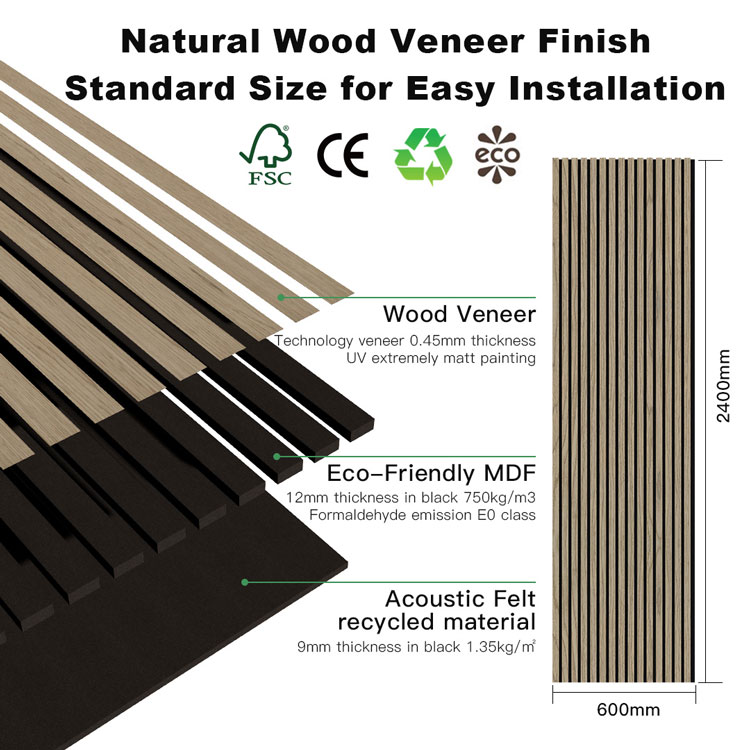
A typical high-quality wood slat acoustic panel includes:


Natural wood veneer surface


High-density MDF slats


Acoustic backing (PET felt or mineral wool)


Each layer has a specific density function.


1. MDF Density and Acoustic Control


High-density MDF:


Provides structural rigidity


Helps diffuse reflected sound


Enhances mid-frequency control


Maintains precise slat spacing


Low-density MDF:


Warps more easily


Loses acoustic consistency


Reduces durability


Affects visual alignment


At Guangdong Leeyin Acoustics, we carefully select stable, high-density MDF to ensure consistent acoustic and structural performance.


2. Acoustic Backing Density Matters


The backing layer is responsible for absorbing sound energy.


Low-density backing → weak absorption


Optimized-density backing → strong absorption without reflection


Correct backing density improves:


Noise reduction


Echo control


Overall room comfort


This balance is essential for spaces like offices, studios, home theaters, and apartments.


Does Higher Density Always Mean Better Acoustic Performance?


Not always.


Extremely high-density solid materials (like concrete or solid wood) tend to reflect sound rather than absorb it.


Effective acoustic panels rely on:


Controlled density


Internal porosity


Layered construction


That’s why engineered acoustic panels outperform single-material solutions.


Density and Fire Safety, Sustainability, and Durability


Density also affects non-acoustic performance factors:


Fire Resistance


High-density MDF and treated acoustic backing improve fire ratings


Low-density foam often fails fire safety requirements


Environmental Performance


Proper density reduces material waste


High-quality MDF lowers emissions and improves lifespan


Certified raw materials meet international standards


Longevity


Dense panels resist sagging and deformation


Maintain acoustic performance over many years

Sound-absorbing panels work by absorbing sound energy and reducing reflections, thus eliminating echoes and reverberation. Their effectiveness largely depends on:


Material density and porosity

Leading Distributor of Acoustic Wood Slat Panels

Internal structure


Fire resistance and safety


Environmental performance


Visual design compatibility


Choosing the wrong material can lead to poor sound insulation, short product lifespan, or safety hazards.


Common Materials for Sound-Absorbing Panels


1. PET Felt (Recycled Polyester Fiber)


PET felt boards are widely used for basic sound absorption.


Advantages:


Lightweight and easy to install


Made from recycled plastic bottles


Good sound absorption for mid-to-high frequencies


Environmentally friendly and recyclable


Disadvantages:


Limited sound absorption for low frequencies


Softer surface, lower impact resistance


Functionality outweighs aesthetics


PET felt is commonly used in offices, schools, and projects with limited budgets.


2. Sound-Absorbing Foam


Sound-absorbing foam is commonly found in small recording studios and home recording studios.


Advantages:


Affordable entry-level option


Easy to install yourself


Reduces flutter echo


Disadvantages:


Weaker low-frequency performance


Will deform over time


Limited fire resistance of low-quality foam


Not suitable for high-end interior decoration


Foam is best suited for temporary or small-scale acoustic treatments.


3. Mineral Wool/Glass Fiber (Core)


Mineral wool and glass fiber are typically used inside acoustic panels, not as exposed surfaces.


Advantages:


Excellent sound absorption across the entire frequency range


High density enhances performance


Fire-resistant after proper treatment


Disadvantages:


Requires fabric or solid surface covering


Less aesthetically pleasing


Requires careful handling during production


These materials form the core of many professional-grade acoustic panels.


4. Medium-Density Fiberboard (MDF)


High-density medium-density fiberboard is a key structural material for high-end acoustic panels, especially wood slat wall panels.


Advantages:


Stable density ensures consistent acoustic performance


Strong structural integrity


Smooth surface for easy veneer application


Ideal for strip and perforated designs


Limitations:


Performance depends on density and quality


Low-grade MDF may release higher levels of volatile organic compounds (VOCs)


Our company uses rigorously selected high-density MDF that meets international standards.


5. Natural Wood Veneer (Decorative and Functional Layer)


Natural wood veneer plays a crucial role in wood strip acoustic panels.


Advantages:


Enhances aesthetics and interior value


Utilizes slat spacing to diffuse and absorb sound


Natural, warm appearance


Complements modern and luxury design styles


Limitations:


Vene thickness and bonding quality are critical


Requires specialized production control


When used in conjunction with acoustic backing, wood veneer offers both performance and aesthetics.

One of the most frequently asked questions before undertaking any acoustic treatment of a space is:


How many acoustic panels do you need in a room?

Best Price Guarantee Acoustic Wood Slat Panels

In short—it depends on the specific situation.


The appropriate number of acoustic panels depends on the size, function, layout of the room, and the type of acoustic problem you want to solve.


In this guide, we'll explain it in a clear and practical way to help you make the right decision and avoid over- or under-treating.


The Actual Role (and Limitations) of Acoustic Panels


Before discussing specific numbers, it's important to understand one thing:


Acoustic panels absorb sound reflections.


They reduce echoes and reverberation.


They improve sound clarity and comfort.


They do not completely isolate room noise.


This means you don't need to cover all surfaces to achieve the desired effect.


General Principle: Coverage 20%–30%


The generally accepted guideline in acoustics is:


👉 Cover 20%–30% of the total surface area of ​​walls and ceilings.


Such coverage is sufficient to:


Control reflections


Improve speech intelligibility


Balance music and audio playback


For most residential or commercial spaces, it's rarely necessary to exceed this range.


How Room Size Affects the Number of Acoustic Panels


Small Rooms (Bedrooms, Home Offices)


Typical Area: 10–15 square meters


Recommended Number of Acoustic Panels: 4–8


Key Areas:


First Reflection Point


Wall behind the speaker or desk


Rear Wall


Even a small number of well-placed acoustic panels can bring significant improvement.


Medium-sized rooms (living room, home office)


Typical area: 15–30 square meters


Recommended number of panels: 8–16


Additions:


Side walls


Ceiling panels can be installed if needed


Suitable for larger areas with decorative wood strip acoustic panels


Large rooms (studios, meeting rooms, commercial spaces)


Area: 30 square meters and above


Recommended number of panels: 16 or more


Strategy:


Combined wall and ceiling treatment


Use large-size acoustic panels


Combined use of wood strip panels for both aesthetics and performance


Placement is more important than quantity


Using a small number of panels in appropriate locations is far more effective than randomly covering walls.


Priority placement areas:


First reflection point


Front wall (behind the speaker)


Rear wall (behind the listener)


Ceiling above the listening or working area


This method achieves maximum acoustic effect with minimal materials.


Are there too many acoustic panels?


Yes.


Over-processing the acoustics of a room can lead to:


a lifeless or unnatural sound


excessive high-frequency attenuation


creating an uncomfortable listening environment


Therefore, professional acoustic design focuses on balance, not comprehensive coverage.

Many people seeking better sound insulation often ask:


What's the difference between acoustic panels and soundproofing panels?


While these two terms are often used interchangeably, their uses are quite different. Understanding their differences is crucial for choosing the right solution for your residential, office, or commercial project.


In this guide, we'll detail how each system works, where it's applicable, and why acoustic panels (especially wood strip acoustic panels) are the most practical choice for most spaces.


Acoustic Panels vs. Soundproofing Panels: Core Differences


The main difference lies in the problem you want to solve.


Type Main Function Uses

Acoustic Wood Slat Panels Supplier

Acoustic Panels Absorbs indoor sound Reduces echoes, reverberation, and noise reflections


Soundproofing Panels Blocks sound from entering or leaving Prevents noise transmission between spaces


In short:


Acoustic panels improve sound quality


Soundproofing panels block sound transmission


What are acoustic panels?


Acoustic panels are designed to absorb sound waves reflected within an indoor space.


They help to:


Reduce echo and reverberation


Improve speech clarity


Enhance music and audio quality


Create a more comfortable indoor environment


Widely used in:


Residential and apartment buildings


Offices and meeting rooms


Restaurants and hotels


Studios and commercial spaces


How Sound-Absorbing Panels Work


Sound-absorbing panels use porous materials that convert sound energy into heat energy through friction.


High-quality sound-absorbing panels typically combine the following features:


Sound-absorbing backing materials (such as PET felt)


Optimized thickness and density


Carefully designed surface


Wood strip sound-absorbing panels go a step further, combining sound absorption with sound diffusion for balanced acoustic control and modern aesthetics.


What are Sound Insulation Panels?


Sound insulation panels are designed to block the transmission of sound between rooms.


They rely on:


Heavy materials


Structural isolation


Sealed structure


True sound insulation typically includes:


High-density materials (concrete, drywall layers)


Resilient partitions


Insulation materials within walls and ceilings


Sealing of gaps


Therefore, soundproofing panels are:


Heavy


More expensive


Usually part of the building structure, not decoration


Why sound-absorbing panels are often the better choice


Many people want “soundproofing” when they actually need better acoustic control.


Sound-absorbing panels are ideal because they:


Easy to install


Immediately improve sound quality


No construction required


Enhance interior design


Excellent cost-effectiveness


For apartments, offices, and most commercial interior spaces, sound-absorbing panels can solve 80-90% of common noise problems.


Can sound-absorbing panels replace soundproofing panels?


Not entirely—but they can significantly improve perceived noise comfort.


Acoustic panels:


Reduce indoor reflected noise


Make conversations clearer


Reduce overall auditory fatigue


However, they do not completely prevent sound from penetrating walls. Complete soundproofing requires structural sound insulation.


Wood strip acoustic panels: Performance and design combined


Wood strip acoustic panels are a modern solution that combines:


Sound absorption


Partial sound diffusion


The beauty of natural wood


They are particularly suitable for:


Modern residences


Offices


Hotel projects


Commercial interior design


This achieves an ideal balance between functionality, aesthetics, and practicality.

Acoustic panels aren't just for recording studios—they're a powerful upgrade for any home looking to reduce noise, improve sound quality, and enhance interior design. Here are some of the best ways to use acoustic panels in your home!

Top Manufacturer and Wholesaler of Acoustic Wood Slat Panels

🛋 1. Living Room


Reduce echoes, make conversations clearer, and enhance the sound of your home theater system.


Liyin wood strip acoustic panels combine aesthetics and performance to create a comfortable and modern living space.


🎶 2. Home Theater or Media Room


Acoustic panels absorb excess reflected sound, delivering cinematic-quality clarity.


Our high-density MDF and PET felt construction provides deep sound absorption while maintaining a premium aesthetic.


🧑‍💻 3. Home Office


Working from home? Benefits of Acoustic Panels:


Reduces interference


Improves call clarity


Creates a professional, sophisticated background


Perfect for video conferencing and a quiet, efficient work environment.


🎧 4. Bedroom


Improves sleep quality by reducing external noise and suppressing echoes.


Liyin Acoustic Panels create a calm and quiet atmosphere, ideal for relaxation.


🎤 5. DIY Music Room or Hobby Area


Whether you're playing guitar or recording a podcast, acoustic panels can:


Improve room acoustics


Reduce noise propagation


Enhance your auditory experience


Liyin Acoustic Panels are favored by musicians, content creators, and enthusiasts worldwide.


👶 6. Children's Room and Play Area


Acoustic panels help soften the noise of playtime while adding a safe, modern design element to the room.

If you're planning to upgrade your space with acoustic panels but are worried they might affect your WiFi signal—the good news is: acoustic panels won't block WiFi signals.

Leading Acoustic Wood Slat Panel Manufacturer & Distributor

✔ Why Acoustic Panels Won't Affect WiFi


WiFi signals can easily pass through materials commonly used in acoustic panels, including:


Medium-Density Fiberboard (MDF)


Recycled PET felt


Wood veneer or PET/PVC finish


These materials don't contain metals or dense barriers that interfere with electromagnetic signals. This means your WiFi signal will remain strong even if you install acoustic panels in your room.


⭐ What Do Acoustic Panels Affect?


They improve the acoustic comfort of a room but don't affect WiFi signals.


Liyin Wood Strip Acoustic Panels are designed to:


Absorb echoes and reduce reverberation


Improve sound clarity in homes, offices, and recording studios


Add beauty and warmth with premium wood veneer finishes


Contribute to eco-friendly building using E0 grade MDF and recycled PET materials.

Many people ask this question—the answer is both yes and no.


The primary function of acoustic panels is to absorb sound, not block it. This means they reduce echoes, reverberation, and noise reflections within the room, making it clearer, quieter, and more comfortable.


However, if high-density materials are used, acoustic panels can also help reduce noise levels both inside and outside the room—especially when combined with appropriate soundproofing measures.

Customizable Acoustic Wood Slat Panels Supplier

Guangdong Liyin Acoustics is dedicated to designing acoustic solutions that combine performance and aesthetics. Our wood slat wall panels, PET acoustic panels, and high-density MDF cores offer superior sound absorption, helping to control noise in any interior space.

keyboard_arrow_up