When dealing with echo, reverberation, or general noise problems in a room, many people ask:

Should I install acoustic panels or just use heavy curtains?

Both options can improve room acoustics—but they serve different purposes and offer very different performance levels.

In this article, we’ll compare acoustic panels vs curtains, explain how each works, and help you decide which solution is better for offices, restaurants, commercial spaces, or home interiors.
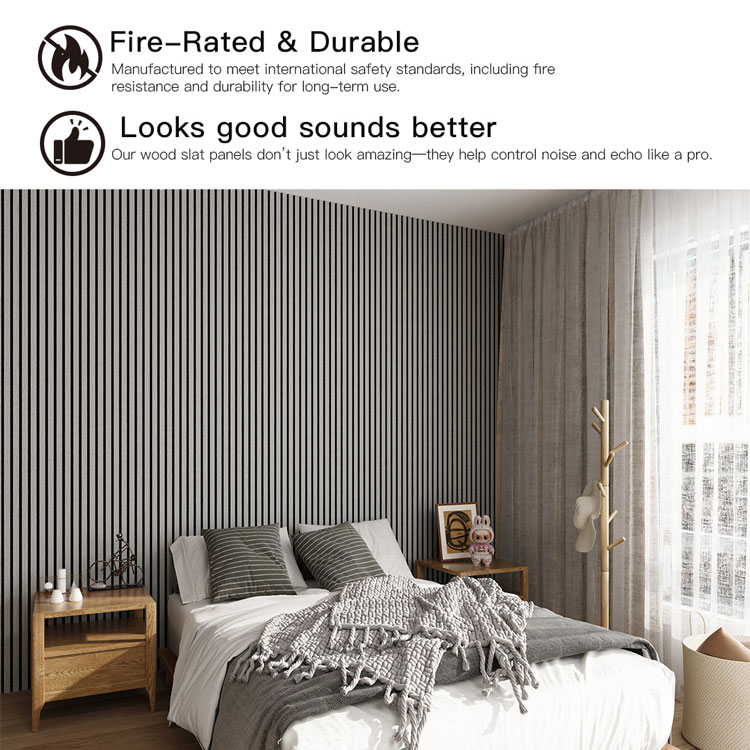
Factory Prices Acoustic Wood Slat Panels


Understanding the Problem: Echo vs Noise

Before comparing solutions, it’s important to clarify what kind of “noise” you are trying to solve.

Most indoor acoustic issues involve:

  • echo

  • reverberation

  • speech clarity problems

  • background noise buildup

  • “hollow” room sound

In open-plan offices, restaurants, conference rooms, and modern homes, the main issue is usually sound reflection, not soundproofing.


How Acoustic Panels Work

Acoustic panels are engineered materials designed to absorb sound waves and reduce reflections.

They typically consist of:

  • polyester fiber

  • mineral wool core

  • acoustic foam

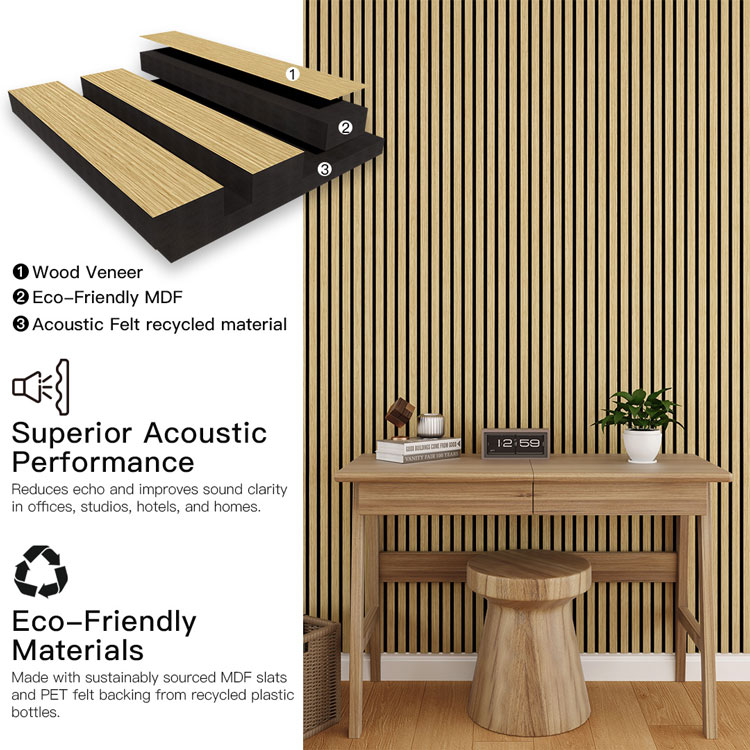
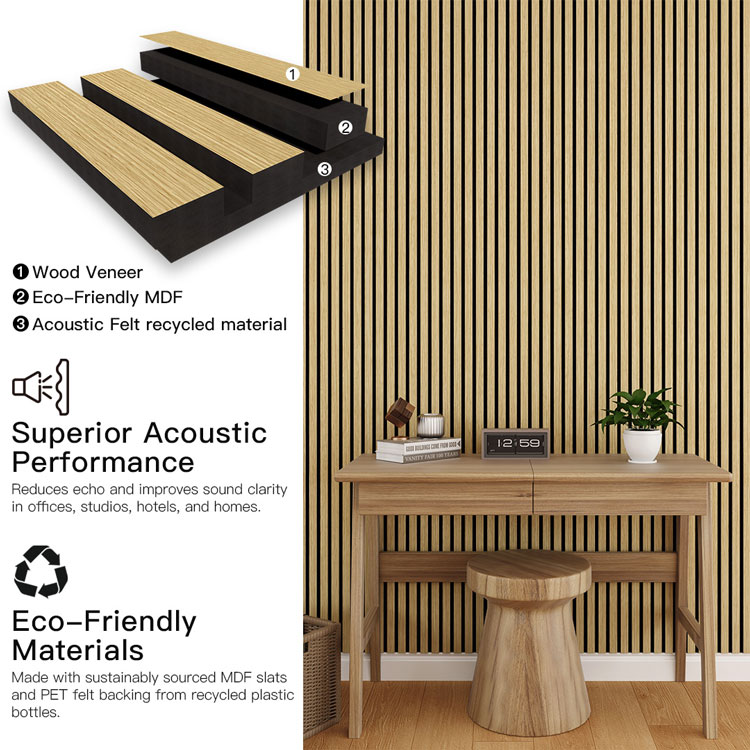
  • wood slats with sound-absorbing felt backing

When sound waves hit these panels, the sound energy is absorbed instead of bouncing back into the room.

Benefits of Acoustic Panels

✅ Significant echo reduction
✅ Improved speech clarity
✅ Reduced reverberation time (RT60)
✅ Professional acoustic performance
✅ Clean and architectural design options
✅ Suitable for walls and ceilings

Acoustic panels are widely used in:

  • open-plan offices

  • meeting rooms

  • restaurants and cafés

  • hotels

  • classrooms

  • home theaters


How Curtains Work for Noise Control

Curtains, especially thick blackout or velvet curtains, can also absorb some sound.

They work by:

  • softening reflections near windows

  • absorbing high-frequency sound

  • reducing minor echo

However, curtains are not specifically engineered for acoustic performance.

Benefits of Curtains

✅ Simple and affordable
✅ Easy to install
✅ Improve window reflection
✅ Add decorative softness to a room

But they also have limitations.


Acoustic Panels vs Curtains: Performance Comparison

Let’s compare them directly.

1. Sound Absorption Performance

Acoustic Panels:
Designed specifically to absorb sound across mid and high frequencies. Some thicker panels also absorb low frequencies.

Curtains:
Mainly absorb high frequencies. Minimal impact on mid-to-low frequency reverberation.

👉 Winner: Acoustic Panels


2. Coverage Flexibility

Acoustic Panels:
Can be installed on walls and ceilings for targeted acoustic treatment.

Curtains:
Usually limited to windows or wall sections with curtain rails.

👉 Winner: Acoustic Panels


3. Speech Clarity Improvement

Acoustic Panels:
Significantly improve speech intelligibility by reducing reverberation.

Curtains:
Provide minor improvement only if large areas are covered.

👉 Winner: Acoustic Panels


4. Design & Aesthetic Appeal

Acoustic Panels:
Modern wood slat designs create high-end architectural features.

Curtains:
Provide softness and fabric elegance but may not fit minimalist or corporate interiors.

👉 Depends on design goals


5. Durability in Commercial Spaces

Acoustic Panels:
Durable, long-lasting, suitable for high-traffic areas.

Curtains:
Require cleaning, can fade, collect dust, and wear over time.

👉 Winner: Acoustic Panels


When Are Curtains Enough?

Curtains may be sufficient when:

  • the room is small

  • echo is minimal

  • budget is very limited

  • the main reflective surface is a large glass window

  • aesthetic softness is the primary goal

In residential bedrooms or living rooms, thick curtains can slightly improve acoustics.

But in larger or commercial environments, curtains alone are rarely enough.


When Are Acoustic Panels the Better Choice?

Acoustic panels are strongly recommended when:

  • the room has hard floors and concrete walls

  • ceilings are high

  • the space is open-plan

  • speech clarity is important

  • noise buildup is noticeable

  • professional acoustic performance is required

In offices, restaurants, conference rooms, and coworking spaces, acoustic panels are far more effective than curtains.


What About Wood Slat Acoustic Panels?

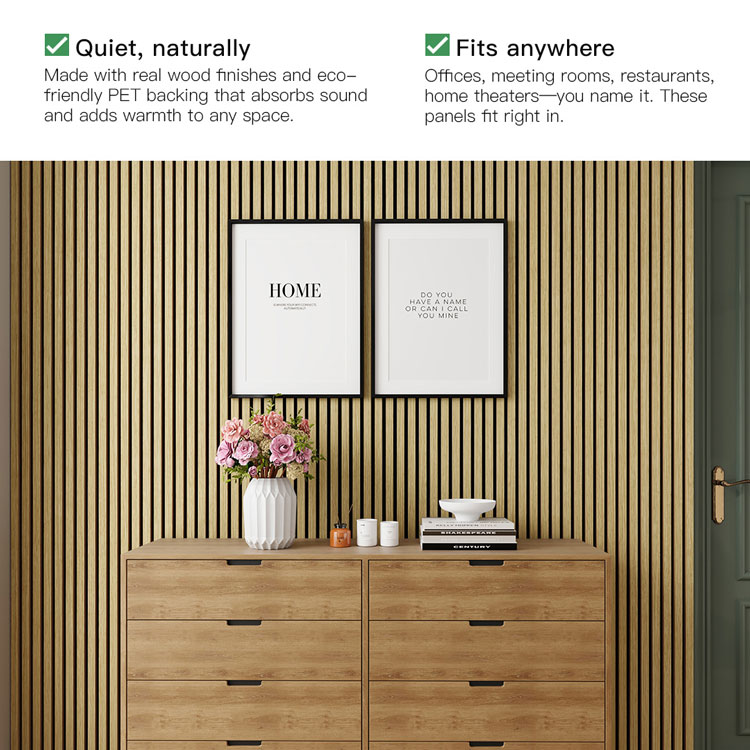
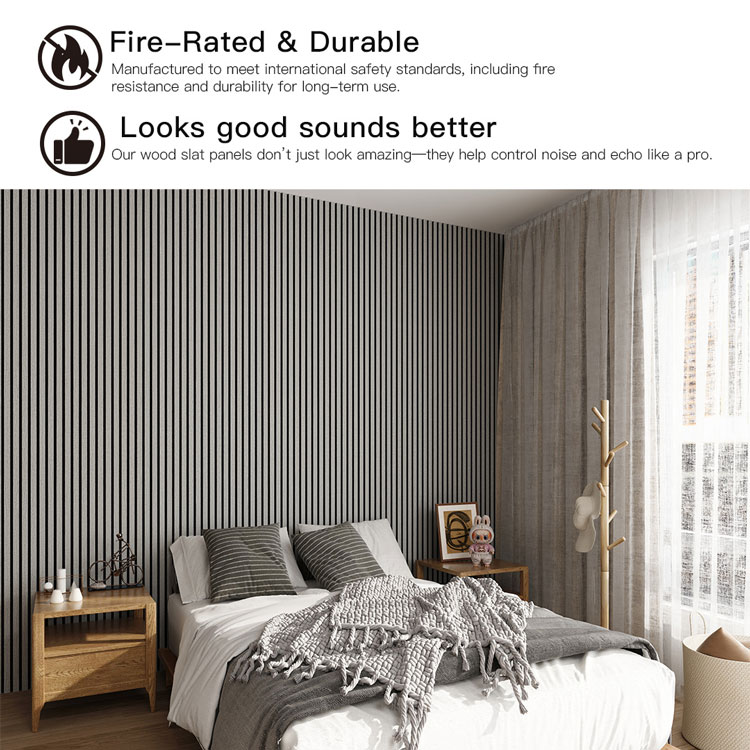
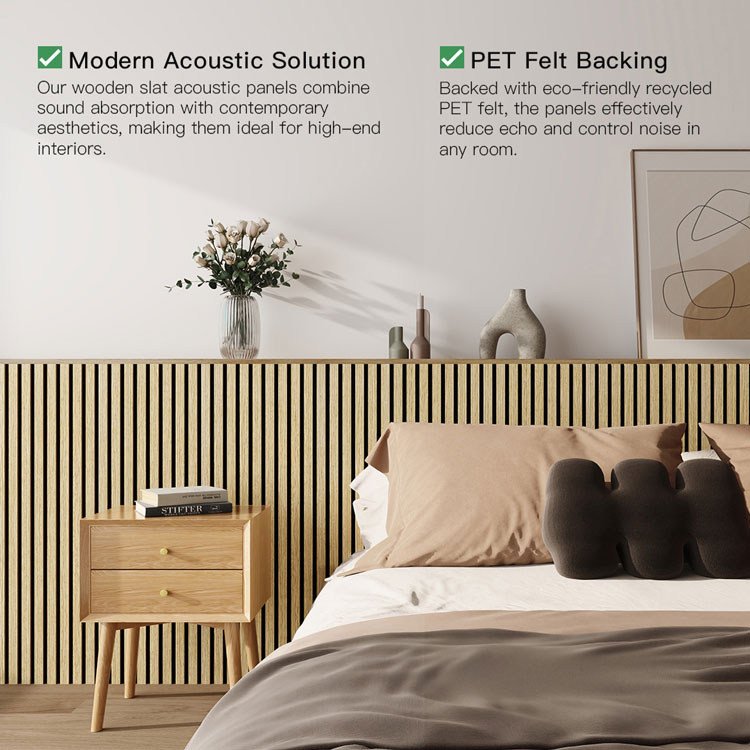
For modern interiors, wood slat acoustic panels are one of the most popular alternatives to fabric panels and curtains.

They combine:

  • decorative wooden slats

  • acoustic felt backing

  • professional sound absorption

  • contemporary architectural style

Unlike curtains, wood slat panels:

  • maintain a clean, structured look

  • do not block natural light

  • provide permanent acoustic treatment

  • improve brand image in commercial spaces

They are widely used in:

  • office feature walls

  • restaurant interiors

  • hotel lobbies

  • reception areas

  • home theaters


Do Acoustic Panels Replace Curtains?

Not necessarily.

In some designs, acoustic panels and curtains can work together:

  • Curtains soften window reflections

  • Acoustic panels treat walls and ceilings

  • Combined treatment produces better overall results

However, if you must choose one for serious acoustic improvement, acoustic panels are the more effective option.


Cost Comparison: Panels vs Curtains

Curtains

  • Lower upfront cost

  • Limited performance improvement

  • May require replacement over time

Acoustic Panels

  • Higher initial investment

  • Long-term durability

  • Stronger acoustic impact

  • Better return in commercial applications

For businesses, the improved comfort and productivity often justify the investment in professional acoustic panels.


Why Commercial Spaces Prefer Acoustic Panels

In offices and hospitality environments, acoustic performance directly affects:

  • employee productivity

  • customer comfort

  • meeting efficiency

  • brand perception

  • overall space value

Curtains cannot provide the level of control required in high-traffic, high-communication spaces.

That’s why professional interior designers and architects typically specify acoustic panels for commercial projects.


Guangdong Leeyin Acoustics: Professional Manufacturer of Wood Slat Acoustic Panels

At Guangdong Leeyin Acoustics, we specialize in manufacturing high-quality wood slat wall panels and acoustic panels for global markets.

As one of China’s leading exporters in the wood slat acoustic panel industry, we provide stable production capacity and consistent quality for distributors, contractors, and commercial project developers.

Our Manufacturing Strength

  • 20,000㎡ modern factory

  • advanced production equipment

  • strong large-scale production capability

  • strict quality management based on international standards

  • precise slat spacing and stable acoustic felt bonding

  • customizable veneer finishes and packaging options

Our wood slat acoustic panels are designed to meet the demands of modern interiors—delivering both aesthetic appeal and professional acoustic performance.


Final Verdict: Acoustic Panels vs Curtains — Which Works Better?

If your goal is serious echo reduction, improved speech clarity, and professional noise control, acoustic panels clearly work better than curtains.

Curtains may provide minor improvement in small spaces, but they cannot replace the performance of engineered acoustic panels.

For offices, restaurants, commercial spaces, and modern homes, wood slat acoustic panels offer:

  • stronger sound absorption

  • long-term durability

  • premium architectural appearance

  • improved comfort and communication

If you’re looking for a long-term solution to indoor noise problems, acoustic panels are the smarter investment.


FAQ: Acoustic Panels vs Curtains

Do curtains reduce echo?

Yes, but only slightly. Thick curtains absorb some high-frequency sound but do not significantly reduce reverberation in large rooms.

Are acoustic panels better than blackout curtains?

Yes. Acoustic panels are specifically engineered for sound absorption, while blackout curtains are designed for light control.

Can I combine curtains and acoustic panels?

Yes. Combining both can improve overall room acoustics.

Are wood slat acoustic panels better than fabric panels?


Both are effective, but wood slat panels provide stronger design impact and durability for commercial interiors.
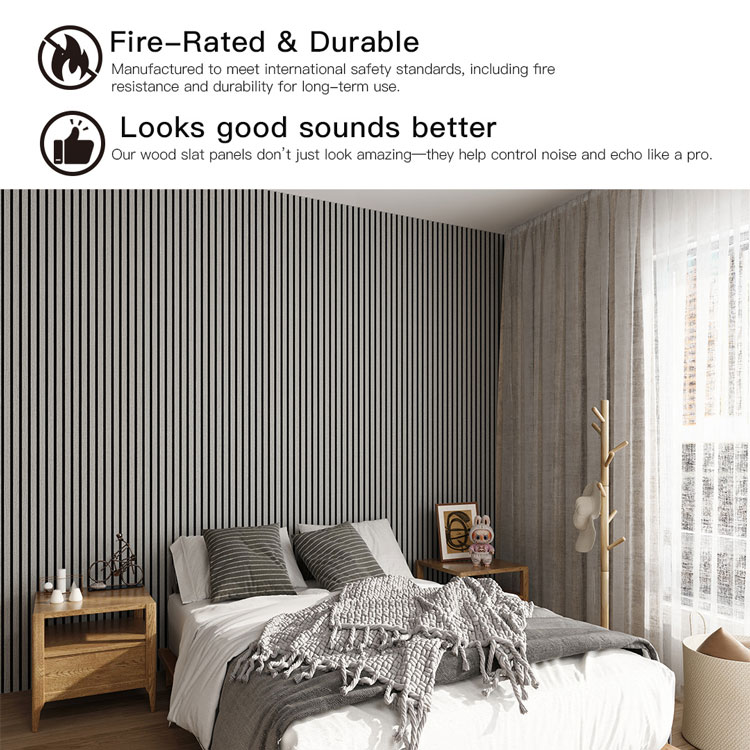
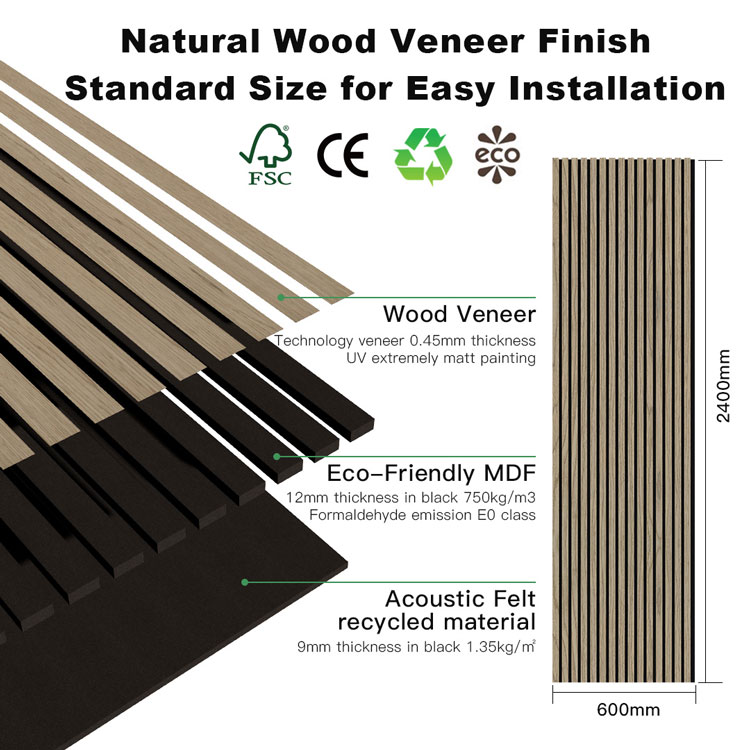
As more homeowners, designers, and business owners focus on improving indoor sound quality, acoustic treatment has become an essential part of modern interior design. Among the many solutions available, DIY acoustic panels are often seen as a budget-friendly alternative to professionally manufactured products. But one important question remains:

Are DIY acoustic panels as effective as professional ones?

The short answer is: DIY acoustic panels can offer basic sound absorption, but they generally do not match the performance, durability, appearance, or reliability of professional acoustic panels.

In this article, we’ll compare DIY and professional acoustic panels in detail, helping you understand which option is best for your acoustic needs.

Manufacturer Acoustic Wood Slat Panels


What Are DIY Acoustic Panels?

DIY acoustic panels are homemade sound-absorbing panels created using readily available materials. Typical components include:

  • Wooden frames
  • Foam, mineral wool, or polyester fiber
  • Fabric covers
  • Basic mounting hardware

They are commonly used in:

  • Home studios
  • Gaming rooms
  • Small personal offices
  • Budget acoustic projects

DIY panels are popular because they are affordable and customizable, but their effectiveness depends heavily on the builder’s skills and material selection.


What Are Professional Acoustic Panels?

Professional acoustic panels are engineered and manufactured using specialized acoustic materials and tested designs to ensure reliable sound absorption performance.

They typically feature:

  • High-density sound-absorbing cores
  • Precision manufacturing
  • Consistent material thickness and density
  • Fire-resistant and eco-friendly materials
  • Decorative surface finishes

Professional panels are widely used in:

  • Offices
  • Commercial spaces
  • Hotels
  • Recording studios
  • Restaurants
  • High-end residential interiors

1. Acoustic Performance Comparison

DIY Acoustic Panels

DIY acoustic panels can reduce basic echo and reverberation if built correctly. However, performance often varies because:

  • Material density may not be optimized
  • Construction quality may differ from panel to panel
  • Thickness may be inconsistent
  • Frequency absorption range may be limited

Professional Acoustic Panels

Professional acoustic panels are specifically engineered to deliver optimized sound absorption across targeted frequencies.

Benefits include:

  • Better mid- and high-frequency absorption
  • More consistent acoustic performance
  • Improved overall room sound balance

👉 Winner: Professional Acoustic Panels


2. Durability and Lifespan

DIY Panels

DIY panels may degrade over time due to:

  • Weak structural support
  • Material sagging
  • Fabric wear
  • Moisture sensitivity

Professional Panels

Manufactured panels are designed for long-term use and durability, often featuring:

  • Reinforced structure
  • Stable acoustic core materials
  • Wear-resistant finishes
  • Moisture-resistant options

👉 Winner: Professional Acoustic Panels


3. Appearance and Interior Design Integration

DIY Panels

DIY acoustic panels often prioritize function over appearance. While some can look attractive, they may lack the polished finish required for professional interiors.

Professional Panels

Modern acoustic panels are designed to enhance interiors, especially decorative options like wood slat acoustic panels, which combine:

  • Architectural style
  • Decorative finishes
  • Premium craftsmanship

These panels can serve as both acoustic treatment and interior décor.

👉 Winner: Professional Acoustic Panels


4. Safety and Compliance

DIY Panels

Homemade panels may not meet building or fire safety standards, which can be a concern in:

  • Commercial buildings
  • Public spaces
  • Hospitality environments

Professional Panels

Professional manufacturers often provide products tested for:

  • Fire resistance
  • Environmental safety
  • Material certification

This is essential for large-scale or commercial projects.

👉 Winner: Professional Acoustic Panels


5. Installation and Convenience

DIY Panels

DIY projects require:

  • Material sourcing
  • Construction time
  • Assembly tools
  • Design planning

Professional Panels

Pre-manufactured panels are ready to install and save:

  • Labor time
  • Installation complexity
  • Project management effort

👉 Winner: Professional Acoustic Panels


When DIY Acoustic Panels Make Sense

DIY acoustic panels may be suitable if:

  • You have a limited budget
  • You need temporary sound treatment
  • The space is informal or personal
  • Aesthetic requirements are low

They can be a practical option for hobbyists and basic home setups.


When Professional Acoustic Panels Are the Better Choice

Professional acoustic panels are ideal when:

  • Acoustic performance is critical
  • Long-term durability is required
  • Appearance matters
  • Safety standards must be met
  • Large-scale installation is involved

For offices, hospitality projects, showrooms, and modern homes, professional solutions provide much greater value.


Why Wood Slat Acoustic Panels Are a Premium Professional Choice

Among professional solutions, wood slat acoustic panels have become one of the most sought-after products due to their unique ability to combine:

  • Sound absorption
  • Decorative elegance
  • Architectural texture
  • Modern aesthetics

These panels feature:

  • Precision wood slats
  • Acoustic felt backing
  • Engineered spacing for enhanced performance

They are widely used in:

  • Luxury homes
  • Office interiors
  • Conference rooms
  • Hotels
  • Restaurants

Guangdong Leeyin Acoustics: Your Trusted Professional Acoustic Panel Manufacturer

At Guangdong Leeyin Acoustics, we specialize in manufacturing premium wood slat wall panels and acoustic panels for clients around the world.

As a leading exporter of wood slat acoustic panels in China, we are committed to delivering superior products backed by professional manufacturing standards.

Why Choose Leeyin?

  • 20,000㎡ modern manufacturing facility
  • Advanced automated production equipment
  • Strict quality management in accordance with international standards
  • Strong large-scale production capacity
  • Extensive global export experience

Our products are trusted by:

  • Interior designers
  • Architects
  • Contractors
  • Distributors worldwide

We deliver acoustic solutions that combine performance, durability, and modern aesthetics.


Final Thoughts

So, are DIY acoustic panels as effective as professional ones?

While DIY acoustic panels can help reduce some echo and improve room acoustics in basic setups, they typically fall short when compared to professional acoustic panels in terms of:

  • Performance
  • Durability
  • Safety
  • Appearance
  • Reliability

For projects where quality, design, and long-term performance matter, professional acoustic panels are the superior investment.


And for those seeking the perfect combination of acoustic treatment and modern style, wood slat acoustic panels remain one of the best options available today.

In today’s architectural and interior design world, aesthetics alone are no longer enough. Modern spaces are expected to be beautiful, functional, and comfortable—and one often overlooked factor in achieving that balance is acoustic performance. Whether in homes, offices, restaurants, or hospitality venues, poor acoustics can negatively affect the overall experience of a space.

This is why more designers and architects are turning to acoustic panels as a solution that improves both sound quality and visual appeal. Once considered purely functional products, acoustic panels have evolved into stylish design elements that contribute significantly to modern interiors.

In this article, we’ll explore how acoustic panels enhance interior design and why they have become an essential feature in contemporary spaces.

Factory Direct Pricing High-Quality Acoustic Wood Slat Panels


The Role of Acoustics in Interior Design

Interior design is not just about what people see—it’s also about what they hear and feel. Sound has a major impact on how comfortable and inviting a space feels.

Hard surfaces like:

  • Glass
  • Marble
  • Concrete
  • Tile
  • Metal

can reflect sound and create:

  • Echo
  • Reverberation
  • Noise buildup
  • Poor speech clarity

Even the most beautifully designed room can feel uncomfortable if the acoustics are poor. Acoustic panels help solve this issue by absorbing unwanted sound reflections and creating a more balanced acoustic environment.


1. Acoustic Panels Improve Both Function and Style

One of the biggest advantages of modern acoustic panels is that they no longer need to look industrial or unattractive.

Today’s acoustic panels are designed to provide:

  • Excellent sound absorption
  • Decorative finishes
  • Architectural textures
  • Customizable aesthetics

This means they can become part of the design itself rather than something hidden away.

Designers can now use acoustic panels to improve room acoustics without sacrificing visual beauty.


2. Creating Stunning Feature Walls

Acoustic panels can transform ordinary walls into decorative focal points.

Especially with wood slat acoustic panels, designers can create:

  • Elegant accent walls
  • Textured architectural surfaces
  • Warm, natural visual effects

Wood slat panels add dimension and depth to interiors while maintaining a modern and minimalist look.

They are frequently used in:

  • Living rooms
  • Hotel lobbies
  • Office reception areas
  • Conference rooms
  • Retail showrooms

3. Enhancing Spatial Perception

Acoustic panels can also influence how a room feels spatially.

For example:

  • Vertical slat panels make ceilings appear taller
  • Horizontal installations can make walls feel wider
  • Patterned panel layouts add rhythm and movement

This allows designers to manipulate visual perception while also solving acoustic problems.


4. Supporting Minimalist and Modern Design Trends

Modern interior design trends emphasize:

  • Clean lines
  • Simplicity
  • Natural materials
  • Functional décor

Acoustic panels—especially wood slat styles—perfectly complement these trends.

Their sleek appearance makes them ideal for:

  • Scandinavian interiors
  • Minimalist homes
  • Contemporary offices
  • Luxury commercial environments

They blend naturally into modern spaces while adding texture and warmth.


5. Improving Comfort in Open-Plan Spaces

Open-plan interiors are increasingly popular, but they often suffer from excessive noise due to fewer dividing walls and more reflective surfaces.

Acoustic panels help:

  • Reduce ambient noise
  • Improve speech clarity
  • Minimize distractions
  • Enhance privacy

This is especially important in:

  • Open offices
  • Restaurants
  • Co-working spaces
  • Reception halls

By improving sound comfort, acoustic panels make these spaces more functional and enjoyable.


6. Adding Warmth Through Natural Materials

Many acoustic panel designs, particularly wood slat acoustic panels, incorporate natural wood finishes.

Wood introduces:

  • Warmth
  • Organic texture
  • Natural elegance

This helps soften modern interiors that may otherwise feel too cold or sterile due to heavy use of glass, metal, and stone.

Natural wood acoustic panels help create spaces that feel more inviting and comfortable.


7. Offering Flexible Design Possibilities

Acoustic panels are highly versatile and can be used in many creative ways, including:

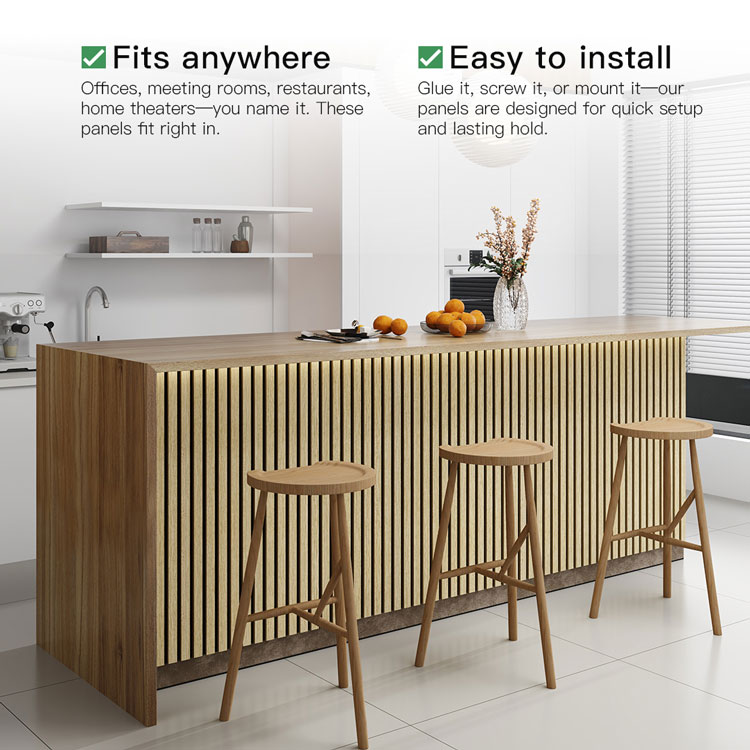
  • Wall cladding
  • Ceiling decoration
  • Partition walls
  • Decorative room dividers
  • Integrated furniture design

This flexibility allows architects and designers to fully integrate acoustic treatment into the overall design concept.


Why Wood Slat Acoustic Panels Are So Popular

Among all acoustic solutions, wood slat acoustic panels are currently one of the most popular options in modern interiors.

Their layered construction typically includes:

  • Decorative wood slats
  • Acoustic felt backing
  • Precision spacing for sound absorption

They offer the perfect combination of:

  • Acoustic functionality
  • Premium appearance
  • Architectural sophistication

This makes them a preferred choice for projects requiring both style and performance.


Guangdong Leeyin Acoustics: Your Professional Acoustic Panel Partner

At Guangdong Leeyin Acoustics, we specialize in producing high-quality wood slat wall panels and acoustic panels for global markets.

As one of China’s leading exporters of wood slat acoustic panels, we provide reliable, modern acoustic solutions trusted by clients worldwide.

Our Core Strengths

  • 20,000 square meters of modern production facilities
  • Advanced automated manufacturing equipment
  • Strict quality management in line with international standards
  • Strong large-scale production capabilities
  • Rich experience serving global distributors, designers, and contractors

We are committed to delivering products that combine:

  • Outstanding acoustic performance
  • Elegant visual design
  • Long-term durability
  • Consistent manufacturing quality


Our acoustic panel systems are widely used in residential, commercial, and hospitality projects around the world.

Acoustic panels play a crucial role in controlling:

  • Echo
  • Reverberation
  • Background noise
  • Speech clarity

Poor-quality panels may only provide minimal improvement, while high-end panels can significantly enhance both sound quality and overall environment comfort.

Leading Acoustic Wood Slat Panel Manufacturer & Distributor


1. Material Quality and Composition

Cheap Acoustic Panels

Low-cost panels are often made from:

  • Low-density foam
  • Inferior fiber materials
  • Thin or inconsistent cores

These materials may degrade quickly and offer limited sound absorption, especially at certain frequencies.

High-End Acoustic Panels

Premium panels use carefully selected materials such as:

  • High-density polyester fiber
  • Mineral wool or engineered acoustic cores
  • High-quality MDF and wood veneers (for wood slat panels)

These materials are designed to deliver consistent and effective sound absorption across a wide frequency range.

👉 Key Difference: Higher density and better material composition result in superior acoustic performance.


2. Acoustic Performance and Testing

Cheap Panels

Many low-cost panels are not professionally tested, meaning:

  • No verified acoustic ratings (like NRC)
  • Inconsistent performance
  • Limited effectiveness in real environments

High-End Panels

Premium acoustic panels are:

  • Engineered for specific acoustic performance
  • Tested under standardized conditions
  • Designed to optimize sound absorption

They provide reliable results in both residential and commercial applications.

👉 Key Difference: High-end panels offer proven, measurable acoustic performance.


3. Design and Aesthetic Appeal

Cheap Panels

Budget panels often focus only on function, resulting in:

  • Basic or outdated designs
  • Limited color and finish options
  • Industrial or unattractive appearance

High-End Panels

Modern high-end panels, especially wood slat acoustic panels, are designed as architectural features.

They offer:

  • Natural wood finishes
  • Clean, modern lines
  • Customizable styles
  • Seamless integration into interior design

👉 Key Difference: Premium panels enhance both acoustics and visual design.


4. Durability and Lifespan

Cheap Panels

Low-quality panels may:

  • Lose shape over time
  • Sag or deform
  • Fade or wear quickly
  • Be sensitive to moisture

High-End Panels

High-end products are built for longevity, featuring:

  • Stable structural design
  • Durable surface finishes
  • Resistance to wear and environmental factors

👉 Key Difference: Premium panels provide long-term reliability and performance.


5. Fire Safety and Environmental Standards

Cheap Panels

Many low-cost panels do not meet safety standards, which can pose risks in:

  • Commercial buildings
  • Public spaces
  • Hospitality environments

High-End Panels

Professional acoustic panels are often:

  • Fire-resistant
  • Low-emission (eco-friendly)
  • Certified according to international standards

👉 Key Difference: High-end panels ensure safety, compliance, and sustainability.


6. Installation and Precision Manufacturing

Cheap Panels

Budget options may suffer from:

  • Inconsistent dimensions
  • Poor edge finishing
  • Difficult installation

High-End Panels

Premium panels are manufactured with precision, offering:

  • Accurate sizing
  • Easy installation systems
  • Clean joints and alignment

👉 Key Difference: Better manufacturing leads to faster installation and a more professional finish.


7. Overall Value vs Initial Cost

While cheap acoustic panels may seem cost-effective upfront, they often require:

  • Replacement over time
  • Additional panels to achieve desired results
  • Compromises in design and performance

High-end acoustic panels, although more expensive initially, provide:

  • Better performance
  • Longer lifespan
  • Higher aesthetic value
  • Greater return on investment

👉 Key Difference: Premium panels deliver better long-term value.


Why Wood Slat Acoustic Panels Represent High-End Solutions

Among premium options, wood slat acoustic panels stand out as a top-tier solution.

Their structure typically includes:

  • Decorative wood slats
  • Acoustic felt backing
  • Engineered spacing for optimized sound absorption

They combine:

  • High-performance acoustics
  • Elegant architectural design
  • Versatility in application

This makes them ideal for:

  • Modern homes
  • Offices
  • Hotels
  • Commercial spaces

Guangdong Leeyin Acoustics: Delivering High-End Acoustic Solutions

At Guangdong Leeyin Acoustics, we specialize in manufacturing premium wood slat wall panels and acoustic panels designed for global markets.

As a leading exporter in China’s wood slat acoustic panel industry, we are committed to delivering high-quality products that meet international standards.

Our Advantages

  • 20,000㎡ modern production facility
  • Advanced automated manufacturing technology
  • Strict quality management systems
  • Strong large-scale production capacity
  • Extensive global export experience

We focus on producing acoustic panels that offer:

  • Reliable acoustic performance
  • Superior craftsmanship
  • Modern aesthetic design
  • Long-lasting durability


Our products are widely used in residential, commercial, and hospitality projects worldwide.

What Can and Can't They Do?

Neighbor noise is one of the most common complaints in apartments, townhouses, and shared office buildings. Many people choose acoustic panels as a quick solution—but do they really block neighbor noise?

High-Quality Acoustic Wood Slat Panels

In short: Acoustic panels help, but they don't completely block sound transmission.


To understand why, it's crucial to understand the difference between sound absorption and sound insulation.


Acoustic Panels vs. Sound Insulation: Key Differences


This is where most misconceptions originate.


Acoustic Panels


Reduce echoes, reverberation, and reflected sound


Improve indoor acoustic clarity


Absorb mid-to-high frequency sounds


Doesn't significantly increase wall mass


Sound Insulation Materials


Prevent sound from passing through walls, floors, and ceilings


Requires a certain level of mass, airtight structure, and vibration isolation


Usually requires structural modifications to the walls


Acoustic panels are designed to control sound, not completely block it.


So, do acoustic panels really reduce neighbor noise?


Yes—but the effect is indirect. Sound-absorbing panels can:


Reduce the perceived intensity of indoor noise


Absorb reflected sound, thus reducing noise from neighbors


Improve overall acoustic comfort


Reduce noise from next door, television, and music


However, they cannot completely prevent sound from penetrating shared walls.


Why is neighbor noise so easily transmitted?


Neighbor noise typically enters a room through:


Shared walls


Structural vibrations


Gap around outlets, doors, and ceilings


Thin drywall structures


Because sound travels as vibrations, blocking sound requires a large, airtight barrier, not just absorption.


How Wood Strip Sound-Absorbing Panels Can Help Improve Sound Insulation in Apartments


While sound-absorbing panels are not a complete soundproofing solution, wood strip sound-absorbing wall panels offer many practical advantages for shared living spaces.


Advantages include:


Absorbing reflected noise entering the room


Reducing booming sounds and harsh echoes


Improving speech clarity in home office environments


Creating a calmer, quieter listening environment


When installed on shared walls, they help control indoor sound energy, making neighbor noise less bothersome.


Optimal installation locations for reducing neighbor noise


For best results:


Install the sound-absorbing panels on shared walls


Cover the first reflecting area near seating or beds


Use sound-absorbing panels with high-density sound-absorbing backing


Coordinate with soft furnishings such as curtains and carpets


While this won't completely eliminate noise, it can significantly improve comfort.


When you need more than just sound-absorbing panels


If neighbor noise is severe, sound-absorbing panels should be used as part of a multi-layered soundproofing approach, including:


Sealing wall gaps and electrical outlets


Adding drywall or soundproofing materials


Using soundproof curtains or door seals


Combining sound-absorbing materials with high-density soundproofing materials


Sound-absorbing panels work best when used in conjunction with basic soundproofing measures.


Why is the quality of sound-absorbing panels important?


Not all sound-absorbing panels perform the same way.


Our company's wood strip sound-absorbing panels use the following materials:


High-density medium-density fiberboard (MDF) strips


Precisely cut sound-absorbing slits


High-quality PET sound-absorbing backing


Stable bonding process ensures long-term performance


This guarantees consistent sound absorption in residential and commercial applications.

If you're planning to create a modern home theater or stylish living room, you might be wondering:


"Can I mount the TV directly on a sound-absorbing wall?"

Customizable Acoustic Wood Slat Panels Supplier

In short: It's not recommended.


Here are the reasons and the correct installation method.


❌ Why you shouldn't mount a TV directly on a sound-absorbing panel


Sound-absorbing panels—especially felt-backed wooden slats—are for absorbing sound, not for bearing weight.


Mounting a TV directly on acoustic panels may result in:


Insufficient structural support


Risk of panel damage


Unsafe installation


Degraded acoustic performance


✔ Correct way to install a TV using acoustic panels


You can perfectly combine a TV wall mount with acoustic panels—simply follow these steps:


1. First, mount the TV bracket on a solid wall.


The TV should be securely fixed to the following wall surfaces:


Concrete wall


Brick wall


Use suitable anchors to secure to drywall


Wooden frame


2. Install the acoustic panels around the bracket.


Leeyin's wood slat acoustic panels are precisely cut to perfectly fit the wall mount, providing a seamless, high-quality look.


3. Hide cables behind the panel.


Our panels have small gaps between the wood slats and felt backing—perfect for concealing cable management.

What Exactly Does Acoustic Panel Do? A Beginner's Guide


If you've ever experienced echoes, noise build-up, or unclear sound in a room, then you've encountered an acoustic challenge. With the growing interest in home studios, modern offices, and high-quality interior design, more and more people are starting to wonder about a simple question: What exactly does an acoustic panel do?

Premium Acoustic Wood Slat Panels Manufacturer

In this beginner's guide, we'll explain how acoustic panels work, what problems they can solve, and how to choose the right solution for your space, from the perspective of a professional acoustic panel manufacturer.


What is an Acoustic Panel?


Acoustic panels are specially designed engineered products designed to control indoor sound. They help reduce echoes, reverberation, and excessive noise reflection by absorbing sound waves, especially mid-to-high frequencies.


Unlike exposed walls, glass, or concrete surfaces that reflect sound, acoustic panels convert sound energy into heat energy through porous materials, such as:


Sound-absorbing PET fibers


High-density MDF boards with felt backing


Mineral wool or sound-absorbing core materials


These materials are commonly used in wood slat wall panels, fabric panels, and decorative acoustic systems.


What are the actual functions of acoustic panels?


1. Reduce Echoes and Reverberation


One of the main functions of acoustic panels is to reduce reverberation time. In an untreated room, sound reflects repeatedly between hard surfaces, creating echoes and a muddy sound. Acoustic panels absorb these reflections, creating a clearer, more controlled acoustic environment.


This is especially important in the following settings:


Home theaters


Music studios


Meeting rooms


Dining rooms and open-plan offices


2. Improve Sound Clarity


By reducing unwanted reflections, acoustic panels improve speech clarity and audio detail. Conversations are easier to understand, music sounds more balanced, and auditory fatigue is reduced.


This is why acoustic panels are widely used in:


Recording studios


Podcast recording studios


Classrooms and training centers


Business meeting spaces


3. Enhance Acoustic Comfort (Not Complete Soundproofing)


People often mistakenly believe that acoustic panels completely block noise from entering and leaving a room. In reality, acoustic panels are designed to absorb sound, not completely isolate it.


They help to:


Reduce indoor noise buildup


Minimize sound reflections


Improve indoor acoustics


To achieve complete sound insulation, additional construction methods such as massing, vibration damping, and sealing are required. However, acoustic panels are a cost-effective and essential first step in most acoustic treatments.


Where are acoustic panels commonly found?


Acoustic panels are suitable for residential and commercial spaces, including:


Living rooms and home theaters


Bedrooms and apartments


Offices and coworking spaces


Hotels, lobbies, and restaurants


Recording studios, rehearsal rooms, and broadcasting studios


In modern interior design, wood slat acoustic wall panels are favored for their combination of sound absorption and modern aesthetics.


Why are wood slat acoustic panels so popular?


Wood slat wall panels achieve a unique balance between design and performance. The strip-shaped medium-density fiberboard (MDF) surface diffuses sound, while the sound-absorbing felt backing absorbs noise, making it both practical and beautiful.


Advantages include:


Highly efficient sound absorption


Warm and modern appearance


Easy wall or ceiling installation


Customizable colors, finishes, and sizes


Specialized manufacturing processes ensure superior quality


The performance of sound-absorbing panels depends heavily on material quality, density, and manufacturing precision.

If you're planning to create a modern home theater or stylish living room, you might be wondering:


"Can I mount the TV directly on a sound-absorbing wall?"


In short: It's not recommended.


Here are the reasons and the correct installation method.

Top Supplier of Acoustic Wood Slat Panels – Factory Direct

❌ Why you shouldn't mount a TV directly on a sound-absorbing panel


Sound-absorbing panels—especially felt-backed wooden slats—are for absorbing sound, not for bearing weight.


Mounting a TV directly on acoustic panels may result in:


Insufficient structural support


Risk of panel damage


Unsafe installation


Degraded acoustic performance


✔ Correct way to install a TV using acoustic panels


You can perfectly combine a TV wall mount with acoustic panels—simply follow these steps:


1. First, mount the TV bracket on a solid wall.


The TV should be securely fixed to the following wall surfaces:


Concrete wall


Brick wall


Use suitable anchors to secure to drywall


Wooden frame


2. Install the acoustic panels around the bracket.


Leeyin's wood slat acoustic panels are precisely cut to perfectly fit the wall mount, providing a seamless, high-quality look.


3. Hide cables behind the panel.


Our panels have small gaps between the wood slats and felt backing—perfect for concealing cable management.

Acoustic panels aren't just for recording studios—they're a powerful upgrade for any home looking to reduce noise, improve sound quality, and enhance interior design. Here are some of the best ways to use acoustic panels in your home!

Top Manufacturer and Wholesaler of Acoustic Wood Slat Panels

🛋 1. Living Room


Reduce echoes, make conversations clearer, and enhance the sound of your home theater system.


Liyin wood strip acoustic panels combine aesthetics and performance to create a comfortable and modern living space.


🎶 2. Home Theater or Media Room


Acoustic panels absorb excess reflected sound, delivering cinematic-quality clarity.


Our high-density MDF and PET felt construction provides deep sound absorption while maintaining a premium aesthetic.


🧑‍💻 3. Home Office


Working from home? Benefits of Acoustic Panels:


Reduces interference


Improves call clarity


Creates a professional, sophisticated background


Perfect for video conferencing and a quiet, efficient work environment.


🎧 4. Bedroom


Improves sleep quality by reducing external noise and suppressing echoes.


Liyin Acoustic Panels create a calm and quiet atmosphere, ideal for relaxation.


🎤 5. DIY Music Room or Hobby Area


Whether you're playing guitar or recording a podcast, acoustic panels can:


Improve room acoustics


Reduce noise propagation


Enhance your auditory experience


Liyin Acoustic Panels are favored by musicians, content creators, and enthusiasts worldwide.


👶 6. Children's Room and Play Area


Acoustic panels help soften the noise of playtime while adding a safe, modern design element to the room.

Neighbor noise can be annoying—footsteps, TV, conversations, even loud music. If you want to effectively insulate, reduce, or block these noises, the key is to use the right acoustic and soundproofing materials.


✔ 1. Add Sound-Absorbing Panels

Leading Acoustic Wood Slat Panel Distributor

Sound-absorbing panels help reduce echoes and control sound reflections within the room, thus reducing the impact of neighbor noise.


Liyin offers:


Wooden Strip Sound-Absorbing Panels (PET + MDF Core)


High-Density PET Sound-Absorbing Panels


Decorative Acoustic Solutions for Homes and Offices


✔ 2. Increase Wall Weight to Block Noise


To insulate or block sound, you need heavier materials.


Liyin's high-density MDF structure offers stronger sound insulation than standard MDF, helping to reduce sound propagation through shared walls.


✔ 3. Leave Air Gaps or Use Framing Strips


Leaving a small gap between the wall and the soundproofing panels can improve sound insulation.


Our soundproofing panels can be installed using either joists or clips, enhancing sound insulation without altering the interior style.


✔ 4. Sealing Gaps and Weak Points


Even small gaps can allow noise to penetrate. Seal the following areas:


Sockets


Door frames


Baseboards


Window edges


For even better sealing, use with Liyin soundproofing wall panels.


🪵 Why Choose Wood Slat Acoustic Panels?

At Guangdong Leeyin Acoustics, our wood slat acoustic panels are designed to offer both style and performance.

✔ Superior sound absorption with felt backing.
✔ Natural wood finish for modern, elegant interiors.
✔ Flexible coverage—use as partial wall designs or full feature walls.
✔ Eco-friendly and durable materials.

Our panels are widely used in homes, offices, studios, restaurants, and theaters, trusted by clients worldwide for their acoustic and visual benefits.


🏭 About Guangdong Leeyin Acoustics

As a leading manufacturer and exporter of wood slat wall panels and acoustic panels in China, Guangdong Leeyin Acoustics delivers world-class acoustic solutions.

  • 20,000㎡ modern factory with advanced technology.

  • International quality management standards for every product.

  • Strong global export presence in the acoustic panel industry.


Our mission is to provide clients with high-quality, cost-effective, and aesthetically pleasing soundproofing solutions.

keyboard_arrow_up