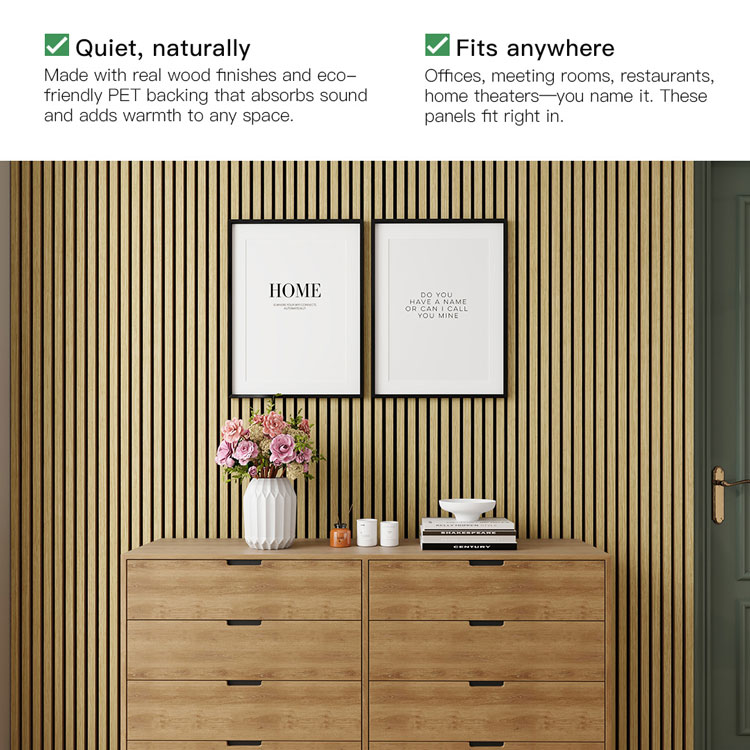
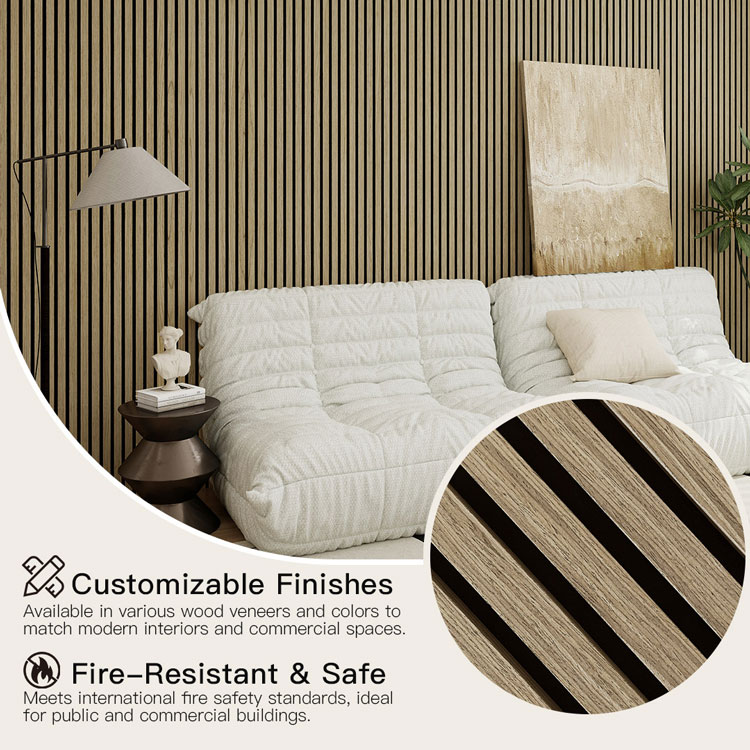
Open-plan spaces have become one of the most popular design trends in modern architecture. From open offices and coworking areas to restaurants, hotel lobbies, and large living rooms, open layouts create a clean, spacious, and modern look.

However, many people quickly realize one major downside:

Open-plan spaces are noisy.

If you’re wondering “Can acoustic panels reduce noise in open-plan spaces?”, the answer is yes—but it depends on the type of noise and how the panels are installed.

In this article, we’ll explain how acoustic panels work in open areas, what kind of noise they can reduce, and how wood slat acoustic panels can create a quieter, more comfortable environment.
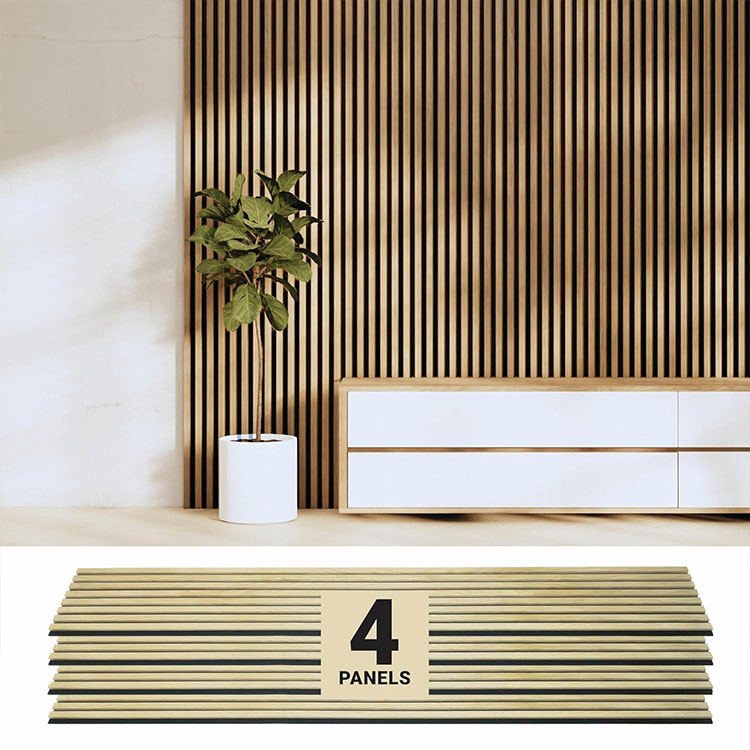
High-Quality Supplier Acoustic Wood Slat Panels


Why Are Open-Plan Spaces So Noisy?

Open-plan layouts typically have fewer walls, fewer partitions, and more hard surfaces. This creates the perfect environment for sound to travel freely.

Common noise problems in open-plan spaces include:

  • loud conversations carrying across the room

  • phone calls disturbing nearby workers

  • footsteps echoing through large areas

  • meeting room sound leaking into work zones

  • general “background buzz” that never disappears

  • poor speech clarity and listening fatigue

The real issue is not always volume. Often, the problem is sound reflection and reverberation.


Can Acoustic Panels Actually Reduce Noise?

Yes—acoustic panels reduce noise perception by controlling sound reflections and absorbing sound energy.

But it’s important to understand one key difference:

Acoustic Panels Reduce Echo, Not True Soundproofing

Acoustic panels are designed for sound absorption, not complete sound blocking.

They help reduce:

✅ echo
✅ reverberation
✅ speech noise buildup
✅ overall noise level inside the space
✅ distractions caused by reflected sound

They do NOT fully block:

❌ noise coming from outside the room
❌ sound traveling through walls, floors, or ceilings

So in open-plan environments, acoustic panels are extremely effective because the main problem is usually reflected sound, not sound transmission through walls.


How Acoustic Panels Reduce Noise in Open-Plan Spaces

1. They Absorb Reflected Sound Waves

In large open rooms, sound waves bounce repeatedly off walls, ceilings, glass, floors, and furniture. This creates a “noise cloud” that builds up over time.

Acoustic panels absorb these reflections, preventing sound from repeatedly bouncing around.

Result: the room feels quieter and more controlled.


2. They Reduce Reverberation Time (RT60)

Reverberation time is the time it takes for sound to fade after the source stops.

Open-plan offices and commercial spaces often have high ceilings and hard surfaces, which leads to long RT60.

Acoustic panels lower reverberation time, which reduces the “constant noise” effect.

Result: less background noise and improved comfort.


3. They Improve Speech Clarity

One major complaint in open-plan spaces is:

“I can hear people talking, but I can’t focus.”

That’s because reverberation makes speech spread across the room and overlap. When acoustic panels absorb mid and high frequencies, conversations become clearer and less chaotic.

Result: speech becomes more understandable nearby, while distant voices become less disturbing.


4. They Reduce Listening Fatigue and Stress

In noisy open-plan environments, the brain works harder to filter unwanted sounds. Over time, this causes fatigue, stress, and reduced productivity.

Acoustic treatment helps create a calmer sound environment, making it easier to work, relax, or communicate.


What Types of Noise Can Acoustic Panels Reduce?

Acoustic panels are best for controlling:

✔ Human Speech Noise

Speech is the biggest noise issue in open offices, restaurants, and coworking spaces. Acoustic panels absorb speech frequencies, making the space feel less overwhelming.

✔ Echo and “Hollow Room Sound”

Large rooms often sound empty and harsh. Panels reduce the “boomy” or “shouting” effect.

✔ General Background Noise

In busy environments, panels lower the overall sound buildup, which improves comfort.


What Noise Can Acoustic Panels NOT Reduce?

Acoustic panels are not designed to solve:

✘ Impact Noise (Footsteps Above)

Footsteps from upstairs require soundproofing solutions like underlayment, floating floors, or ceiling isolation systems.

✘ Mechanical Noise (HVAC, Machines)

Panels help reduce reflections but cannot eliminate noise generated by machines. This may require noise barriers or specialized enclosures.

✘ Full Privacy Between Areas

If you need private meeting rooms, you will need partitions, sealed walls, and soundproof doors.

However, acoustic panels can still improve privacy by reducing sound reflections.


Are Acoustic Panels Worth It for Open-Plan Offices?

Yes. Open-plan offices are one of the most common applications for acoustic panels because they improve:

  • productivity

  • employee comfort

  • meeting quality

  • phone call clarity

  • workplace satisfaction

Many companies invest in open office design for collaboration, but without acoustic treatment, the space often becomes inefficient.

Installing acoustic panels is one of the most cost-effective upgrades for open office noise control.


Best Acoustic Solutions for Open-Plan Spaces

1. Ceiling Acoustic Panels (Highly Recommended)

In open-plan areas, ceilings are usually the largest reflective surface. Installing acoustic panels on the ceiling can significantly reduce echo.

Ceiling treatment is often the fastest way to improve acoustics in large spaces.


2. Wall Acoustic Panels for Reflection Control

Wall panels are effective when installed at:

  • first reflection points

  • large empty walls

  • behind seating zones

  • near meeting areas


3. Wood Slat Acoustic Panels for Design + Performance

For modern interiors, wood slat acoustic panels are one of the most popular choices.

They offer:

  • high-end architectural aesthetics

  • excellent echo reduction

  • improved speech clarity

  • durability for commercial spaces

  • easy installation

Wood slat panels are especially suitable for:

  • open-plan offices

  • coworking spaces

  • hotel lobbies

  • cafés and restaurants

  • shopping malls

  • reception areas


Are Wood Slat Acoustic Panels Effective in Open Spaces?

Yes. Wood slat acoustic panels are highly effective for open-plan noise control when properly designed.

They work through a combination of:

  • wood slats that help diffuse sound reflections

  • acoustic felt backing that absorbs sound energy

  • optional mineral wool or insulation behind panels for enhanced performance

This makes them an excellent solution for large commercial interiors that require both acoustic performance and visual appeal.


Where Should Acoustic Panels Be Placed in Open-Plan Spaces?

For best results, panels should be installed strategically rather than randomly.

Recommended Areas

  • ceilings above workstations

  • walls facing each other (to reduce sound bouncing)

  • behind reception desks

  • near collaborative zones

  • around meeting corners

  • above dining tables in restaurants

  • near hallways and open corridors

A combination of ceiling and wall treatment typically produces the best acoustic improvement.


How Many Acoustic Panels Are Needed for an Open-Plan Area?

There is no fixed number, but for open-plan spaces, many acoustic designers recommend treating:

  • 20%–40% of total surface area (walls + ceiling)

In large open offices with high ceilings and glass walls, coverage may need to be higher.

The goal is to reduce reverberation without making the room feel acoustically “dead.”


Acoustic Panels vs Soundproofing: Which Is Better for Open Spaces?

For open-plan environments, acoustic panels are usually more practical than soundproofing.

Acoustic Panels (Best Choice for Open-Plan)

  • reduce echo and noise buildup

  • improve comfort and speech clarity

  • cost-effective

  • easy installation

  • modern design options

Soundproofing (More Complex)

  • blocks sound transmission

  • requires structural construction

  • expensive and time-consuming

  • not always possible in existing buildings

That’s why acoustic panels are widely used in commercial open spaces.


Why Choose Guangdong Leeyin Acoustics for Acoustic Panels?

At Guangdong Leeyin Acoustics, we specialize in manufacturing high-quality wood slat wall panels and acoustic panels for global projects.

As one of China’s leading exporters of wood slat acoustic panels, we support importers, wholesalers, interior contractors, and project developers with stable production and consistent quality.

Our Manufacturing Advantages

  • 20,000㎡ modern factory

  • strong production capacity for large-scale commercial orders

  • strict quality management based on international standards

  • professional export packaging and logistics support

  • customizable finishes, veneers, sizes, and felt backing colors


Our wood slat acoustic panels are designed to meet the needs of modern interiors where both aesthetics and acoustic performance matter.
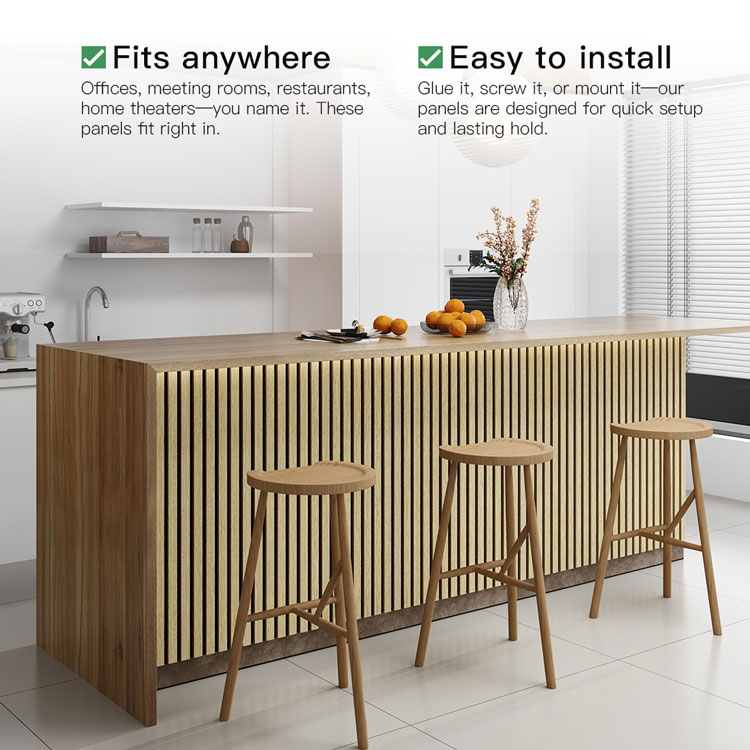
Creating a high-quality home studio is not just about having the right microphone or speakers—it’s also about achieving the right acoustic environment. Even the best equipment can underperform in a room with poor acoustics.

This is where acoustic panels come in. They help control sound reflections, reduce echo, and improve recording and mixing accuracy. But with so many options available, many users ask:

How do you choose the right acoustic panels for a home studio?

In this guide, we’ll walk you through everything you need to know to make the right choice—while ensuring optimal performance and a professional-looking space.

High-Quality Supplier Acoustic Wood Slat Panels


Why Acoustic Panels Are Essential for Home Studios

Home studios are often set up in bedrooms, offices, or small rooms that were not designed for audio production. These spaces typically have:

  • Hard walls and ceilings
  • Parallel surfaces
  • Limited sound treatment

This leads to:

  • Echo and reverberation
  • Sound coloration
  • Poor recording clarity
  • Inaccurate monitoring

Acoustic panels help absorb unwanted reflections, allowing you to hear and record clean, accurate sound.


1. Understand Your Acoustic Goals

Before choosing panels, define what you want to achieve.

For Recording:

  • Reduce echo and background reflections
  • Improve vocal clarity

For Mixing:

  • Achieve accurate sound monitoring
  • Reduce frequency imbalances

For General Use:

  • Improve overall room comfort
  • Minimize noise distractions

Your goal will influence the type, thickness, and placement of acoustic panels.


2. Choose the Right Material

The material of the panel plays a major role in its performance.

Common Options:

  • Foam Panels
    Affordable but limited in performance, especially for mid-low frequencies.
  • Polyester Fiber Panels
    Durable, eco-friendly, and widely used for balanced sound absorption.
  • Mineral Wool Panels
    Excellent absorption but may require proper sealing and handling.
  • Wood Slat Acoustic Panels
    Combine acoustic absorption with modern design, ideal for users who want both performance and aesthetics.

👉 For home studios, high-density materials are recommended for better sound control.


3. Consider Panel Thickness and Density

Thickness directly affects how well panels absorb sound.

  • 25–50mm (1–2 inches): Good for high frequencies
  • 50–75mm (2–3 inches): Balanced performance
  • 75mm+ (3 inches and above): Better for low frequencies

Higher density panels provide more consistent absorption across frequencies.

👉 For most home studios, 50mm–75mm panels are a great starting point.


4. Focus on Key Placement Areas

Even the best panels won’t work effectively if placed incorrectly.

Important Placement Zones:

  • First reflection points (side walls)
  • Behind studio monitors
  • Rear wall
  • Ceiling (above listening position)

Strategic placement ensures maximum acoustic improvement with fewer panels.


5. Balance Absorption and Design

A common mistake is over-treating a room, making it sound “too dead.”

Instead, aim for a balance between:

  • Absorption (acoustic panels)
  • Reflection (natural room surfaces)

Modern solutions like wood slat acoustic panels are ideal because they offer:

  • Controlled sound absorption
  • Partial diffusion
  • Aesthetic enhancement

This creates a more natural and professional sound environment.


6. Consider Aesthetic Integration

Your home studio is also part of your living space, so design matters.

Acoustic panels are now available in:

  • Different colors
  • Fabric finishes
  • Wood textures
  • Custom patterns

Wood slat panels, in particular, are highly popular for home studios because they provide:

  • A modern, professional look
  • Warm natural textures
  • A studio-grade appearance

7. Evaluate Installation and Flexibility

Choose panels that are easy to install and adjust.

Options include:

  • Wall-mounted systems
  • Adhesive installation (no drilling)
  • Modular panels for flexible layouts

This is especially important for renters or users who frequently upgrade their setup.


8. Prioritize Quality Over Price

While budget options may seem attractive, low-quality panels often result in:

  • Poor sound absorption
  • Short lifespan
  • Inconsistent performance

Investing in high-quality acoustic panels ensures:

  • Better recording results
  • Long-term durability
  • Improved studio experience

Why Wood Slat Acoustic Panels Are Ideal for Home Studios

Among all options, wood slat acoustic panels are becoming increasingly popular in home studio design.

They offer:

  • Effective sound absorption
  • Balanced acoustic performance
  • Premium visual appeal
  • Multi-functional design (acoustic + decorative)

They are perfect for creators who want a professional studio look with high acoustic performance.


Guangdong Leeyin Acoustics: Your Trusted Acoustic Panel Manufacturer

At Guangdong Leeyin Acoustics, we specialize in manufacturing high-quality wood slat wall panels and acoustic panels for global markets.

As a leading exporter of wood slat acoustic panels in China, we provide reliable solutions for home studios, commercial spaces, and architectural projects.

Our Advantages

  • 20,000㎡ modern production facility
  • Advanced automated manufacturing technology
  • Strict quality management aligned with international standards
  • Strong production capacity for bulk and custom orders
  • Extensive global export experience

We are committed to delivering acoustic panels that combine:

  • Excellent sound absorption
  • Modern design aesthetics
  • Long-lasting durability


Our products help customers create professional-grade acoustic environments with stylish interiors.

Creating a comfortable acoustic environment is essential for many modern spaces, including offices, restaurants, recording studios, home theaters, and commercial interiors. While acoustic panels are one of the most effective tools for reducing echo and improving sound clarity, the best results are often achieved when they are combined with other sound treatment solutions.

In this article, we will explore how to combine acoustic panels with other sound treatments to create a balanced acoustic environment and achieve optimal sound performance.

Factory Direct Acoustic Wood Slat Panels


Understanding the Role of Acoustic Panels

Acoustic panels are designed to absorb sound reflections that bounce off hard surfaces like walls, ceilings, and floors. When sound waves strike these panels, the porous materials inside convert sound energy into small amounts of heat, reducing echo and reverberation.

Acoustic panels are especially effective at controlling mid- and high-frequency sounds, such as:

  • Speech

  • Office noise

  • Music reflections

  • Background chatter

However, in larger or more complex spaces, acoustic panels alone may not fully solve all acoustic problems. That is why combining them with other sound treatments can significantly improve results.


Why Combining Multiple Acoustic Solutions Matters

Sound behaves differently depending on room size, materials, and layout. Some surfaces reflect sound, while others absorb or diffuse it.

Using a combination of acoustic treatments helps control:

  • Echo and reverberation

  • Bass buildup

  • Sound diffusion and balance

  • Speech clarity and listening comfort

A well-designed acoustic system typically includes absorption, diffusion, and sometimes sound isolation elements working together.


1. Combine Acoustic Panels with Bass Traps

One of the most common acoustic challenges is low-frequency buildup, especially in corners of rooms.

Acoustic panels mainly absorb mid- and high-frequency sounds, while bass traps are specifically designed to absorb low-frequency energy.

How They Work Together

  • Acoustic panels reduce echo and reflections on walls.

  • Bass traps absorb deep bass frequencies that accumulate in room corners.

Best Placement

  • Install acoustic panels on walls and ceilings.

  • Place bass traps in vertical corners or ceiling corners where bass energy is strongest.

This combination is especially effective for home theaters, recording studios, and music rooms.


2. Combine Acoustic Panels with Acoustic Ceilings

Ceilings are often one of the largest reflective surfaces in a room, yet they are frequently overlooked when designing acoustic treatments.

Adding ceiling treatments such as acoustic ceiling panels or suspended baffles can significantly improve sound quality.

Benefits

  • Reduces vertical sound reflections

  • Improves speech clarity in large rooms

  • Enhances overall acoustic balance

Ideal Spaces

  • Offices

  • Conference rooms

  • Restaurants

  • Open-plan commercial environments

When wall panels and ceiling treatments are used together, they create a more complete acoustic solution.


3. Combine Acoustic Panels with Diffusers

While absorption materials remove sound reflections, too much absorption can sometimes make a room sound unnaturally dull or flat.

This is where acoustic diffusers play an important role.

Diffusers scatter sound waves in multiple directions, helping to maintain a natural and balanced acoustic environment.

Advantages of Diffusion

  • Preserves natural room ambiance

  • Prevents overly “dead” acoustics

  • Improves sound distribution

Diffusers are commonly used in:

  • Recording studios

  • Home theaters

  • Music rehearsal rooms

When combined with acoustic panels, they create a balanced acoustic design with both absorption and diffusion.


4. Combine Acoustic Panels with Soft Furnishings

Soft materials in a room can also contribute to sound absorption. Items such as:

  • Carpets

  • Rugs

  • Upholstered furniture

  • Thick curtains

can help reduce sound reflections and improve overall acoustic comfort.

While these materials cannot replace professional acoustic panels, they can complement them by providing additional sound absorption throughout the space.


5. Use Decorative Acoustic Wall Systems

Modern architectural design increasingly favors solutions that combine acoustic performance with visual aesthetics.

One of the most popular solutions today is wood slat acoustic panels, which integrate decorative wood elements with sound-absorbing materials.

These panels typically feature:

  • Natural wood veneer or MDF slats

  • Acoustic felt backing

  • Engineered spacing for improved sound absorption

This design allows them to enhance both the visual appearance and acoustic performance of interior spaces.

Wood slat acoustic panels are widely used in:

  • Offices and meeting rooms

  • Hotels and restaurants

  • Residential interiors

  • Retail spaces

  • Corporate reception areas


The Importance of Professional Acoustic Design

Every room has unique acoustic characteristics based on its size, shape, materials, and usage. A successful acoustic solution requires careful planning of:

  • Panel placement

  • Surface coverage

  • Material selection

  • Combination of acoustic treatments

By integrating acoustic panels with other sound treatments, it is possible to create a comfortable and balanced acoustic environment that supports communication, productivity, and enjoyment.


Guangdong Leeyin Acoustics: Expertise in Wood Slat Acoustic Panels

At Guangdong Leeyin Acoustics, we specialize in the manufacturing of high-quality wood slat wall panels and acoustic panels designed for modern architectural spaces.

As one of the leading exporters of wood slat acoustic panels in China, we provide products that combine excellent acoustic performance with elegant interior design.

Our strengths include:

  • 20,000 square meters of modern production facilities

  • Advanced manufacturing technology

  • Strict quality management following international standards

  • Strong production capacity to support large global orders

  • Extensive experience serving international distributors, designers, and contractors


Our wood slat acoustic panels are widely used in commercial buildings, residential interiors, offices, and hospitality projects, delivering both acoustic improvement and modern aesthetics.

1. Compliance with International Building Codes

Many countries require acoustic panels used in public and commercial spaces to meet strict fire standards, such as:

  • EN 13501-1 (Europe)

  • ASTM E84 / Class A (USA)

  • BS 476 (UK)

Fire-rated acoustic panels are often mandatory in:

  • Offices and coworking spaces

  • Hotels and hospitality projects

  • Schools and universities

  • Cinemas, theaters, and studios

  • Shopping malls and airports

Choosing non-compliant panels can lead to project delays, failed inspections, or legal risks.

High-Quality Supplier Acoustic Wood Slat Panels


2. Enhanced Safety for Occupants

Acoustic panels cover large surface areas. In the event of a fire, low-quality materials can:

  • Ignite quickly

  • Spread flames rapidly

  • Produce toxic smoke

Fire-resistant acoustic panels help:

  • Slow down fire spread

  • Reduce smoke emission

  • Provide extra evacuation time

This makes them an essential component of responsible architectural and interior design.


3. Essential for Commercial & Public Projects

While residential users may prioritize aesthetics, commercial buyers focus on risk control. Architects, contractors, and developers increasingly demand:

  • Fire-retardant wood slat acoustic panels

  • Tested and certified acoustic materials

  • Full documentation for project approval

Fire resistance is no longer optional—it is a core purchasing criterion.


Fire Resistance in Wood Slat Acoustic Panels

Wood slat acoustic panels combine natural wood aesthetics with acoustic functionality. However, natural wood must be properly treated to meet fire standards.

Professional manufacturers achieve this by:

  • Using fire-retardant MDF or engineered wood slats

  • Applying fire-resistant surface treatments

  • Pairing wood slats with Class B or Class A polyester fiber acoustic backing

When engineered correctly, wood slat panels can offer both excellent sound absorption and reliable fire performance.


How Guangdong Leeyin Acoustics Ensures Fire Safety

As a leading manufacturer and exporter of wood slat acoustic panels in China, Guangdong Leeyin Acoustics integrates fire resistance into every stage of production.

Our Manufacturing Advantages:

  • 20,000㎡ modern factory with large-scale production capacity

  • Advanced production lines for wood slat wall panels and acoustic panels

  • Strict quality control systems aligned with international standards

  • Fire-retardant material options tailored for different market requirements

What We Offer:

  • Fire-rated wood slat acoustic panels

  • Polyester fiber acoustic panels with tested fire performance

  • Customized solutions for commercial and export projects

  • Stable quality for large-volume international orders

Our products are widely exported and trusted by clients seeking safe, compliant, and high-performance acoustic solutions.


What Buyers Should Look for in Fire-Resistant Acoustic Panels

Before purchasing acoustic panels, always confirm:

  • Fire rating classification and test standards

  • Core material fire performance

  • Manufacturer’s quality management system

  • Export experience and certification support


Choosing a professional manufacturer ensures both acoustic effectiveness and safety compliance.

When choosing acoustic panels, many buyers focus on appearance, thickness, or price. However, one of the most critical yet often overlooked factors is material density.


So, how does density affect acoustic panel performance?

The short answer: density directly determines how effectively an acoustic panel absorbs, controls, and manages sound.


In this article, we explain the role of density in acoustic panels, how it impacts real-world performance, and why high-density materials are essential for professional-grade wood slat acoustic panels.

Acoustic Wood Slat Panels from Reliable Manufacturer

What Does “Density” Mean in Acoustic Panels?


Density refers to the mass of material per unit volume, usually measured in kg/m³.


In acoustic panels, density affects:


How much sound energy the panel can absorb


Which frequencies are absorbed (high, mid, or low)


Structural stability and durability


Long-term acoustic consistency


Different materials—such as MDF, PET felt, mineral wool, and fiberglass—perform very differently depending on their density.


Why Density Is Critical for Sound Absorption


Sound waves lose energy when they pass through or strike materials that create internal friction.

Higher-density materials generally provide:


Greater resistance to sound wave movement


More friction within the material structure


Better absorption of mid-to-low frequencies


However, density must be optimized, not simply maximized.


Too low → sound passes through

Too high → sound reflects instead of being absorbed


Professional acoustic panels strike a balanced density range.


Low-Density vs High-Density Acoustic Panels

Low-Density Panels (Poor Performance)


Examples:


Thin foam panels


Low-density PET felt


Soft decorative panels


Limitations:


Absorb mainly high frequencies


Weak control of echo and reverb


Ineffective against voice and music clarity issues


Shorter lifespan and deformation over time


These panels may reduce flutter echo but do not deliver professional acoustic results.


High-Density Panels (Professional Performance)


Examples:


High-density MDF wood slat panels


Mineral wool-backed acoustic panels


Engineered composite systems


Advantages:


Balanced absorption across frequencies


Improved speech intelligibility


Better music clarity


Stronger structural stability


Consistent long-term performance


This is why high-density materials are widely used in commercial, architectural, and premium residential projects.


How Density Works in Wood Slat Acoustic Panels


Wood slat acoustic panels are not a single material—they are a system.


A typical high-quality wood slat acoustic panel includes:


Natural wood veneer surface


High-density MDF slats


Acoustic backing (PET felt or mineral wool)


Each layer has a specific density function.


1. MDF Density and Acoustic Control


High-density MDF:


Provides structural rigidity


Helps diffuse reflected sound


Enhances mid-frequency control


Maintains precise slat spacing


Low-density MDF:


Warps more easily


Loses acoustic consistency


Reduces durability


Affects visual alignment


At Guangdong Leeyin Acoustics, we carefully select stable, high-density MDF to ensure consistent acoustic and structural performance.


2. Acoustic Backing Density Matters


The backing layer is responsible for absorbing sound energy.


Low-density backing → weak absorption


Optimized-density backing → strong absorption without reflection


Correct backing density improves:


Noise reduction


Echo control


Overall room comfort


This balance is essential for spaces like offices, studios, home theaters, and apartments.


Does Higher Density Always Mean Better Acoustic Performance?


Not always.


Extremely high-density solid materials (like concrete or solid wood) tend to reflect sound rather than absorb it.


Effective acoustic panels rely on:


Controlled density


Internal porosity


Layered construction


That’s why engineered acoustic panels outperform single-material solutions.


Density and Fire Safety, Sustainability, and Durability


Density also affects non-acoustic performance factors:


Fire Resistance


High-density MDF and treated acoustic backing improve fire ratings


Low-density foam often fails fire safety requirements


Environmental Performance


Proper density reduces material waste


High-quality MDF lowers emissions and improves lifespan


Certified raw materials meet international standards


Longevity


Dense panels resist sagging and deformation


Maintain acoustic performance over many years

When building a home theater, many people focus only on the screen, speakers, and amplifier, neglecting a crucial factor: the room's acoustic environment.

Acoustic Wood Slat Panels Supplier

So the question is:


Do acoustic panels really improve the sound quality of a home theater?


The answer is yes, and significantly. This article will explain how acoustic panels work in a home theater, their installation location, and why wooden slat acoustic panels are increasingly becoming the preferred solution in modern home theater designs.


Why Room Acoustics Are Crucial for Home Theaters


Even the most expensive audio equipment cannot perform at its best in a room with poor acoustics.


Common problems include:


Echoes and excessive reverberation


Muddled or booming bass


Unclear dialogue


Harsh high-frequency reflections


These problems are caused by sound waves reflecting off hard surfaces such as walls, ceilings, and floors.


How Acoustic Panels Improve Home Theater Sound


Acoustic panels are designed to absorb unwanted sound reflections, allowing you to hear the sound you should hear.


Key advantages of home theater acoustic panels:


✔ Clearer dialogue and vocals


✔ More accurate surround sound imaging


✔ Reduced echo and reverberation


✔ Better bass, midrange, and treble balance


✔ A more immersive movie and gaming experience


You'll get clearer, more controllable sound, not just more volume.


The difference between home theater acoustic panels and soundproofing


Understanding the difference is crucial:


Acoustic panels improve room sound quality


Soundproofing blocks sound from entering or leaving the room


For most home theaters, acoustic treatment is far more important than complete soundproofing, especially when the goal is a better listening experience rather than complete noise isolation.


Why wood slat acoustic panels are ideal for home theaters


Wood slat acoustic panels combine sound absorption, diffusion, and aesthetics, making them a perfect choice for home theaters.


Advantages of wooden acoustic panels:


Effectively absorbs mid-to-high frequency sounds


Aids in sound diffusion, creating a more natural sound field


Delivers a warm, sophisticated visual effect


Integrates perfectly with modern interior design


In home theaters, they are especially suitable for behind the TV, on side walls, and the rear wall.


Where should acoustic panels be installed in a home theater?


For best results, acoustic panels should be installed at the primary reflection points:


The side wall near the front speakers


The wall behind the TV or projector screen


The rear wall behind the seats


The ceiling (optional, for high-end configurations)


Clever installation placement can significantly improve sound quality without covering all surfaces.


How many acoustic panels does a home theater need?


There is no one-size-fits-all solution, but general principles are as follows:


Cover 20%–30% of the total wall area


Prioritize reflection points


Match wall panels with soft furnishings whenever possible


A balanced approach yields optimal performance and visual harmony.

For acoustic treatment, proper placement is just as important as the quality of the panels. Even the best acoustic panels won't perform to their full potential if improperly installed.


So, where should acoustic panels be placed for optimal results?

Customizable Acoustic Wood Slat Panels Supplier

The answer depends on how sound travels within a room—and understanding this propagation is key to achieving professional-grade acoustics.


The Importance of Acoustic Panel Placement


Sound travels in waves and reflects off hard surfaces such as walls, ceilings, and floors. These reflections cause:


Echoes and reverberation


Decreased speech intelligibility


Muffled music playback


Hearing fatigue


Acoustic panels work by absorbing reflected sound energy, not blocking it. Therefore, they must be placed where reflections occur most frequently.


The Most Important Placement Areas for Acoustic Panels


1. First Reflection Point (Side Wall)


The first reflection point is the location where sound emitted by a speaker is directly reflected back to the listener after hitting the wall.


Optimal Placement:


1. Walls to the left and right of the speakers


Ear-level (sitting height)


This is one of the most effective and important placements for improving sound clarity in home theaters, recording studios, and offices.


2. Front Wall (Behind the Speakers)


Placing acoustic panels on the wall behind the speakers helps to:


Reduce sound reflections back into the room


Improve stereo imaging


Enhance bass response


Wooden slat acoustic panels are particularly effective here, combining sound absorption with aesthetics.


3. Rear Wall (Behind the Listener)


The wall behind the listener often produces back reflections, resulting in echoes and muddy sound.


Recommended Uses:


Large acoustic panels


Wooden slat acoustic panels with PET backing


Partial or full coverage depending on room size


This installation method significantly improves overall listening comfort.


4. Ceiling Acoustic Panels (Ceiling Clouds)


The ceiling is often overlooked, but it is a major source of sound reflections.


Ceiling acoustic panels are best suited for the following locations:


Home studios


Meeting rooms


Home theaters


Open-plan offices


Installing acoustic panels directly above the listening or working area helps control vertical reflections.


5. Shared walls in apartments or offices


If you share a wall with a neighbor or adjacent room:


Install acoustic panels on the shared wall


Focus on absorbing mid-to-high frequency sounds


For best results, pair with soft furnishings


While acoustic panels don't completely block out sound, they significantly improve perceived noise levels.

Want to improve the acoustics of your room but don't have traditional acoustic panels on hand?


Here are some alternatives that can help reduce echoes and improve sound quality—although none of them can match the performance of professional acoustic panels.

Custom Solutions Acoustic Wood Slat Panels

✅ 1. Heavy Curtains


Thick fabrics help absorb mid-to-high frequency sounds.


Perfect for living rooms and bedrooms.


✅ 2. Rugs


Bare floors reflect sound. Laying down a soft rug can instantly reduce echoes.


✅ 3. Bookshelves Filled with Books


Bookshelves filled with books both diffuse and absorb sound—simple and effective.


✅ 4. Upholstered Furniture


Sofas, upholstered chairs, and cushions themselves absorb sound waves.


✅ 5. Homemade Foam Boards


While convenient, they are usually not dense enough and have poor fire resistance.

Yes—you can significantly reduce noise from your upstairs neighbor, especially footsteps and impact sounds like objects falling. While achieving 100% soundproofing without altering the structure is difficult, suitable sound-absorbing materials can significantly improve comfort and quietness.

Wholesale High-Quality Acoustic Wood Slat Panels for Sale

🎧 How to Effectively Soundproof Your Ceiling


Here are the most effective methods:


✔ 1. Add Sound-Absorbing Panels


High-density sound-absorbing panels help absorb reflected noise, reducing the sound you hear.


Our PET sound-absorbing panels and wood strip wall/ceiling panels combine sound absorption with aesthetic appeal.


✔ 2. Create a Freestanding Ceiling


Installing a suspended or floating ceiling helps block impact sounds.


Even better when used with soundproofing materials.


✔ 3. Increase Mass


Using high-density boards or layers of high-density materials helps block airborne noise.


✔ 4. Seal Gaps


Even the smallest gaps can allow sound to pass through. Proper sealing can improve overall performance.v

In short: They cannot completely block sound, but they can effectively reduce noise.


Doors are often the weakest link in a soundproofing system. Hollow cores, gaps, and thin surfaces allow sound to easily penetrate. Sound-absorbing panels can improve this, but only in certain areas.

Acoustic Wood Slat Panels from Reliable Manufacturer

🔊 What benefits do sound-absorbing panels bring to doors?


✔ Reduced echoes and sound reflections


Installing sound-absorbing panels on doors absorbs indoor sound, reducing noise that would otherwise be reflected onto the door.


✔ Improved privacy


By reducing internal reverberation, less sound reaches the door and leaks out.


✔ Quick, aesthetically pleasing, and convenient installation


Sound-absorbing panels—especially wood strip sound-absorbing panels with PET felt—instantly improve soundproofing comfort and aesthetics, even on doors.


🚫 Limitations of soundproofing panels


Soundproofing panels cannot block strong external noise that passes through the door.


To truly achieve sound insulation for your door, you may need:


Door seals


Bottom door seals


Solid door


Soundproofing materials


Combining these materials with soundproofing panels will yield even better results.

keyboard_arrow_up