When dealing with echo, reverberation, or general noise problems in a room, many people ask:
Should I install acoustic panels or just use heavy curtains?
Both options can improve room acoustics—but they serve different purposes and offer very different performance levels.
In this article, we’ll compare acoustic panels vs curtains, explain how each works, and help you decide which solution is better for offices, restaurants, commercial spaces, or home interiors.
Understanding the Problem: Echo vs Noise
Before comparing solutions, it’s important to clarify what kind of “noise” you are trying to solve.
Most indoor acoustic issues involve:
-
echo
-
reverberation
-
speech clarity problems
-
background noise buildup
-
“hollow” room sound
In open-plan offices, restaurants, conference rooms, and modern homes, the main issue is usually sound reflection, not soundproofing.
How Acoustic Panels Work
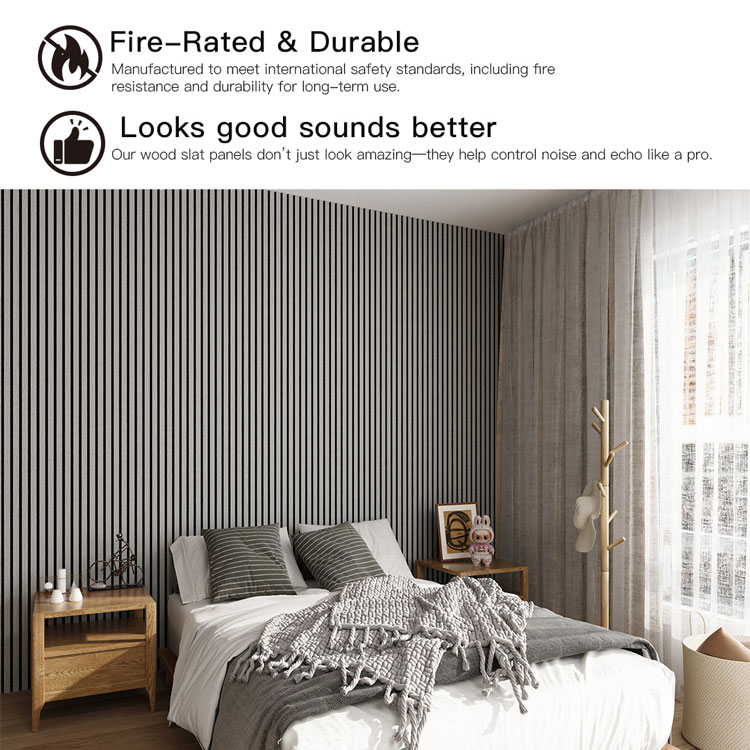
Acoustic panels are engineered materials designed to absorb sound waves and reduce reflections.
They typically consist of:
-
polyester fiber
-
mineral wool core
-
acoustic foam
-
wood slats with sound-absorbing felt backing
When sound waves hit these panels, the sound energy is absorbed instead of bouncing back into the room.
Benefits of Acoustic Panels
✅ Significant echo reduction
✅ Improved speech clarity
✅ Reduced reverberation time (RT60)
✅ Professional acoustic performance
✅ Clean and architectural design options
✅ Suitable for walls and ceilings
Acoustic panels are widely used in:
-
open-plan offices
-
meeting rooms
-
restaurants and cafés
-
hotels
-
classrooms
-
home theaters
How Curtains Work for Noise Control
Curtains, especially thick blackout or velvet curtains, can also absorb some sound.
They work by:
-
softening reflections near windows
-
absorbing high-frequency sound
-
reducing minor echo
However, curtains are not specifically engineered for acoustic performance.
Benefits of Curtains
✅ Simple and affordable
✅ Easy to install
✅ Improve window reflection
✅ Add decorative softness to a room
But they also have limitations.
Acoustic Panels vs Curtains: Performance Comparison
Let’s compare them directly.
1. Sound Absorption Performance
Acoustic Panels:
Designed specifically to absorb sound across mid and high frequencies. Some thicker panels also absorb low frequencies.
Curtains:
Mainly absorb high frequencies. Minimal impact on mid-to-low frequency reverberation.
👉 Winner: Acoustic Panels
2. Coverage Flexibility
Acoustic Panels:
Can be installed on walls and ceilings for targeted acoustic treatment.
Curtains:
Usually limited to windows or wall sections with curtain rails.
👉 Winner: Acoustic Panels
3. Speech Clarity Improvement
Acoustic Panels:
Significantly improve speech intelligibility by reducing reverberation.
Curtains:
Provide minor improvement only if large areas are covered.
👉 Winner: Acoustic Panels
4. Design & Aesthetic Appeal
Acoustic Panels:
Modern wood slat designs create high-end architectural features.
Curtains:
Provide softness and fabric elegance but may not fit minimalist or corporate interiors.
👉 Depends on design goals
5. Durability in Commercial Spaces
Acoustic Panels:
Durable, long-lasting, suitable for high-traffic areas.
Curtains:
Require cleaning, can fade, collect dust, and wear over time.
👉 Winner: Acoustic Panels
When Are Curtains Enough?
Curtains may be sufficient when:
-
the room is small
-
echo is minimal
-
budget is very limited
-
the main reflective surface is a large glass window
-
aesthetic softness is the primary goal
In residential bedrooms or living rooms, thick curtains can slightly improve acoustics.
But in larger or commercial environments, curtains alone are rarely enough.
When Are Acoustic Panels the Better Choice?
Acoustic panels are strongly recommended when:
-
the room has hard floors and concrete walls
-
ceilings are high
-
the space is open-plan
-
speech clarity is important
-
noise buildup is noticeable
-
professional acoustic performance is required
In offices, restaurants, conference rooms, and coworking spaces, acoustic panels are far more effective than curtains.
What About Wood Slat Acoustic Panels?
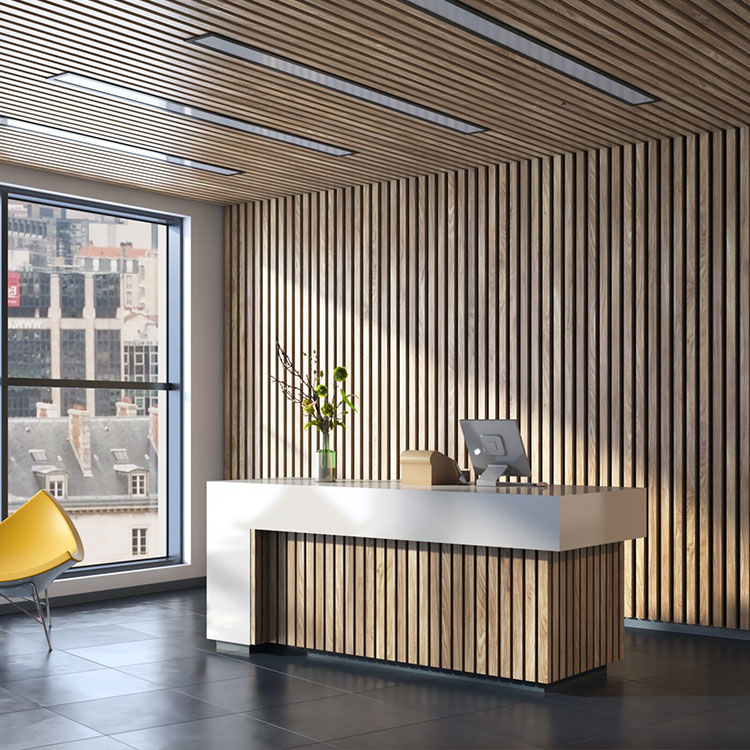
For modern interiors, wood slat acoustic panels are one of the most popular alternatives to fabric panels and curtains.
They combine:
-
decorative wooden slats
-
acoustic felt backing
-
professional sound absorption
-
contemporary architectural style
Unlike curtains, wood slat panels:
-
maintain a clean, structured look
-
do not block natural light
-
provide permanent acoustic treatment
-
improve brand image in commercial spaces
They are widely used in:
-
office feature walls
-
restaurant interiors
-
hotel lobbies
-
reception areas
-
home theaters
Do Acoustic Panels Replace Curtains?
Not necessarily.
In some designs, acoustic panels and curtains can work together:
-
Curtains soften window reflections
-
Acoustic panels treat walls and ceilings
-
Combined treatment produces better overall results
However, if you must choose one for serious acoustic improvement, acoustic panels are the more effective option.
Cost Comparison: Panels vs Curtains
Curtains
-
Lower upfront cost
-
Limited performance improvement
-
May require replacement over time
Acoustic Panels
-
Higher initial investment
-
Long-term durability
-
Stronger acoustic impact
-
Better return in commercial applications
For businesses, the improved comfort and productivity often justify the investment in professional acoustic panels.
Why Commercial Spaces Prefer Acoustic Panels
In offices and hospitality environments, acoustic performance directly affects:
-
employee productivity
-
customer comfort
-
meeting efficiency
-
brand perception
-
overall space value
Curtains cannot provide the level of control required in high-traffic, high-communication spaces.
That’s why professional interior designers and architects typically specify acoustic panels for commercial projects.
Guangdong Leeyin Acoustics: Professional Manufacturer of Wood Slat Acoustic Panels
At Guangdong Leeyin Acoustics, we specialize in manufacturing high-quality wood slat wall panels and acoustic panels for global markets.
As one of China’s leading exporters in the wood slat acoustic panel industry, we provide stable production capacity and consistent quality for distributors, contractors, and commercial project developers.
Our Manufacturing Strength
-
20,000㎡ modern factory
-
advanced production equipment
-
strong large-scale production capability
-
strict quality management based on international standards
-
precise slat spacing and stable acoustic felt bonding
-
customizable veneer finishes and packaging options
Our wood slat acoustic panels are designed to meet the demands of modern interiors—delivering both aesthetic appeal and professional acoustic performance.
Final Verdict: Acoustic Panels vs Curtains — Which Works Better?
If your goal is serious echo reduction, improved speech clarity, and professional noise control, acoustic panels clearly work better than curtains.
Curtains may provide minor improvement in small spaces, but they cannot replace the performance of engineered acoustic panels.
For offices, restaurants, commercial spaces, and modern homes, wood slat acoustic panels offer:
-
stronger sound absorption
-
long-term durability
-
premium architectural appearance
-
improved comfort and communication
If you’re looking for a long-term solution to indoor noise problems, acoustic panels are the smarter investment.
FAQ: Acoustic Panels vs Curtains
Do curtains reduce echo?
Yes, but only slightly. Thick curtains absorb some high-frequency sound but do not significantly reduce reverberation in large rooms.
Are acoustic panels better than blackout curtains?
Yes. Acoustic panels are specifically engineered for sound absorption, while blackout curtains are designed for light control.
Can I combine curtains and acoustic panels?
Yes. Combining both can improve overall room acoustics.
Are wood slat acoustic panels better than fabric panels?
Both are effective, but wood slat panels provide stronger design impact and durability for commercial interiors.