As modern offices, homes, and commercial spaces increasingly adopt acoustic panels to improve sound quality, many people have a practical concern:

Will acoustic panels interfere with WiFi, mobile signals, or wireless communication?

The short answer is no — most acoustic panels do not affect WiFi or wireless signals in any significant way. In fact, the materials used in typical acoustic treatments are designed for sound absorption, not signal blocking.

In this article, we’ll explain how WiFi signals work, how acoustic panels are constructed, and why they generally have little to no impact on wireless connectivity.
Factory Direct Acoustic Wood Slat Panels – Best Price Guarantee


Understanding How WiFi Signals Travel

WiFi works using radio frequency (RF) signals, usually in the 2.4 GHz or 5 GHz bands. These signals travel through the air and can pass through many common building materials.

However, some materials weaken wireless signals more than others.

Materials That Can Block WiFi Signals

Certain dense or conductive materials can interfere with signal strength, such as:

  • reinforced concrete

  • metal structures

  • thick stone walls

  • large metal furniture

  • metal mesh or foil insulation

These materials can reflect, absorb, or block radio signals, reducing network coverage.

This leads many people to wonder whether installing acoustic panels might create a similar problem.


What Acoustic Panels Are Made Of

Most acoustic panels are made from porous, lightweight materials designed to absorb sound waves rather than block them.

Common acoustic panel materials include:

  • polyester fiber

  • acoustic felt

  • mineral wool

  • fiberglass

  • foam

  • wooden slats with acoustic backing

These materials allow air to pass through small internal spaces, which is how they absorb sound energy.

Importantly, these materials are not conductive and do not significantly block radio signals.


Do Acoustic Panels Block WiFi?

In most cases, acoustic panels have virtually no impact on WiFi signals.

Here’s why:

1. Panels Are Lightweight and Porous

Unlike concrete or metal, acoustic panels are not dense enough to block radio waves.

WiFi signals can easily pass through materials like:

  • polyester fiber

  • acoustic felt

  • foam

  • wood veneer

2. Panels Contain Little or No Metal

Wireless interference usually occurs when signals encounter metal surfaces that reflect radio waves.

Standard acoustic panels are designed without metal components, which means they do not reflect WiFi signals significantly.

3. Panels Are Usually Thin

Most acoustic panels range between 9 mm and 25 mm thick, which is far too thin to cause serious signal attenuation.

Even when installed across multiple walls, their impact on wireless networks is minimal.


What About Wood Slat Acoustic Panels?

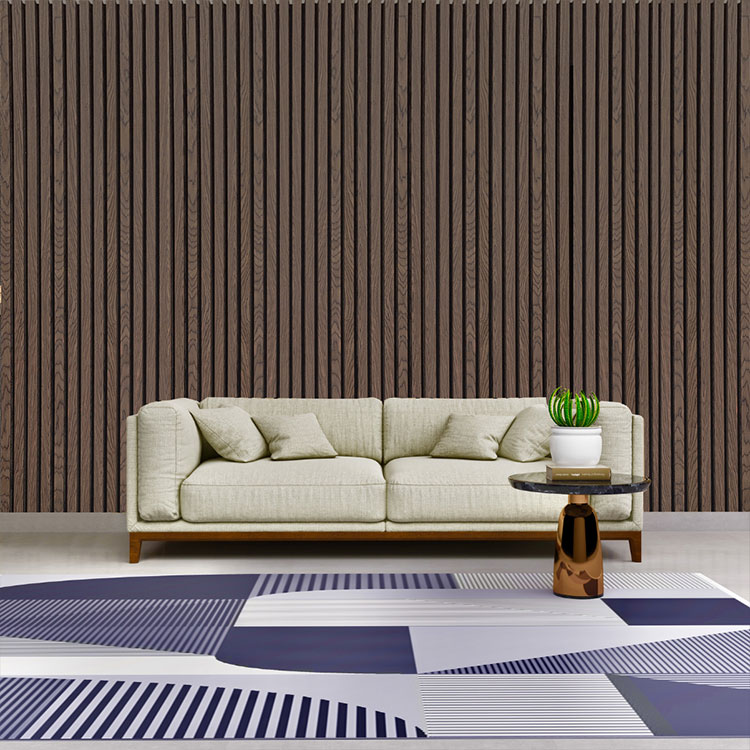
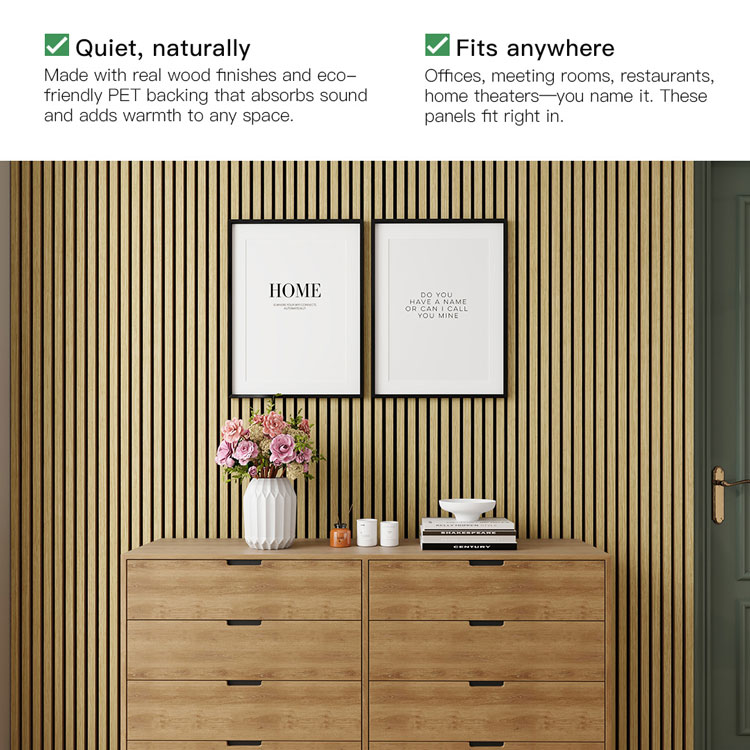
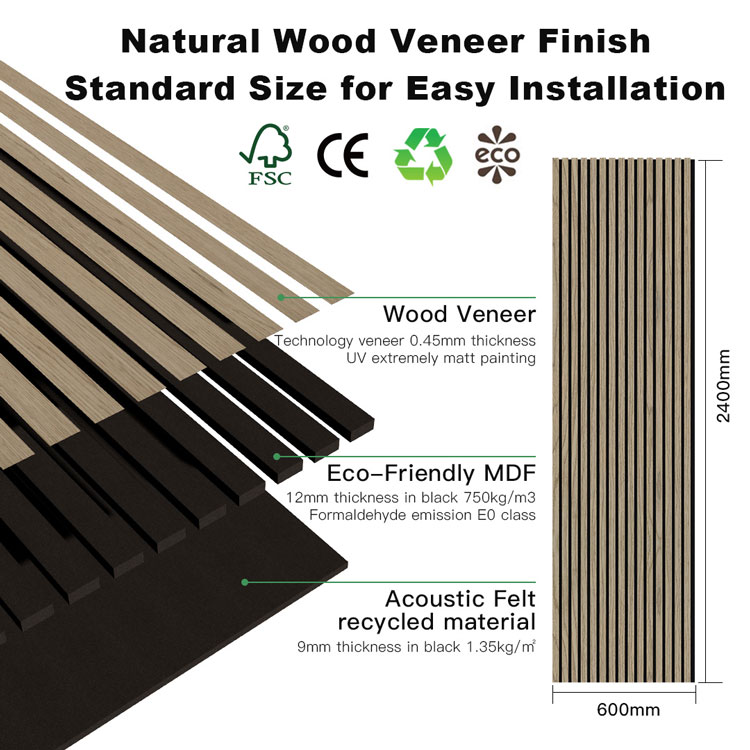
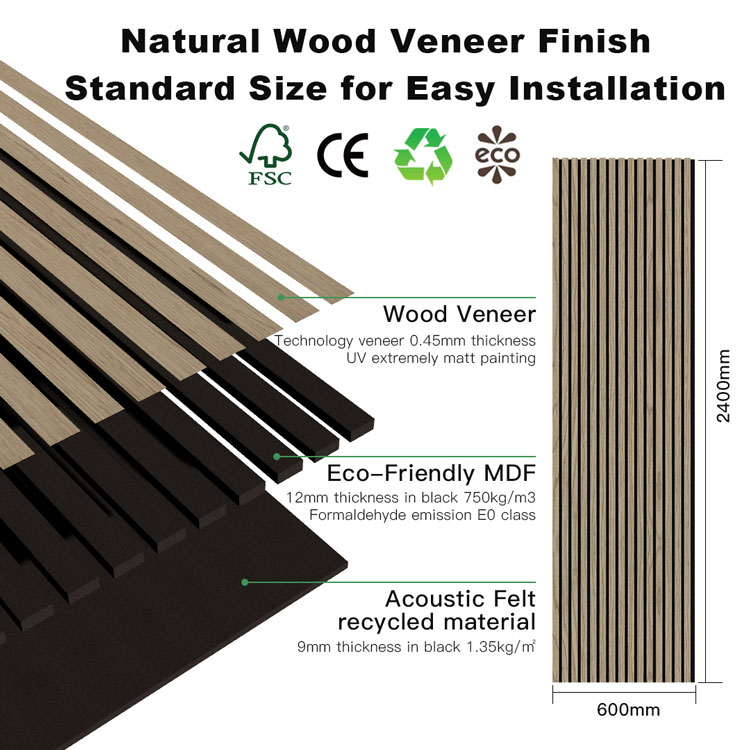
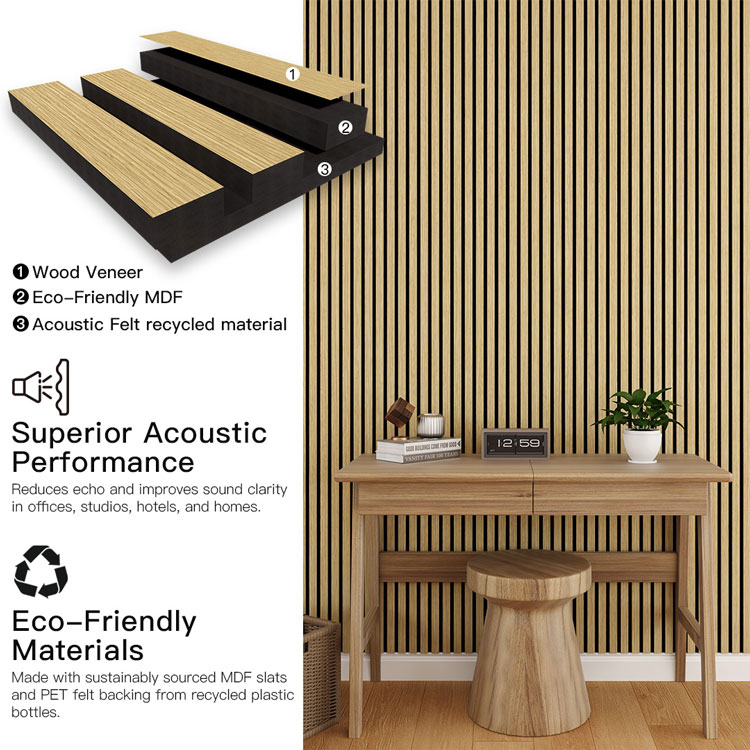
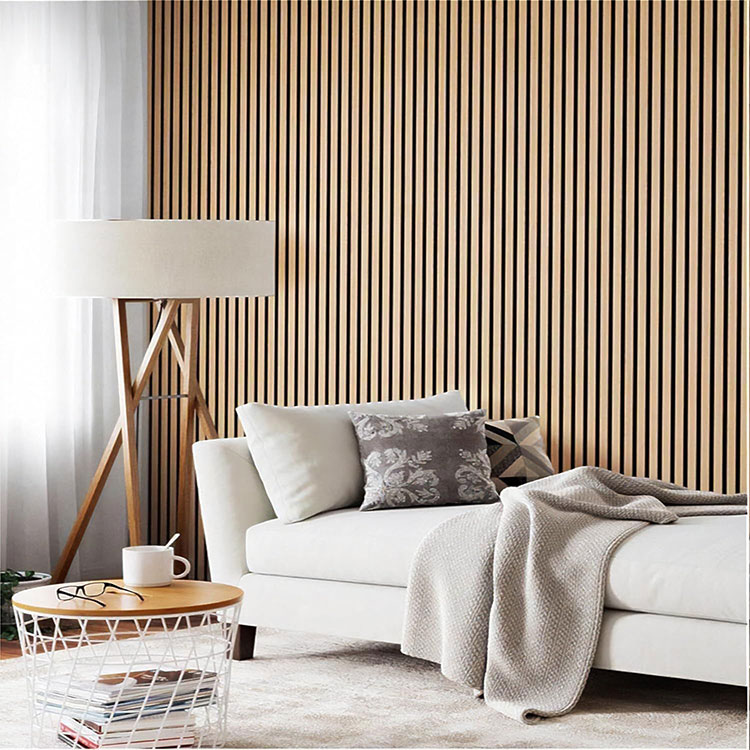
Wood slat acoustic panels have become increasingly popular in modern interior design. These panels combine decorative wooden slats with sound-absorbing acoustic felt backing.

Despite their structured appearance, they still do not interfere with WiFi signals.

Why Wood Slat Panels Don’t Affect WiFi

Wood is a natural non-conductive material, meaning it does not block or reflect radio frequencies in the same way metal does.

The acoustic felt backing is typically made from polyester fiber, which is also signal-friendly.

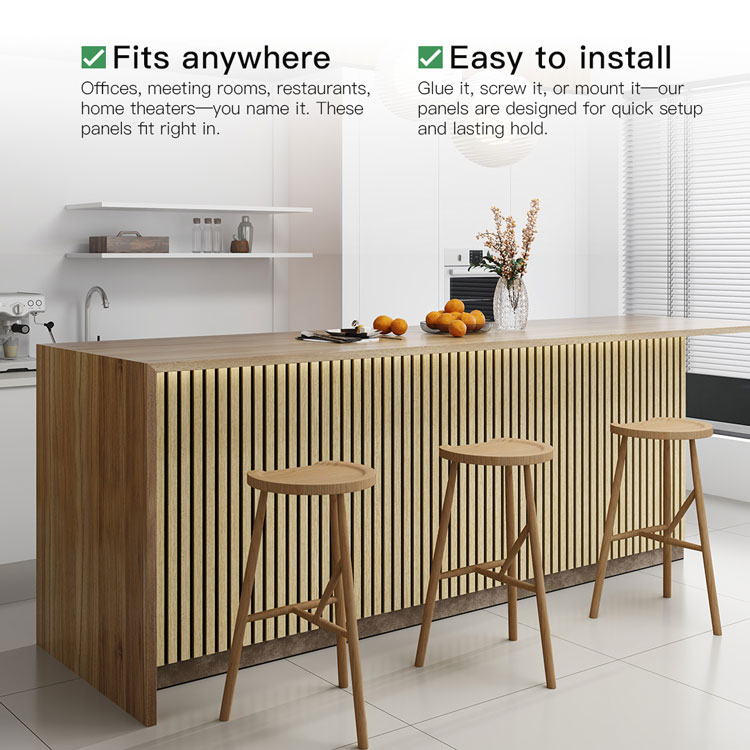
Because of this construction, wood slat acoustic panels are widely used in:

  • offices

  • coworking spaces

  • conference rooms

  • restaurants

  • hotels

  • home theaters

without affecting wireless connectivity.


Situations Where Signals Could Be Affected

While acoustic panels themselves rarely cause issues, certain installation conditions might slightly influence signal performance.

Large-Scale Coverage

If an entire room is covered with thick acoustic treatment on every surface, signal reflections may change slightly. However, this is uncommon and rarely noticeable.

Metal-Based Decorative Panels

Some decorative panels may include:

  • aluminum frames

  • metal mesh layers

  • foil backing

These could potentially affect signals, but standard acoustic panels generally do not use these materials.

Weak Router Placement

Often, poor WiFi performance is actually caused by:

  • routers placed behind furniture

  • long distances from the router

  • thick concrete walls

  • outdated network equipment

These factors have a far greater impact than acoustic panels.


Acoustic Panels Can Improve Office Environments Without Affecting Connectivity

Modern workplaces rely heavily on both clear communication and strong wireless networks. Fortunately, acoustic panels support one goal without compromising the other.

In open-plan offices, acoustic panels can:

  • reduce distracting noise

  • improve speech clarity

  • enhance meeting productivity

  • create a more comfortable working environment

At the same time, they allow WiFi, Bluetooth, and mobile signals to pass through normally.


Why Acoustic Panels Are Widely Used in Technology Environments

If acoustic panels significantly interfered with wireless signals, they would not be widely used in technology-heavy environments.

However, they are commonly installed in:

  • tech company offices

  • video conferencing rooms

  • recording studios

  • broadcast facilities

  • coworking spaces

  • educational institutions

These spaces rely on reliable internet connectivity, yet acoustic treatment remains a standard design feature.


Choosing High-Quality Acoustic Panels

While acoustic panels generally do not interfere with signals, selecting high-quality panels ensures optimal performance and durability.

Important factors include:

  • stable acoustic materials

  • precise panel structure

  • consistent manufacturing quality

  • environmentally friendly components

  • reliable installation systems

Working with experienced manufacturers helps ensure both acoustic performance and product reliability.


Guangdong Leeyin Acoustics: Professional Wood Slat Acoustic Panel Manufacturer

Guangdong Leeyin Acoustics is a professional manufacturer specializing in wood slat wall panels and acoustic panels for global markets.

As a leading exporter of wood slat acoustic panels in China, we provide high-quality acoustic solutions for distributors, contractors, and interior designers worldwide.

Our Manufacturing Strength

  • 20,000㎡ modern production facility

  • advanced automated manufacturing equipment

  • strong large-scale production capacity

  • strict quality management following international standards

  • precise slat spacing and durable acoustic felt backing

  • flexible customization options for different interior projects


Our wood slat acoustic panels combine aesthetic design with effective sound absorption, making them ideal for residential, office, and commercial environments.
In today’s modern interiors—offices, restaurants, classrooms, home theaters, and open-plan homes—people often complain about the same issue:

“I can hear voices, but I can’t understand what people are saying.”

This problem is not always caused by loud noise. In many cases, it’s caused by poor acoustics, especially excessive echo and reverberation. That’s where acoustic panels become an essential solution.

In this article, we’ll explain how acoustic panels improve speech clarity, why speech intelligibility matters, and how professional solutions like wood slat acoustic panels can create a more comfortable and productive environment.

Customizable Acoustic Wood Slat Panels Supplier


Why Speech Clarity Is a Common Problem in Modern Rooms

Modern architecture often prioritizes minimalism and open space design. While this looks stylish, it also creates acoustic challenges.

Many interiors include hard reflective surfaces such as:

  • glass partitions

  • concrete walls

  • wooden floors

  • ceramic tiles

  • exposed ceilings

  • large empty walls

These materials reflect sound waves instead of absorbing them. When people speak, their voice bounces around the room and overlaps with itself, causing speech to sound unclear or “muddy.”

This is known as reverberation.


What Is Speech Clarity (Speech Intelligibility)?

Speech clarity refers to how easily listeners can understand spoken words in a space. Acoustic engineers often describe this as speech intelligibility.

A room with good speech clarity allows conversations to feel natural, even at a normal speaking volume.

A room with poor speech clarity forces people to:

  • speak louder

  • repeat themselves

  • feel tired during meetings

  • lose focus during lessons

  • misunderstand important information

Over time, this becomes a major comfort and productivity issue.


The Main Enemy of Speech Clarity: Echo and Reverberation

To understand how acoustic panels help, you first need to understand what causes poor speech clarity.

Echo

Echo is a distinct repetition of sound caused by reflections from distant surfaces.

Reverberation (Reverb)

Reverberation is the continuous buildup of reflected sound in a room. It’s more common than echo and often makes voices sound unclear.

When reverb time is too long, spoken words overlap and become difficult to understand—especially in busy environments like offices, restaurants, or classrooms.


How Acoustic Panels Improve Speech Clarity

Acoustic panels are designed to absorb sound energy rather than reflect it. This reduces sound reflections and controls reverberation.

Here’s exactly how they improve speech clarity:

1. Acoustic Panels Reduce Sound Reflections

When sound waves hit a hard surface (like glass or concrete), they bounce back into the room.

Acoustic panels reduce these reflections by absorbing sound, which prevents voice signals from bouncing and overlapping.

Result: Speech becomes sharper and cleaner.


2. Acoustic Panels Lower Reverberation Time (RT60)

Reverberation time (often measured as RT60) is the time it takes for sound to fade by 60 dB after the source stops.

A room with high RT60 makes speech sound blurred.

By installing acoustic panels, RT60 is reduced, creating a clearer listening environment.

Result: Less “room noise” and more intelligible conversations.


3. Acoustic Panels Improve the Signal-to-Noise Ratio (SNR)

In a noisy environment, the listener needs to distinguish speech from background noise. This depends heavily on the signal-to-noise ratio.

When acoustic panels absorb reflections, they reduce the buildup of unwanted noise in the space.

Result: Voices stand out more clearly from ambient sounds.


4. Acoustic Panels Reduce Voice Fatigue

In rooms with poor acoustics, people unconsciously raise their voices to be understood. This leads to vocal strain, especially in:

  • open offices

  • classrooms

  • restaurants

  • meeting rooms

Acoustic treatment helps reduce the need for shouting.

Result: Better comfort for employees, teachers, and guests.


Why Speech Clarity Matters in Different Spaces

Speech clarity is not only about comfort—it impacts performance, safety, and customer experience.

Offices and Meeting Rooms

Poor speech clarity leads to:

  • inefficient meetings

  • communication errors

  • reduced productivity

  • stress and mental fatigue

Acoustic panels help offices create a professional environment where people can communicate clearly.


Restaurants and Cafés

Many customers leave restaurants because they feel the space is too loud. Even when noise levels are not extreme, reverberation can make conversation difficult.

Acoustic panels reduce reverb and improve the dining atmosphere.

Better speech clarity = better customer satisfaction.


Schools and Classrooms

Students need to clearly understand teachers. In classrooms with high reverberation, children struggle to focus, and teachers must speak louder.

Acoustic panels help create an effective learning environment.


Healthcare Facilities

Hospitals and clinics require clear communication between staff and patients. Poor acoustics can increase stress and lead to misunderstandings.

Acoustic panels improve privacy and speech clarity in consultation rooms.


Home Theaters and Living Rooms

Speech clarity is critical when watching movies. If dialogue sounds unclear, people increase volume, which creates discomfort.

Acoustic panels can enhance sound quality and dialogue clarity.


Do Acoustic Panels Work Better Than Soundproofing for Speech Clarity?

This is a common confusion.

Acoustic Panels

  • improve sound inside a room

  • reduce echo and reverb

  • improve speech clarity

  • control reflections

Soundproofing

  • blocks sound from entering/leaving a room

  • requires heavy construction materials

  • focuses on isolation rather than clarity

For improving speech clarity, acoustic panels are the correct solution.


What Types of Acoustic Panels Are Best for Speech Clarity?

Different materials and structures affect acoustic performance.

Fabric-Wrapped Acoustic Panels

These panels absorb mid and high frequencies well, improving speech clarity. They are common in offices and schools.

Polyester Fiber Acoustic Panels

Lightweight, eco-friendly, and effective for commercial interiors.

Wood Slat Acoustic Panels

Wood slat panels combine decorative design with acoustic performance. The slats work with an acoustic felt backing to absorb sound reflections.

They are especially popular in:

  • offices

  • restaurants

  • hotels

  • conference rooms

  • retail spaces

  • modern residential interiors


Are Wood Slat Acoustic Panels Effective for Speech Clarity?

Yes. Wood slat acoustic panels are highly effective in improving speech clarity when designed correctly.

They work by combining:

  • wood slats (for diffusion and design)

  • acoustic felt backing (for absorption)

  • optional insulation behind panels (for stronger performance)

This combination reduces reflections while maintaining a premium architectural appearance.

Unlike basic foam solutions, wood slat panels are suitable for commercial environments because they are:

  • durable

  • easy to maintain

  • visually attractive

  • highly customizable


Where Should Acoustic Panels Be Installed for Better Speech Clarity?

Placement is critical. Even high-quality panels will not work well if installed incorrectly.

Best Installation Areas

  • ceilings in open-plan spaces

  • walls behind seating areas

  • side walls in meeting rooms

  • walls opposite glass windows

  • areas near noise sources (cafés, restaurants, office printers)

A common professional approach is to treat first reflection points, where sound bounces directly back into the listening area.


How Many Acoustic Panels Are Needed to Improve Speech Clarity?

There is no one-size-fits-all answer, but in most cases, improving speech clarity requires treating:

  • 20%–35% of total wall and ceiling surface area

Spaces with hard surfaces and high ceilings may require:

  • 35%–50% coverage for best results

The goal is to reduce reverb without making the room sound “too dead.”


Key Factors That Affect Acoustic Panel Performance

When selecting acoustic panels for speech clarity, consider these key factors:

Panel Thickness

Thicker panels absorb more low-frequency sound, but speech clarity mainly depends on mid-frequency control.

Density and Core Material

High-quality core materials provide stable absorption and long-term performance.

NRC Rating (Noise Reduction Coefficient)

NRC indicates how much sound a panel absorbs on average. Higher NRC usually means better echo reduction.

Installation Method

Mounting directly on walls vs. using an air gap can affect absorption performance.


Guangdong Leeyin Acoustics: Professional Manufacturer of Wood Slat Acoustic Panels

At Guangdong Leeyin Acoustics, we specialize in manufacturing premium wood slat wall panels and acoustic panels for global residential and commercial projects.

We are one of China’s leading exporters in the wood slat acoustic panel industry, providing reliable supply for importers, wholesalers, contractors, and interior designers worldwide.

Why Buyers Choose Guangdong Leeyin Acoustics

  • 20,000㎡ modern production facility

  • strong mass production capacity for large-scale projects

  • strict quality control based on international standards

  • stable veneer finishing and consistent slat alignment

  • customizable colors, sizes, and packaging

  • export-ready logistics support for global markets


Whether your project requires modern acoustic design for offices, hospitality spaces, or home interiors, we provide professional solutions that combine sound performance and architectural

When choosing acoustic panels, most buyers focus on surface design, thickness, or installation. However, one of the most critical factors affecting acoustic performance, durability, and application suitability is the panel core material.

Two of the most commonly used cores today are MDF (Medium-Density Fiberboard) and Polyester Fiber (PET Fiber). But which one is better?

The answer depends on how the panel is used, where it is installed, and what level of performance is required. In this article, we compare MDF and polyester fiber cores in detail to help you make the right decision.

 Custom Solutions Acoustic Wood Slat Panels


Understanding Acoustic Panel Core Materials

The core material of an acoustic panel directly influences:

  • Sound absorption efficiency

  • Structural stability

  • Durability and lifespan

  • Fire resistance and safety compliance

  • Visual and architectural applications

Let’s look at how MDF and polyester fiber perform across these key factors.


What Is MDF in Acoustic Panels?

MDF (Medium-Density Fiberboard) is a highly engineered wood-based material made from compressed wood fibers bonded under high pressure.

In acoustic applications, MDF is commonly used in:

Key Characteristics of MDF:

  • High density and uniform structure

  • Excellent dimensional stability

  • Strong load-bearing capacity

  • Ideal for precision machining and slat spacing


What Is Polyester Fiber in Acoustic Panels?

Polyester fiber (often PET fiber) is a synthetic, non-woven acoustic material made from recycled or virgin polyester.

It is widely used in:

  • Fabric-wrapped acoustic panels

  • Felt acoustic boards

  • Lightweight sound absorption panels

Key Characteristics of Polyester Fiber:

  • Lightweight and flexible

  • Good mid-to-high frequency absorption

  • Easy to install

  • Often eco-friendly (recycled PET)


MDF vs Polyester Fiber: Acoustic Performance Comparison

1. Sound Absorption Efficiency

  • Polyester Fiber
    Excellent at absorbing mid and high frequencies due to its porous structure.

  • MDF (in wood slat panels)
    MDF itself is reflective, but when combined with slat spacing and acoustic backing, it creates a hybrid system that offers controlled diffusion and absorption.

👉 Best Result:
MDF-based wood slat panels with PET felt or mineral wool backing provide balanced acoustic control, not just absorption.


2. Structural Strength and Stability

  • MDF
    High-density MDF offers superior rigidity, ensuring panels remain flat, aligned, and stable over time—especially important for large wall installations.

  • Polyester Fiber
    Lightweight but less rigid; prone to bending or deformation if unsupported.

👉 Winner: MDF
Ideal for architectural wall systems and long-term commercial use.


3. Aesthetic and Design Flexibility

  • MDF
    Perfect for wood veneer finishes, CNC cutting, and precise slat designs. Creates a premium architectural look.

  • Polyester Fiber
    Limited design options; typically flat panels or felt shapes.

👉 Winner: MDF
Preferred for modern interiors where design and acoustics must coexist.


4. Fire Safety and Compliance

  • MDF (treated)
    Can meet international fire standards when produced with certified treatments and finishes.

  • Polyester Fiber
    Fire performance varies significantly by grade and manufacturer.

👉 Key Point:
Fire performance depends heavily on manufacturing standards, not just material type.


5. Durability and Lifespan

  • MDF
    Long-lasting, resistant to wear, ideal for high-traffic commercial spaces.

  • Polyester Fiber
    Softer material; more susceptible to surface damage.

👉 Winner: MDF for commercial and long-term projects.


MDF vs Polyester Fiber: Application Scenarios

Application Better Choice
Wood slat acoustic wall panels MDF
Architectural interiors MDF
Offices & commercial spaces MDF
Lightweight acoustic treatment Polyester Fiber
Temporary installations Polyester Fiber
Budget acoustic solutions Polyester Fiber

Why MDF Is the Preferred Core for Wood Slat Acoustic Panels

In wood slat acoustic panels, MDF plays a critical structural and acoustic role:

  • Maintains precise slat spacing

  • Enhances sound diffusion

  • Supports high-quality veneer finishes

  • Ensures long-term stability

This is why professional manufacturers consistently choose high-density MDF for premium wood slat acoustic systems.


Manufacturing Quality Makes the Real Difference

Material choice alone does not guarantee performance. How the panel is manufactured is just as important.

At Guangdong Leeyin Acoustics, we specialize in:

  • Wood slat acoustic panels

  • MDF-based acoustic wall systems

  • Integrated acoustic panel solutions

Our manufacturing strengths include:

  • 20,000㎡ modern production facility

  • Strict MDF density selection and control

  • Precision CNC machining

  • High-performance acoustic backing integration

  • Quality management aligned with international standards

  • Leading exporter of wood slat wall panels in China

This ensures every panel delivers consistent acoustic performance, structural reliability, and visual excellence.


Final Verdict: MDF or Polyester Fiber?

There is no one-size-fits-all answer—but for wood slat acoustic panels and architectural acoustic applications, MDF is the superior core material.

  • Choose MDF for:

    • Premium wood slat acoustic panels

    • Commercial and architectural projects

    • Long-term durability and design-driven spaces

  • Choose Polyester Fiber for:

    • Lightweight acoustic absorption

    • Simple installations

    • Budget-focused solutions

For projects that demand both acoustic performance and high-end aesthetics, MDF-based wood slat acoustic panels remain the industry standard.

Sound-absorbing panels work by absorbing sound energy and reducing reflections, thus eliminating echoes and reverberation. Their effectiveness largely depends on:


Material density and porosity

Leading Distributor of Acoustic Wood Slat Panels

Internal structure


Fire resistance and safety


Environmental performance


Visual design compatibility


Choosing the wrong material can lead to poor sound insulation, short product lifespan, or safety hazards.


Common Materials for Sound-Absorbing Panels


1. PET Felt (Recycled Polyester Fiber)


PET felt boards are widely used for basic sound absorption.


Advantages:


Lightweight and easy to install


Made from recycled plastic bottles


Good sound absorption for mid-to-high frequencies


Environmentally friendly and recyclable


Disadvantages:


Limited sound absorption for low frequencies


Softer surface, lower impact resistance


Functionality outweighs aesthetics


PET felt is commonly used in offices, schools, and projects with limited budgets.


2. Sound-Absorbing Foam


Sound-absorbing foam is commonly found in small recording studios and home recording studios.


Advantages:


Affordable entry-level option


Easy to install yourself


Reduces flutter echo


Disadvantages:


Weaker low-frequency performance


Will deform over time


Limited fire resistance of low-quality foam


Not suitable for high-end interior decoration


Foam is best suited for temporary or small-scale acoustic treatments.


3. Mineral Wool/Glass Fiber (Core)


Mineral wool and glass fiber are typically used inside acoustic panels, not as exposed surfaces.


Advantages:


Excellent sound absorption across the entire frequency range


High density enhances performance


Fire-resistant after proper treatment


Disadvantages:


Requires fabric or solid surface covering


Less aesthetically pleasing


Requires careful handling during production


These materials form the core of many professional-grade acoustic panels.


4. Medium-Density Fiberboard (MDF)


High-density medium-density fiberboard is a key structural material for high-end acoustic panels, especially wood slat wall panels.


Advantages:


Stable density ensures consistent acoustic performance


Strong structural integrity


Smooth surface for easy veneer application


Ideal for strip and perforated designs


Limitations:


Performance depends on density and quality


Low-grade MDF may release higher levels of volatile organic compounds (VOCs)


Our company uses rigorously selected high-density MDF that meets international standards.


5. Natural Wood Veneer (Decorative and Functional Layer)


Natural wood veneer plays a crucial role in wood strip acoustic panels.


Advantages:


Enhances aesthetics and interior value


Utilizes slat spacing to diffuse and absorb sound


Natural, warm appearance


Complements modern and luxury design styles


Limitations:


Vene thickness and bonding quality are critical


Requires specialized production control


When used in conjunction with acoustic backing, wood veneer offers both performance and aesthetics.

Many people seeking better sound insulation often ask:


What's the difference between acoustic panels and soundproofing panels?


While these two terms are often used interchangeably, their uses are quite different. Understanding their differences is crucial for choosing the right solution for your residential, office, or commercial project.


In this guide, we'll detail how each system works, where it's applicable, and why acoustic panels (especially wood strip acoustic panels) are the most practical choice for most spaces.


Acoustic Panels vs. Soundproofing Panels: Core Differences


The main difference lies in the problem you want to solve.


Type Main Function Uses

Acoustic Wood Slat Panels Supplier

Acoustic Panels Absorbs indoor sound Reduces echoes, reverberation, and noise reflections


Soundproofing Panels Blocks sound from entering or leaving Prevents noise transmission between spaces


In short:


Acoustic panels improve sound quality


Soundproofing panels block sound transmission


What are acoustic panels?


Acoustic panels are designed to absorb sound waves reflected within an indoor space.


They help to:


Reduce echo and reverberation


Improve speech clarity


Enhance music and audio quality


Create a more comfortable indoor environment


Widely used in:


Residential and apartment buildings


Offices and meeting rooms


Restaurants and hotels


Studios and commercial spaces


How Sound-Absorbing Panels Work


Sound-absorbing panels use porous materials that convert sound energy into heat energy through friction.


High-quality sound-absorbing panels typically combine the following features:


Sound-absorbing backing materials (such as PET felt)


Optimized thickness and density


Carefully designed surface


Wood strip sound-absorbing panels go a step further, combining sound absorption with sound diffusion for balanced acoustic control and modern aesthetics.


What are Sound Insulation Panels?


Sound insulation panels are designed to block the transmission of sound between rooms.


They rely on:


Heavy materials


Structural isolation


Sealed structure


True sound insulation typically includes:


High-density materials (concrete, drywall layers)


Resilient partitions


Insulation materials within walls and ceilings


Sealing of gaps


Therefore, soundproofing panels are:


Heavy


More expensive


Usually part of the building structure, not decoration


Why sound-absorbing panels are often the better choice


Many people want “soundproofing” when they actually need better acoustic control.


Sound-absorbing panels are ideal because they:


Easy to install


Immediately improve sound quality


No construction required


Enhance interior design


Excellent cost-effectiveness


For apartments, offices, and most commercial interior spaces, sound-absorbing panels can solve 80-90% of common noise problems.


Can sound-absorbing panels replace soundproofing panels?


Not entirely—but they can significantly improve perceived noise comfort.


Acoustic panels:


Reduce indoor reflected noise


Make conversations clearer


Reduce overall auditory fatigue


However, they do not completely prevent sound from penetrating walls. Complete soundproofing requires structural sound insulation.


Wood strip acoustic panels: Performance and design combined


Wood strip acoustic panels are a modern solution that combines:


Sound absorption


Partial sound diffusion


The beauty of natural wood


They are particularly suitable for:


Modern residences


Offices


Hotel projects


Commercial interior design


This achieves an ideal balance between functionality, aesthetics, and practicality.

Want to improve the acoustics of your room but don't have traditional acoustic panels on hand?


Here are some alternatives that can help reduce echoes and improve sound quality—although none of them can match the performance of professional acoustic panels.

Custom Solutions Acoustic Wood Slat Panels

✅ 1. Heavy Curtains


Thick fabrics help absorb mid-to-high frequency sounds.


Perfect for living rooms and bedrooms.


✅ 2. Rugs


Bare floors reflect sound. Laying down a soft rug can instantly reduce echoes.


✅ 3. Bookshelves Filled with Books


Bookshelves filled with books both diffuse and absorb sound—simple and effective.


✅ 4. Upholstered Furniture


Sofas, upholstered chairs, and cushions themselves absorb sound waves.


✅ 5. Homemade Foam Boards


While convenient, they are usually not dense enough and have poor fire resistance.

Living next to noisy neighbors can be annoying—but with the right soundproofing strategies, you can create a quieter, more comfortable space. Here are some ways to effectively block noise from shared walls.

Custom Solutions Acoustic Wood Slat Panels

🧱 1. Increase Wall Mass


Noise can easily penetrate thin walls. Increasing wall density helps block sound.


Options include:


High-density materials


Double-layer gypsum board


High-density sound-absorbing panels


High-density MDF sound-absorbing panels, produced by Guangdong Liyin Acoustics Technology Co., Ltd., increase wall mass and enhance aesthetics.


🔊 2. Use Sound-absorbing panels to Absorb Sound


Installing sound-absorbing panels helps reduce sound reflections within the room, significantly reducing noise from the other side.


Our wood strip sound-absorbing panels combine:


✔ High-density medium-density fiberboard (MDF)


✔ Sound-absorbing PET felt


✔ Natural wood veneer


✔ Modern interior design aesthetics


Perfect for bedrooms, home offices, and apartments.


🔧 3. Seal Gaps and Cracks


Small cracks around sockets, windows, and walls can leak a lot of noise.


Seal these gaps with sealant or weatherstripping.


🛠 4. Create Air Gaps


For more severe noise problems, leave small air gaps on the back of the sound-absorbing panels.


This enhances low-frequency absorption and significantly improves sound insulation.

Yes—and doing so is crucial for improving acoustic performance.


Many people believe that acoustic panels should be directly attached to the wall when installing them. However, leaving a small air gap behind the panel can significantly improve low-frequency absorption and enhance overall acoustics.

Premium Acoustic Wood Slat Panels Manufacturer

🔍 Why Leaving an Air Gap is Beneficial


Installing acoustic panels slightly off-wall can:


✔ Enhance low-frequency absorption


✔ Improve overall sound absorption efficiency


✔ Improve indoor acoustics without requiring additional materials


✔ Maximize the performance of wood strips and PET acoustic panels


Even a 1-2 cm gap can make a significant difference.


🎯 Best Practices from Acoustics Experts


The wood strip wall panels and PET acoustic panels designed by Guangdong Liyin Acoustics Co., Ltd. deliver superior performance whether installed flush or with an air gap. Our panels can be installed using the following methods:


Snap-on


Wooden strips


Adhesive + gaskets


Acoustic frame


This flexible installation method allows users to create their ideal acoustic environment based on space, style, and acoustic needs.


Why Choose Guangdong Liyin Acoustics Technology Co. Ltd.?

1. Industry Leadership

As a leading manufacturer and exporter of Natural Oak Acoustic Slat Panels, our company has set the benchmark in the field, delivering superior quality and innovative designs worldwide.

2. Advanced Production Facility

Our 20,000-square-meter modern factory is equipped with state-of-the-art machinery, enabling us to meet large-scale demands without compromising on quality.

3. Strict Quality Control

We adhere to international quality standards at every stage of production, ensuring every wood slat panel we produce meets the highest expectations.

4. Eco-Friendly Practices

Sustainability is at the core of our operations. From sourcing natural oak to our production methods, we are committed to protecting the environment.

5. Global Trust

Our products, including akupanel and Natural Oak Acoustic Slat Panels, are trusted by customers across the globe for their outstanding performance

If you're planning to upgrade your space with acoustic panels but are worried they might affect your WiFi signal—the good news is: acoustic panels won't block WiFi signals.

Leading Acoustic Wood Slat Panel Manufacturer & Distributor

✔ Why Acoustic Panels Won't Affect WiFi


WiFi signals can easily pass through materials commonly used in acoustic panels, including:


Medium-Density Fiberboard (MDF)


Recycled PET felt


Wood veneer or PET/PVC finish


These materials don't contain metals or dense barriers that interfere with electromagnetic signals. This means your WiFi signal will remain strong even if you install acoustic panels in your room.


⭐ What Do Acoustic Panels Affect?


They improve the acoustic comfort of a room but don't affect WiFi signals.


Liyin Wood Strip Acoustic Panels are designed to:


Absorb echoes and reduce reverberation


Improve sound clarity in homes, offices, and recording studios


Add beauty and warmth with premium wood veneer finishes


Contribute to eco-friendly building using E0 grade MDF and recycled PET materials.

Want to create a space that boasts stunning aesthetics and perfect sound quality?


Guangdong Leeyin Acoustics makes it easy to customize your own acoustic panel solution – seamlessly integrating aesthetics, acoustic control, and brand image.

Premium Acoustic Wood Slat Panels Manufacturer

Here's how we help you turn your vision into reality 👇


🧩 1. Customized Design Consultation


Our team of experts will work with you to gain a deep understanding of your project goals, whether it's an office, recording studio, hotel, or home. We will provide acoustic design advice and material recommendations to ensure both beauty and performance.


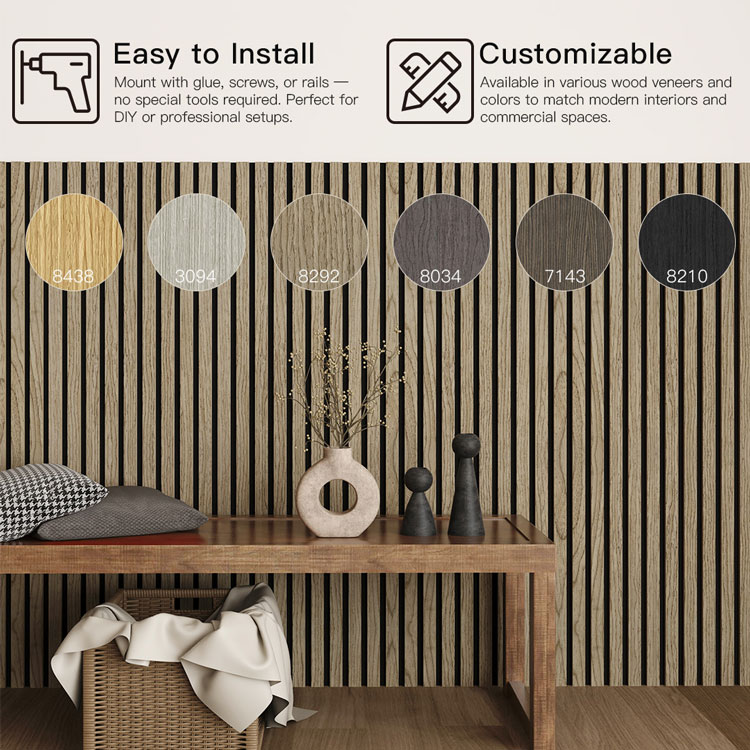
🎨 2. Customizable Panel Options


From wood slatted wall panels to fabric acoustic panels, you can choose:


Panel size and pattern


Finish type (oak, walnut, ash, etc.)


Color, texture, and finish options


Fire-retardant or environmentally friendly materials


🏗️ 3. Flexible Installation and Superior Acoustic Performance


Leeyin panels can be installed vertically, horizontally, or suspended, providing flexibility for creative interior layouts while maintaining top-notch sound absorption performance.

keyboard_arrow_up