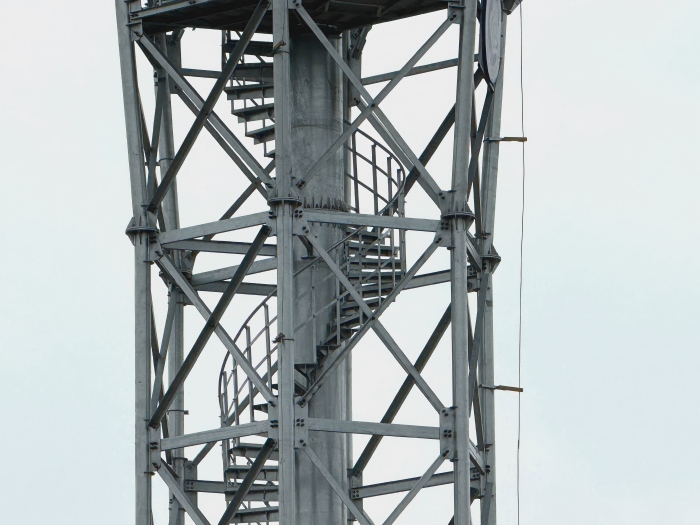
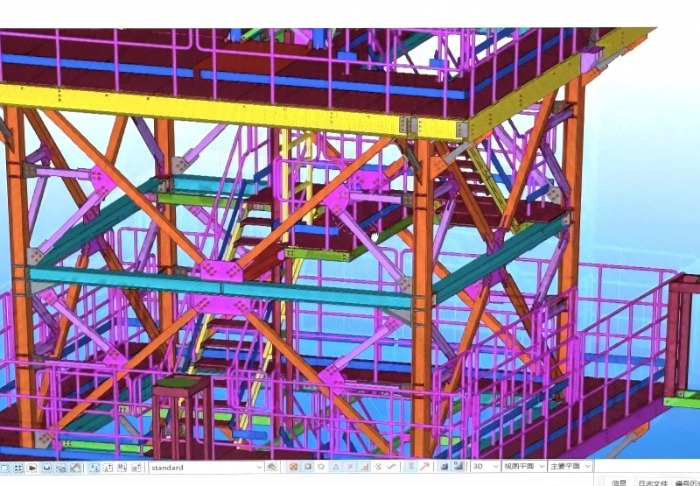
In the world of critical radar infrastructure, precision is everything. Modern radar systems—whether for meteorological monitoring, air traffic control, or defense—demand an exceptionally stable platform. Even minute structural vibrations or sway in a radar tower can introduce phase errors, distort beam patterns, and degrade data quality【7+L9-L12】. Yet these same towers must also be accessible. Technicians need to climb them regularly for calibration, antenna maintenance, and emergency repairs. The challenge is to integrate safe climbing systems and equipment platforms into the tower's structural envelope without compromising the stiffness that radar precision demands.
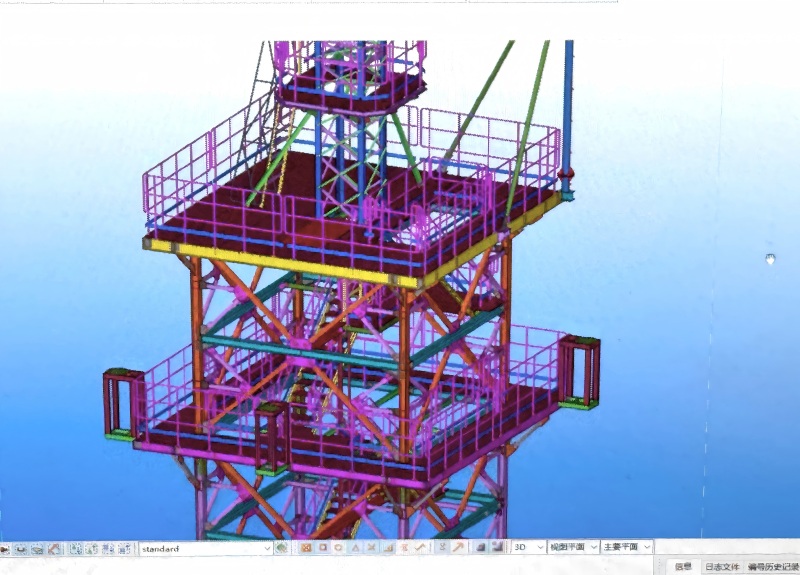
radar support tower

The Tension Between Access and Stiffness

Radar support structures are governed by stringent dynamic requirements. A tower's natural frequency must be kept sufficiently high, and well separated from forcing frequencies generated by the rotating antenna and environmental wind loads, to avoid resonant coupling that would smear radar images. Every added component—a ladder rung, a platform support bracket, a cable guide—alters the structure's mass and stiffness distribution. Poorly designed access features can introduce local flexibility or add mass in locations that lower critical natural frequencies.

A radar tower is engineered not just to carry weight, but to resist deformation under dynamic loads with exceptional rigidity. The natural frequency is a function of stiffness and mass. For heavy radar antennas and radomes, reducing mass is often impractical, so the primary lever is to maximize structural stiffness. Access features must therefore be embedded into the tower's primary structural logic rather than treated as afterthoughts.
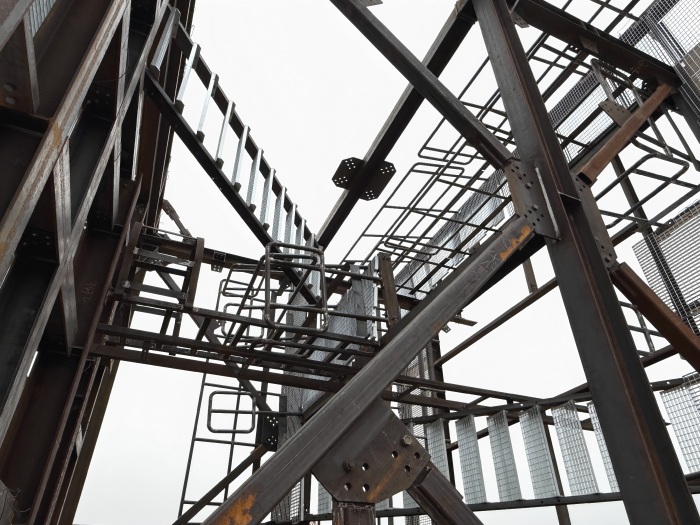

radar support tower


Regulatory Framework for Safe Access

Radar towers must comply with safety standards that are evolving toward more effective fall protection. The ANSI/ASSE A10.48 standard provides comprehensive safety guidance for communication structures, including antenna and antenna-supporting structures, covering fall protection and rescue, climbing facilities, and training. The 2023 revision of this standard, effective January 1, updated safety practices for construction, demolition, modification, and maintenance.

OSHA regulations require 100% fall protection for personnel working at heights above 6 feet. For fixed ladders over 24 feet, the regulatory trend has shifted decisively: ladder cages are being phased out, with a 2036 deadline for their replacement on new installations and major modifications. Cages do not arrest vertical falls and complicate rescue, making modern cable- or rail-based systems the preferred solution.


Choosing the Right Climbing System

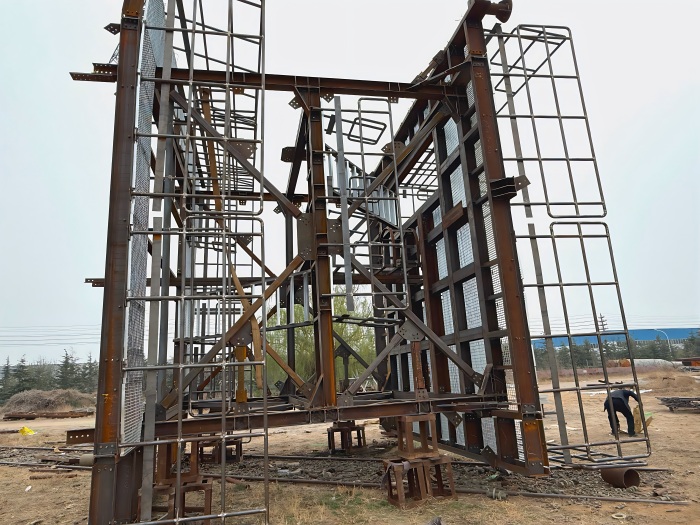
For radar towers, not all climbing safety solutions are equal. Vertical cable and rail systems have become the industry standard because they provide continuous attachment without requiring the user to disconnect at intermediate points. Tractel's FABA™ fall arrest systems allow for safe climbing on fixed vertical ladders at any height on towers, masts, and pylons. The stopcable® system features a detachable fall arrester with built-in energy absorber that locks instantly on the cable upon a fall, minimizing free-fall distance. MSA Safety's Latchways® systems (LadderLatch and TowerLatch) incorporate a patented starwheel component that enables smooth movement through cable guides without pulling cable out of the guides.


System Type Fall Protection Mechanism Suitability for Radar Towers
Fixed Ladder (No Protection) None—relies on 3-point contact Not acceptable—fails regulatory compliance
Ladder with Cage Physical barrier prevents sideways falls Phased out—does not arrest vertical falls; complicates rescue
Vertical Cable/Rail System Harness-mounted fall arrester slides on cable/rail Recommended—arrests falls within inches; hands-free climbing; minimal stiffness impact
Personal Fall Arrest System (PFAS) Harness + lanyard attached to anchor point Supplemental—suitable for platform work but not as primary climbing system

radar support tower


Equipment Platforms: Stiffening Rather Than Compromising

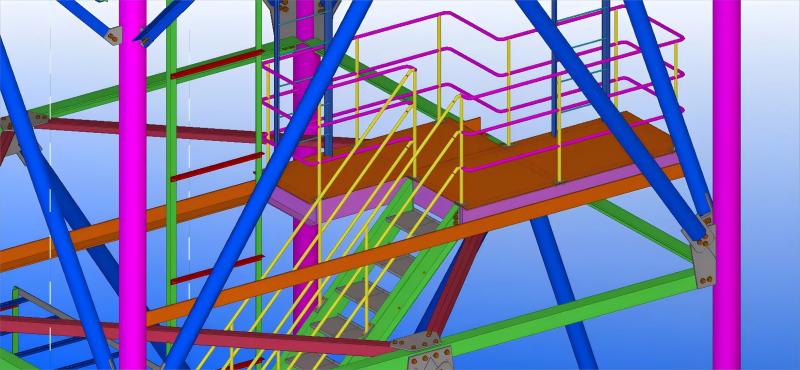
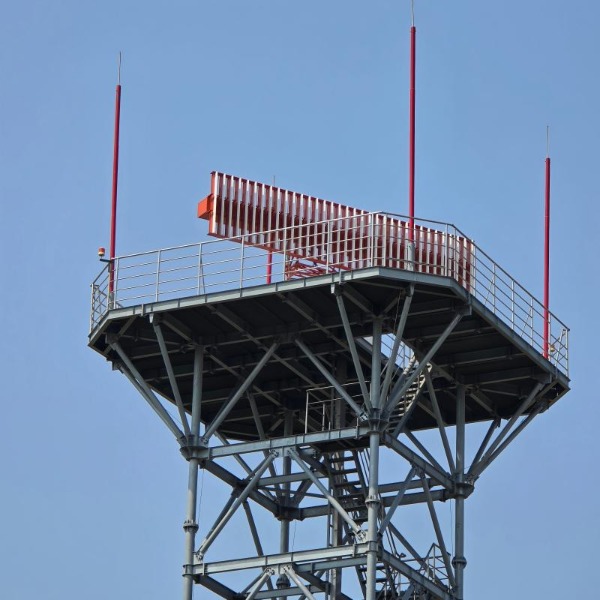
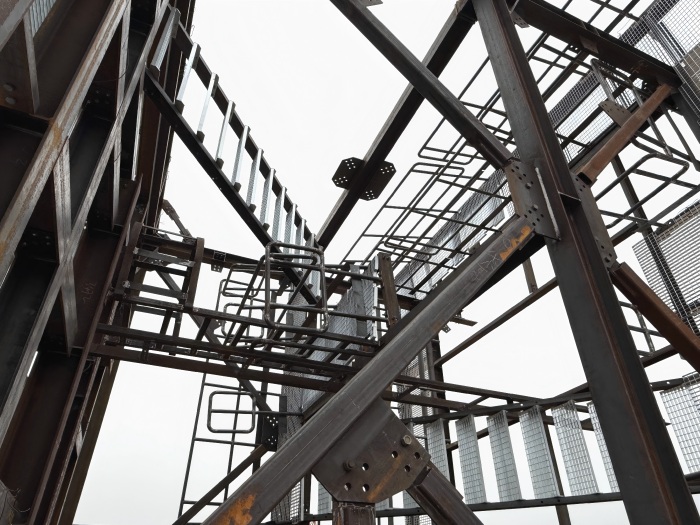
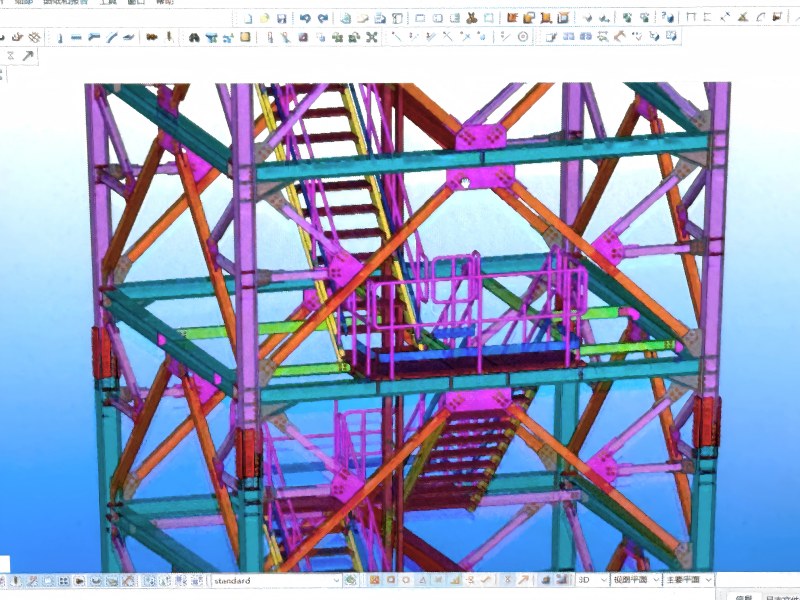
Radar towers typically feature multiple platforms: a lower platform for equipment access and an upper platform at the radome level for antenna installation. These platforms serve as maintenance work areas and provide mounting points for ancillary equipment. From a structural perspective, they should be integrated as stiffened diaphragms—their floor beams and bracing must contribute positively to the tower's overall rigidity.

Key design principles for platforms in radar applications:

  1. · Full-perimeter bracing: Platforms should be tied into all tower faces with cross-bracing or stiffened decking to act as horizontal stiffening rings. This prevents local mode shapes that could otherwise reduce natural frequencies.

  2. · Load transfer: Platform loads must be transferred into tower legs via dedicated connection nodes, not through diagonal bracing alone. This ensures predictable force paths and avoids unintended stress concentrations.

  3. · Open steel grating: Preferred over solid plate because it reduces wind load accumulation, improves visual inspection of members below, and sheds ice more readily. The open design also minimizes added mass, supporting the goal of maximizing stiffness-to-weight ratio.

Advanced bracing patterns—such as K-bracing or X-bracing—are analyzed and optimized to ensure a stiff, robust platform that minimizes deflection under operational loads. Platforms also serve as rescue staging areas—required resting points on tall ladders, typically every 9 to 12 metres—where a worker can rest or await assistance.

radar support tower


Lightning Protection Integration

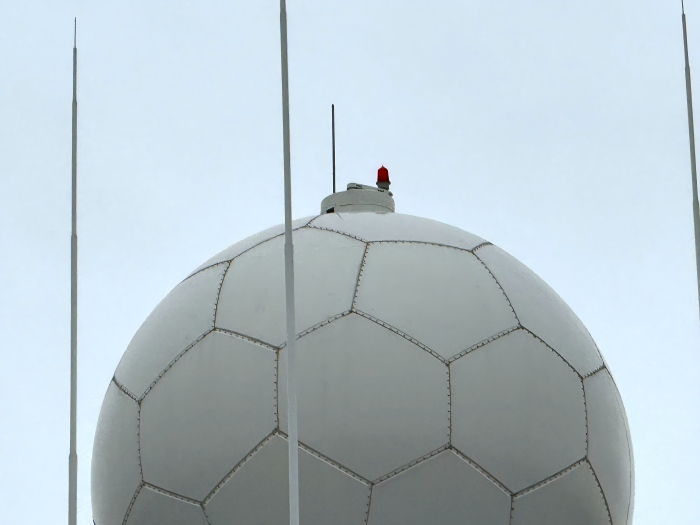
Radar towers are often sited in exposed locations, making lightning protection a critical consideration. The tower's climbing systems and platforms must be integrated with the external lightning protection scheme. According to ITU-T K.112, a radio base station's lightning protection system includes air-termination, down-conductors, earthing network, bonding conductors, and surge protective devices. All metallic access components—ladders, platform railings, cable guides—must be bonded to the grounding system to prevent dangerous side-flashes. The steel tower itself serves as the primary down-conductor, but grounding continuity must be verified for all attached access hardware. The rebar in concrete tower foundations should be used to augment the grounding system, coupling strike energy through conductive concrete.

radar support tower


Conclusion

Access systems in radar towers are not peripheral add-ons—they are integral to the structure's ability to be maintained, calibrated, and ultimately to perform its precision mission. When properly integrated, safe climbing systems and equipment platforms enable the tower to be both accessible and accurate. Vertical cable fall-arrest systems provide continuous protection without compromising stiffness. Platforms designed as stiffened diaphragms contribute positively to the tower's dynamic performance. And comprehensive lightning protection ensures the safety of personnel during climbs in exposed conditions. For structures where a fraction of a degree of antenna deflection can render radar data unreliable, this integration is not optional—it is fundamental.


Ready to integrate safe, radar‑grade access systems into your next tower project? Contact our engineering team today for custom design support and a detailed quote.
Contact Us

Radar towers serve a uniquely demanding purpose. Unlike communication towers that simply hoist passive antennas, radar towers must provide an exceptionally stable platform for rotating, precision‑sensing equipment. A slight structural deflection, an unexpected vibration mode, or—just as critically—an access component that introduces unwanted flexibility can compromise the radar's pointing accuracy and data fidelity.


radar support tower


Yet these towers must also be accessible. Technicians need to climb them for routine calibration, antenna maintenance, and emergency repairs. The challenge is to integrate safe climbing systems and equipment platforms into the tower's structural envelope without sacrificing the stiffness that radar precision demands.


The Tension Between Access and Stiffness

Radar support structures are governed by stringent dynamic requirements. A tower's natural frequency must be kept sufficiently high, and well separated from the forcing frequencies generated by the rotating antenna and environmental wind loads, to avoid resonant coupling that would smear radar images. Every added component—a ladder rung, a platform support bracket, a cable guide—alters the structure's mass and stiffness distribution. Poorly designed access features can introduce local flexibility, create stress concentrations, or add mass in locations that lower critical natural frequencies. The objective, therefore, is to embed safety and access features into the tower's primary structural logic rather than treating them as afterthoughts.


Regulatory Framework for Safe Access

Radar towers, like communication towers, must comply with an evolving suite of safety standards. In North America, the ANSI/ASSE A10.48‑2016 Standard establishes comprehensive criteria for safe work practices on communication structures, covering everything from fall protection to climbing facilities. This standard has become the benchmark for the industry. Meanwhile, OSHA regulations require 100% fall protection for employees exposed to elevations above 6 feet while working on towers. For fixed ladders over 24 feet, OSHA historically permitted ladder cages, but the regulatory trend has shifted decisively: cages are being phased out, with a 2036 deadline for replacement. Modern systems rely on vertical lifelines or rigid rail fall‑arrest systems, which are more effective at actually stopping a fall.


Internationally, EN 353‑1:2014+A1:2017 governs guided type fall arresters on rigid anchor lines, while ANSI Z359.16‑2016 covers safety systems for climbing fixed ladders. Products compliant with these standards, such as the stopcable system, feature detachable fall arresters with built‑in energy absorbers that lock instantly upon a fall and minimise free‑fall distance.


radar lattice tower


Choosing the Right Climbing System: A Comparative Overview

For radar towers, not all climbing safety solutions are equal. The table below compares the main options:


System Fall Protection Mechanism Key Features Suitability for Radar Towers
Fixed Ladder (No Protection) None—user relies on 3‑point contact Lowest cost, simplest installation Not acceptable—fails regulatory compliance and presents extreme risk
Ladder with Cage Physical barrier prevents falling sideways/backward Simpler for untrained users; cages do not arrest vertical falls Phased out—offers false security and complicates rescue; not recommended for new builds
Vertical Cable/Rail Safety System Harness‑mounted fall arrester slides along permanently installed cable Arrests falls within inches; allows free climbing with both hands; can be retrofitted Recommended—meets ANSI/OSHA requirements; minimal impact on tower stiffness; supports up to 4 users on one system
Personal Fall Arrest System (PFAS) Harness + lanyard attached to independent anchor point Highly effective but relies on correct user action and anchor availability Supplemental—suitable for platform work, but not as primary climbing system due to repeated connect/disconnect requirements

Key selection insights:

  1. Vertical cable systems (e.g., Latchways® TowerLatch or Tractel stopcable®) are increasingly the industry standard because they provide continuous attachment and do not require the user to disconnect at intermediate guides. The patented starwheel component enables smooth movement through cable guides without pulling cable out of the guides, a critical feature when climbing past multiple platform levels.

  2. For monopole radar towers, dedicated universal mounts are available (e.g., Universal Monopole Mount Safe Climb Systems), using 3/8″ galvanised wire rope with cable stand‑offs every 25 feet and a sealed anchor head with impact attenuator.

  3. Ladder cages should be avoided on new radar towers: they do not prevent vertical falls and can make rescue more difficult.


radar lattice support tower


Equipment Platforms: Access Without Compromising Stiffness

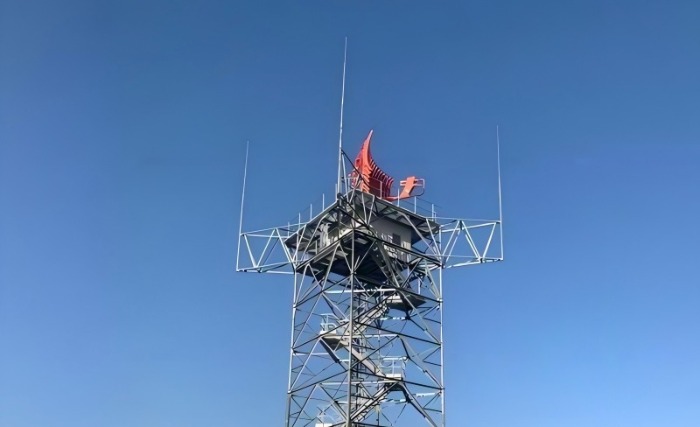
Radar towers typically feature multiple platforms: a lower platform for equipment access (e.g., at 26 m) and an upper platform at the radome level (e.g., at 30 m) where the radar antenna is installed. These platforms serve as maintenance work areas and provide mounting points for ancillary equipment. From a structural perspective, they must be integrated as stiffened diaphragms—their floor beams and bracing must contribute positively to the tower's overall rigidity.

Key design principles for platforms:

  1. · Full‑perimeter bracing: Platforms should be tied into all tower faces with cross‑bracing or stiffened decking to act as horizontal stiffening rings, preventing local mode shapes.

  2. · Load transfer: The platform's vertical load (technician weight, equipment, ice) must be transferred into the tower legs via dedicated connection nodes, not through the diagonal bracing alone.

  3. · Open vs. solid decking: Open steel grating is preferred over solid plate because it reduces wind load accumulation, improves visual inspection of members below, and sheds ice more readily.

Platforms also serve as rescue staging areas—required resting points on tall ladders, typically every 9 to 12 metres—where a worker can rest, change out fall protection gear, or await assistance.


radar support tower


Lightning Protection Integration

Radar towers are often sited in exposed locations (mountains, coastlines) that make them vulnerable to lightning strikes. The tower's climbing systems and platforms must be integrated with the external lightning protection scheme:

  1. · Air terminations: Lightning rods or masts at the tower apex protect the radar antenna. Studies show that a single air termination raised to 38 m can protect the entire tower and antenna. With four terminations placed on the tower, each offers a protection radius of 45 m.

  2. · Down‑conductors: The steel tower itself serves as the primary down‑conductor, but all metallic access components (ladders, platform railings, cable guides) must be bonded to the grounding system to prevent side‑flashes.

  3. · Grounding: A ring earth electrode at the tower base, connected to all leg foundations, ensures safe dissipation of strike current without endangering personnel climbing the structure.


radar support tower


Structural Design for Serviceability

The ultimate goal of integrating safe climbing systems is to ensure that the tower can be serviced and maintained throughout its operational life without compromising radar performance. This means designing for:

  1. · Fatigue resistance: The addition of platforms and ladders creates local stress raisers. Bolted connections are preferred over welded attachments at critical dynamic load paths to avoid introducing fatigue‑prone notches.

  2. · Dynamic compatibility: The mass of access systems must be accounted for in modal analysis. Distributed mass (ladders, cable guides) has a different effect on natural frequencies than concentrated mass (platform equipment).

  3. · Inspectability: Platforms should be positioned to allow visual access to bolted connections and welds in the tower legs, facilitating routine condition assessments.


radar support lattice tower


Conclusion

Access systems in radar towers are not peripheral add‑ons—they are integral to the structure's ability to be maintained, calibrated, and ultimately to perform its precision mission. The modern design approach mandates vertical cable fall‑arrest systems over outdated cages, stiffened platform diaphragms that enhance rather than degrade tower rigidity, and bonded lightning protection that safeguards climbing personnel. When properly integrated, safe climbing systems and equipment platforms enable the tower to be both accessible and accurate, fulfilling its dual role as a stable radar platform and a safe workplace for the technicians who keep it operational.


Ready to integrate safe, radar‑grade access systems into your next tower project? Contact our engineering team today for custom design support and a detailed quote.
Contact Us

keyboard_arrow_up