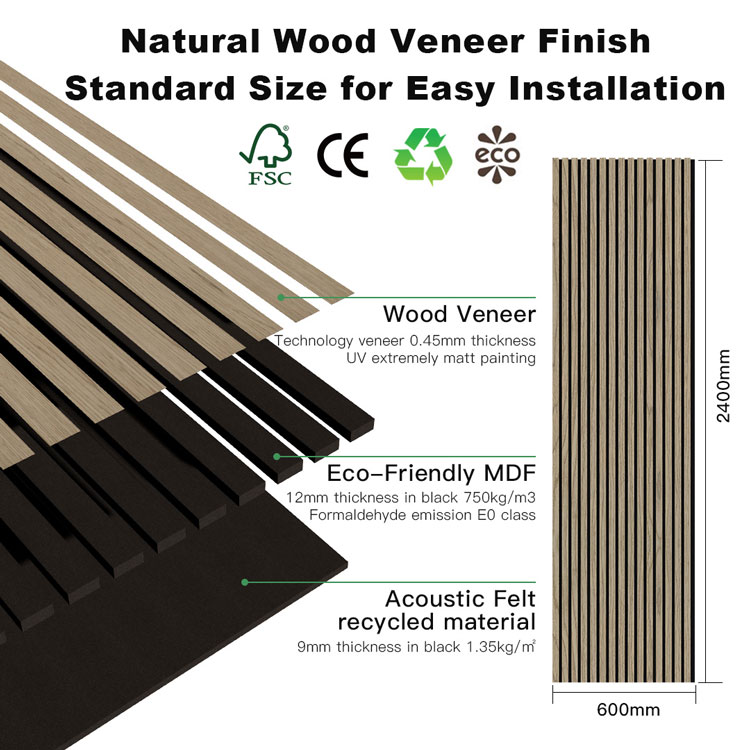
In recent years, wood slat acoustic panels have become one of the most sought-after design elements in residential and commercial interiors. From luxury homes and modern offices to hotels, restaurants, and retail spaces, these panels are appearing everywhere in contemporary architecture. But what exactly is driving their popularity?
The answer lies in their unique ability to combine aesthetic beauty, acoustic functionality, and architectural versatility—three qualities that are essential in modern interior design.
In this article, we’ll explore why wood slat acoustic panels are trending in modern interiors and why they have become a preferred choice for designers, architects, and developers worldwide.
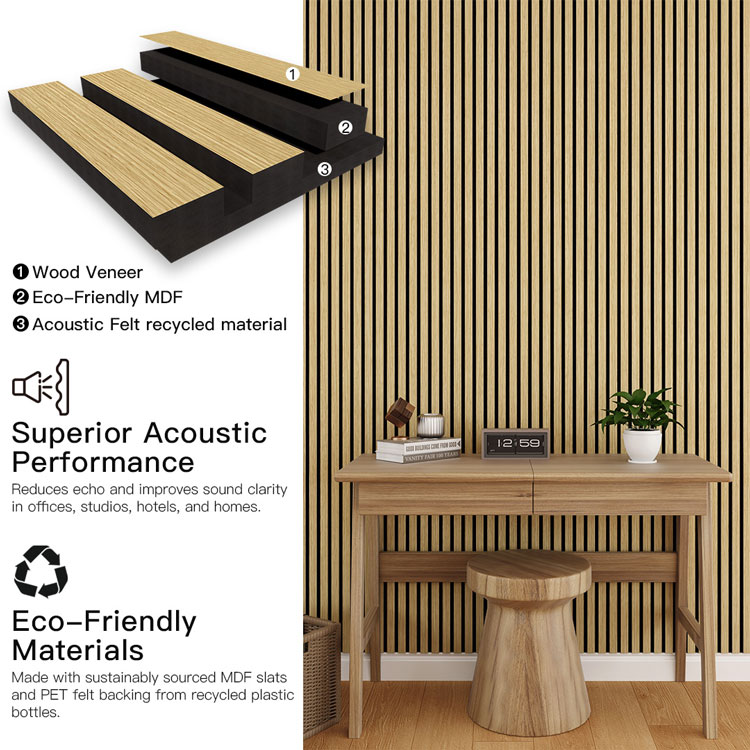 The Rise of Multi-Functional Interior Materials
Modern design is no longer just about creating beautiful spaces—it’s about creating environments that are:
- Functional
- Comfortable
- Sustainable
- Visually appealing
Today’s clients want materials that do more than simply look good. They expect products to improve the usability and comfort of a space while supporting modern aesthetics.
Wood slat acoustic panels meet all of these demands by offering both decorative appeal and acoustic performance in one product.
1. They Combine Style and Acoustic Performance
One of the biggest reasons for the growing popularity of wood slat acoustic panels is that they provide two major benefits in one solution:
Decorative Appeal
Their sleek linear design and natural wood finishes create a modern, elegant appearance that enhances interior aesthetics.
Sound Absorption
The acoustic felt backing and slatted construction help reduce:
- Echo
- Reverberation
- Background noise
This makes spaces more acoustically comfortable while maintaining visual sophistication.
2. They Match Modern Design Trends Perfectly
Wood slat acoustic panels align seamlessly with today’s most popular design styles, including:
- Minimalist interiors
- Scandinavian design
- Japandi aesthetics
- Contemporary architecture
- Biophilic/nature-inspired spaces
Their clean lines and natural textures make them ideal for interiors focused on simplicity, warmth, and balance.
3. Natural Wood Adds Warmth to Interiors
Many modern interiors use materials like:
- Concrete
- Glass
- Steel
- Stone
While these materials look sophisticated, they can sometimes make spaces feel cold or sterile.
Wood slat acoustic panels help soften these environments by introducing:
- Warm natural tones
- Organic textures
- Visual depth
This creates a more welcoming and balanced atmosphere.
4. They Improve Acoustic Comfort in Open Spaces
Open-plan spaces are highly popular today, but they often come with acoustic challenges due to:
- High ceilings
- Hard flooring
- Large glass windows
- Minimal partitions
These features can cause sound to bounce excessively throughout the room.
Wood slat acoustic panels help control noise by absorbing sound reflections, making them ideal for:
- Open offices
- Conference rooms
- Restaurants
- Hotel lobbies
- Residential living areas
5. They Create Stunning Feature Walls
Wood slat acoustic panels are frequently used to build feature walls that act as visual focal points in a room.
Their textured, dimensional appearance adds:
- Architectural character
- Wall depth
- Premium visual interest
This transforms plain walls into statement design elements.
6. They Offer Versatile Installation Options
Another reason for their popularity is their installation flexibility.
Wood slat acoustic panels can be installed on:
- Walls
- Ceilings
- Partitions
- Curved surfaces (depending on design)
This versatility allows designers to incorporate them into a wide range of interior concepts.
7. They Support Sustainable Design Goals
Sustainability has become a major priority in modern construction and interior design.
Many wood slat acoustic panels are manufactured using:
- Eco-friendly materials
- Recyclable acoustic felt
- Low-emission adhesives
- Sustainable wood sources
This makes them a strong choice for environmentally conscious projects.
8. They Enhance Property Value and Perceived Luxury
Wood slat acoustic panels create a premium, upscale look that increases the perceived value of a space.
Their high-end appearance makes interiors feel:
- More luxurious
- More professionally designed
- More architecturally refined
This is especially valuable in:
- Hospitality projects
- High-end residences
- Commercial showrooms
- Luxury retail spaces
Why Businesses and Designers Prefer Professional Manufacturers
As demand for wood slat acoustic panels continues to rise, quality becomes increasingly important.
Professional manufacturing ensures:
- Precise slat spacing
- Consistent acoustic performance
- Durable construction
- High-end finishing quality
This is why sourcing from experienced manufacturers is critical for long-term project success.
Guangdong Leeyin Acoustics: Leading the Wood Slat Acoustic Panel Industry
At Guangdong Leeyin Acoustics, we specialize in the production of premium wood slat wall panels and acoustic panels, serving clients around the world.
As one of China’s leading exporters in the wood slat acoustic panel industry, we are trusted by distributors, contractors, and designers for our quality, reliability, and manufacturing expertise.
Our Advantages Include:
- 20,000㎡ modern production facility
- Advanced automated manufacturing equipment
- Strict quality management following international standards
- Strong production capacity for bulk orders
- Extensive experience in global export markets
We focus on delivering products that combine:
- Excellent sound absorption performance
- Superior craftsmanship
- Elegant modern design
- Long-lasting durability
Our wood slat acoustic panels are used in residential, commercial, hospitality, and architectural projects across the globe.