The telecommunications industry is witnessing a fundamental realignment of infrastructure roles. For decades, the architecture of connectivity was vertically integrated: a single tower, a single operator, a single purpose. Today, a new division of labor is emerging—one that leverages the unique strengths of both space-based and terrestrial assets. In this paradigm, satellite constellations like Starlink dominate wide-area coverage and backhaul, while ground-based towers handle low-latency AI inference and indoor penetration. This is not a competition for supremacy but a strategic specialization driven by immutable physics and economics.
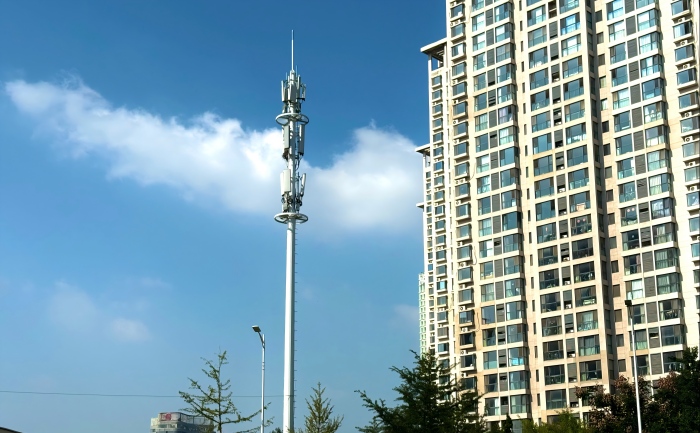

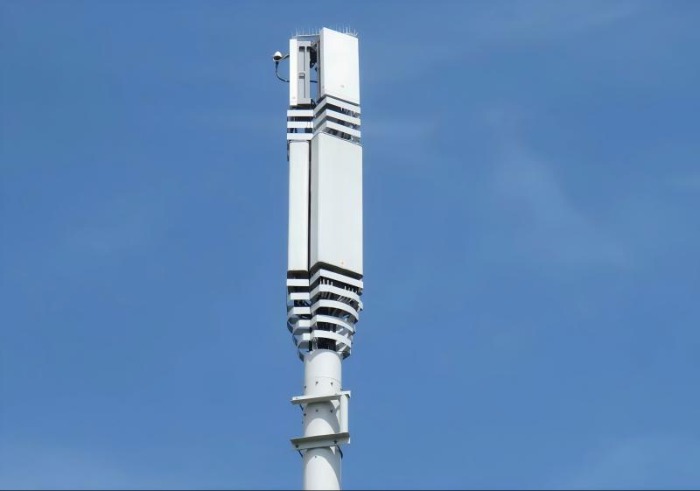
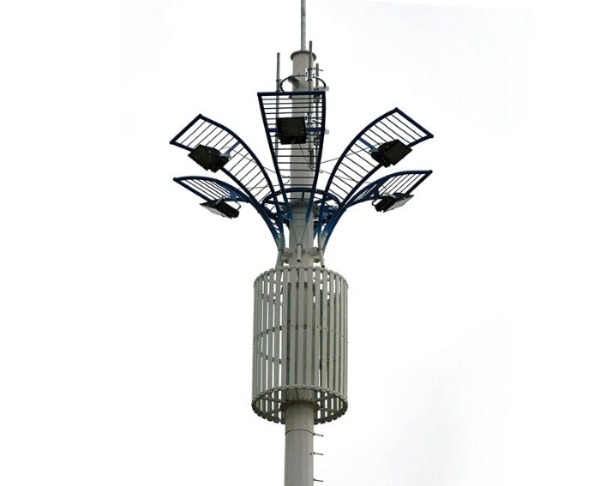
monopole towers


The Spectrum Reality: Why Satellites Can't Match Terrestrial Capacity

The most fundamental constraint on satellite communication is spectrum. AT&T CEO John Stankey recently delivered a "physics lesson" to the industry, highlighting a stark numerical reality: terrestrial mobile network operators have access to approximately 300 megahertz of spectrum per cell site, which is more than triple the 80 megahertz that SpaceX can provide from its entire satellite constellation.

This 80 MHz allocation must be shared across a spot beam covering a radius of roughly 20 miles—compared to a terrestrial cell site's 2-2.5 mile radius . The implication is inescapable: spectral density—bandwidth per user per square kilometer—is fundamentally limited in satellite systems. As Stankey noted, this creates "a weaker uplink" and makes a like-for-like replacement of terrestrial networks by satellites "a hard putt" .

An Analysys Mason report quantified this limitation, finding that Starlink's constellation could provide maximum downlink capacity per beam of only 18.3 Mb/s using 5 MHz of spectrum "under optimal conditions"—capacity that must be shared among all users under that beam.


starlink


The Indoor Coverage Divide: Where Physics Meets Architecture

Satellite signals face another immutable constraint: building penetration. Research has consistently demonstrated that higher frequencies—precisely those used by modern satellite systems for bandwidth—suffer disproportionately from wall attenuation.

Frequency-Dependent Penetration Loss

Academic studies of satellite-to-indoor propagation at L-, S-, and C-bands have documented significant building penetration losses that increase with frequency . A comprehensive measurement campaign using a remote-controlled airship as a pseudo-satellite found a pronounced elevation-angle dependence in signal loss, with non-line-of-sight conditions within buildings presenting formidable challenges .

For low-Earth orbit (LEO) satellite signals, penetration into deep indoor environments remains problematic. However, research has shown that lower-frequency constellations like Orbcomm (operating in the VHF band at 137-138 MHz) can achieve remarkable indoor penetration—even reaching basements—while higher-frequency systems struggle . This underscores the fundamental trade-off: lower frequencies penetrate buildings but offer limited bandwidth; higher frequencies deliver capacity but stop at the window.
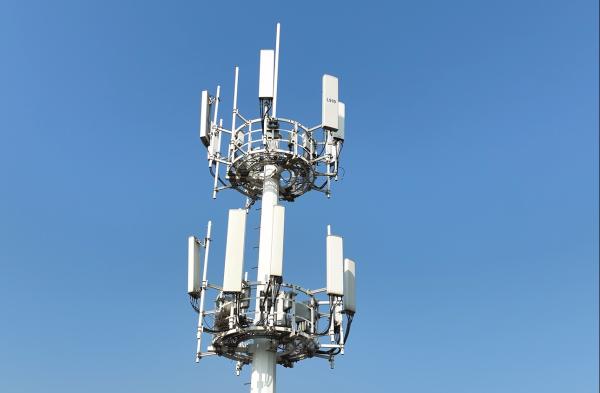

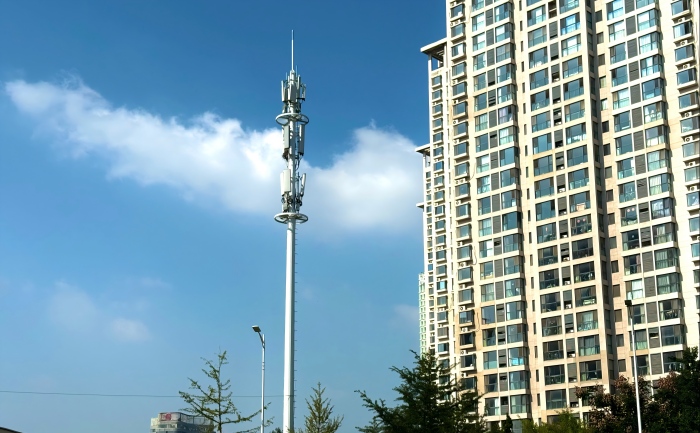
monopole towers


The Glass Ceiling

Modern building materials compound the problem. Low-emissivity (low-E) coated glass, ubiquitous in energy-efficient construction, can attenuate satellite signals by 4.2 dB or more at Ku-band frequencies . Double-silver coated glass can increase attenuation to 3.5 dB, and when signals must pass through at oblique angles—typical for satellites at lower elevation angles—polarization loss can spike by 40% .

AST SpaceMobile, a direct-to-cell satellite provider, acknowledges that achieving reliable indoor reception requires significant signal strength. While 35 dBi may suffice for outdoor and vehicle connectivity, reliable light indoor penetration demands 40 dBi—a threefold increase in signal power—and next-generation satellites aim for 46 dBi to compensate for building loss .


The Latency Imperative: Why AI Computation Must Stay Grounded

The emerging era of edge AI and real-time applications introduces another constraint: latency. While LEO satellites have dramatically reduced round-trip times compared to geostationary orbit—Starlink achieves latencies of 31 milliseconds in ideal conditions —this still exceeds the single-digit millisecond requirements of autonomous systems, industrial robotics, and augmented reality.

Stankey emphasized this point, noting that satellite upstream links are "inherently going to be a more fragile upstream uplink" than terrestrial networks that connect to fiber quickly . For AI inference—where split-second decisions matter—getting data onto fiber as rapidly as possible is paramount. Terrestrial towers with fiber backhaul provide the low-latency, high-reliability path that distributed intelligence demands.


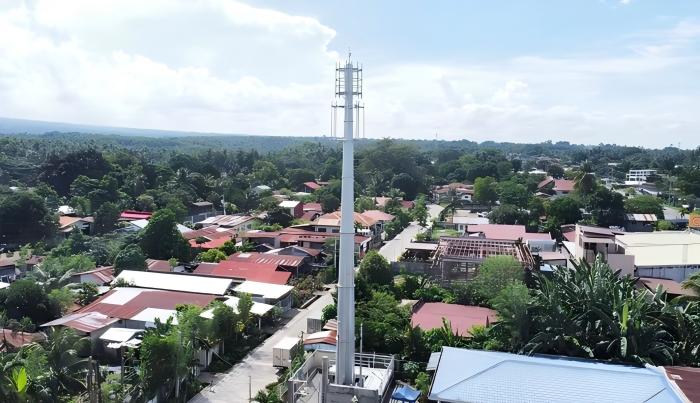
monopole towers


The New Division of Labor: Specialized Roles for a Converged Network

These physical constraints naturally suggest a functional specialization:

Satellites: The Wide-Area Transport Layer

LEO constellations excel at what terrestrial infrastructure cannot economically achieve: connecting the unconnected. For maritime vessels, aircraft, remote wilderness areas, and disaster zones, satellites are the only viable solution. They also serve as high-capacity backhaul for terrestrial sites in challenging locations .

ABI Research projects that the direct-to-cellular market will generate $11.6 billion in revenue by 2030, with IoT applications alone contributing $4 billion . As Stankey noted, satellite may prove superior for "assets that move all over the globe, like container ships"—applications where global mobility trumps local capacity .

Terrestrial Towers: The Capacity and Computation Layer

Ground-based infrastructure—the monopoles, lattice towers, and small cells that form the subject of this blog series—will remain the workhorses of high-density connectivity. With 300+ MHz of spectrum per site, fiber backhaul, and proximity to users, terrestrial towers deliver:

  1. Massive capacity for dense urban environments

  2. Reliable indoor coverage through low-frequency bands and distributed antenna systems

  3. Ultra-low latency for edge computing and AI inference

  4. Support for massive MIMO and beamforming technologies that maximize spectral efficiency
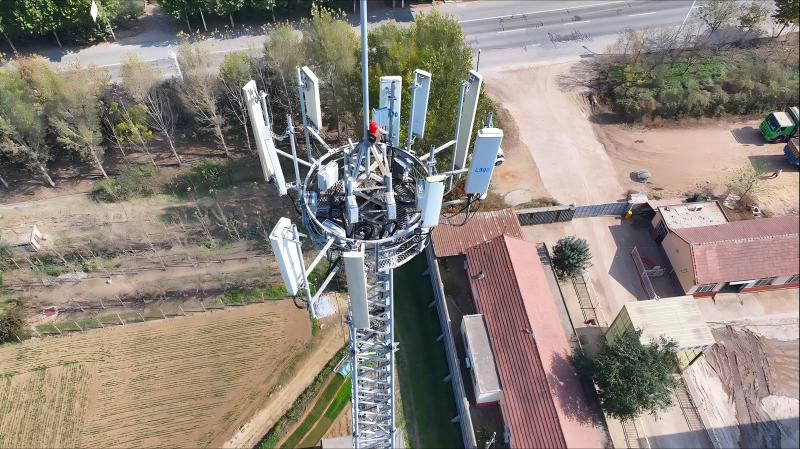

lattice tower


The Convergence Opportunity: Hybrid Networks

The true promise lies not in choosing one architecture over another but in seamless integration. Starlink already operates over 8,000 satellites in orbit, with more than 600 supporting direct-to-device services . Terrestrial operators are partnering with satellite providers—AT&T with AST SpaceMobile, others with Starlink—to create networks where devices intelligently select the optimal path based on location, activity, and requirements.

This hybrid model recognizes that:

  1. Outdoors and mobile may favor satellite connectivity

  2. Indoors and stationary demands terrestrial infrastructure

  3. Emergency scenarios require both, with automatic failover

  4. IoT applications may use satellite for remote reporting and terrestrial for dense sensor networks


Conclusion: Complementary, Not Competitive

The new division of labor in telecommunications infrastructure is not a battle for supremacy but a recognition of complementary strengths. Satellites, with their global reach and declining launch costs, will dominate the wide-area transport layer—connecting the remote, the mobile, and the underserved. Terrestrial towers, with their spectral abundance, building penetration, and fiber proximity, will anchor the capacity layer—delivering the bandwidth and low latency that AI, streaming, and real-time applications demand.

As one industry analyst noted, the market is "evolving quickly, and many services are finding enhanced deployment through strategic alliances" . The winners in this new landscape will be those who embrace specialization, integrate seamlessly across domains, and respect the physical constraints that ultimately govern all communication.

The sky is not the limit—it is one part of a unified system that extends from low-Earth orbit to the smallest indoor femtocell, each element performing the role for which physics and economics have best suited it.


 Learn more at   www.alttower.com

 

Contact Us

The telecommunications industry stands at the precipice of a fundamental transformation. As 5G matures and the vision of 6G takes shape, the network edge is becoming intelligent. The future is not merely about connectivity—it is about computation at the edge, where AI inference happens milliseconds from the user, enabling autonomous systems, immersive reality, and real-time industrial control. This vision demands that processing power migrates from distant cloud data centers to the very base of the tower. But this raises an urgent structural question: Can today's slender monopoles bear the weight of tomorrow's AI?


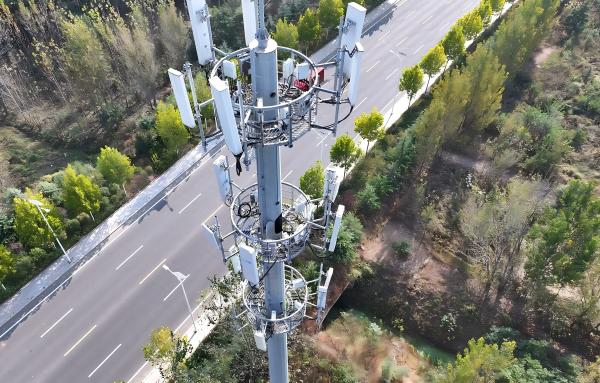
monopole towers


The New Weight: Edge Computing's Structural Demand

The integration of edge computing infrastructure into tower sites represents a paradigm shift in loading conditions. Traditional tower-mounted equipment—antennas, remote radio units (RRUs), and microwave dishes—is measured in kilograms. A typical 5G Massive MIMO antenna weighs 40-47kg . A full complement of sector antennas might total 200-300kg per platform.

Edge computing is different. It requires physical infrastructure: servers, storage, power distribution, and cooling systems. These are not lightweight appendages; they are substantial installations that, in a traditional data center context, demand floor loading capacities of 16 kN/m² or more . This figure—equivalent to approximately 1,600 kg per square meter—is not arbitrary. It reflects the weight density of fully populated server racks, battery backups, and the structural frames that support them.

For a monopole tower, this presents an unprecedented challenge. The question is not whether the tower can support a few additional kilograms—it is whether its foundation, shaft, and connection points can bear the concentrated weight of a micro data center at its base or, in more aggressive designs, mounted on its shaft.


Existing Capacity: The Monopole's Load Envelope

To understand the gap, we must first understand what today's monopoles are designed to carry. The loading capacity of a monopole depends critically on its height and structural design :


Tower Height Class Typical Equipment Load Capacity
Under 100 feet (30m) 500-1,000 lbs (227-454 kg)
100-150 feet (30-45m) 1,000-2,000 lbs (454-907 kg)
Over 150 feet (45m+) 2,000-5,000+ lbs (907-2,268 kg)
monopole towers

Extra-heavy-duty towers, specially engineered for extreme loads, can be rated for over 10,000 lbs (4,500 kg) . These capacities, however, assume that loads are distributed appropriately—typically antenna masses mounted on platforms along the upper shaft, with their weight transferred through the structure to the foundation.

The key observation is that even the largest monopoles have total equipment load capacities measured in thousands of kilograms—not tens of thousands. A fully equipped edge micro data center, with its servers, power systems, and thermal management, could easily consume 30-50% or more of a medium tower's total capacity before any antennas are installed.


The Structural Loading Gap: Comparing Requirements

The disparity between traditional antenna loads and edge computing requirements becomes stark when expressed in engineering terms.

Traditional Antenna Loads:

  1. · Distributed along upper shaft (favorable for moment distribution)

  2. · Low mass density per unit area

  3. · Dynamic wind loads dominate over static weight

  4. · Point loads manageable through localized reinforcement

Edge Computing Loads:

  1. · Concentrated at base or lower shaft (more favorable location, but high magnitude)
  2. · High mass density requiring substantial floor space
  3. · Static gravity loads dominate structural demand
  4. · Requires dedicated support platform with load distribution

monopole structures


A typical edge data center module, even in compact form factors, might impose a base area load of 5-10 kN/m²—lower than a core data center's 16 kN/m², but still an order of magnitude higher than the distributed loads from antenna platforms . For a tower with a base diameter of perhaps 1-2 meters, the available footprint is limited, concentrating these loads further.


The Foundation Question

The most critical structural element for bearing additional weight is not the tower shaft—it is the foundation. Monopole foundations are typically designed as rigid concrete piers or drilled shafts, sized to resist overturning moments from wind and the tower's self-weight .


monopole mast


Adding a multi-ton edge computing load at the base fundamentally alters the foundation's demand:

  1. · Increased compressive stress on the concrete and soil
  2. · Potential settlement if soils are compressible
  3. · Changed load eccentricity affecting moment distribution

Foundations are the most expensive and least accessible part of a tower to modify. A monopole designed without margin for significant additional base weight may face a hard constraint: the foundation cannot safely carry more load, regardless of what the shaft can support.


Reinforcement Strategies: Raising the Capacity Ceiling

For towers with structural margin—or for those where the foundation can accommodate additional load—several reinforcement strategies exist to increase shaft capacity.

1. External Steel Reinforcement (Field-Applied)

A patented method involves attaching vertical flat bars to the tower's exterior using one-sided bolts . These bars, typically steel, are installed continuously up the tower length, with joining plates connecting sections. The reinforcement works by sharing bending moments, effectively increasing the section modulus of the tower. This approach can be targeted to specific zones where additional equipment will be installed .

2. Carbon Fiber Reinforced Polymer (CFRP) Wrapping

Research at North Carolina State University has demonstrated that high-modulus carbon fiber polymers can increase monopole flexural capacity by 20-50% . This technique involves bonding CFRP sheets or strips to the tower's exterior, adding strength and stiffness with minimal weight penalty. The CFRP works compositely with the steel, resisting tensile stresses and delaying yielding. For towers where weight addition is the primary concern, CFRP offers an elegant solution .

3. Internal Stiffening and Bracing

For multi-sided monopoles, internal diaphragms or bracing can be added to increase local stability and global stiffness. This is most feasible during manufacturing but can be retrofitted in some designs.


monopole mast


Design Standards: Built for Today, Not Tomorrow

Current design standards for monopole towers—whether Eurocode , TIA , or GB standards —are focused on traditional telecommunications loads. Eurocode EN 1993-3-1 provides specific guidance for towers and masts, but its load combinations assume antenna and wind loads as the primary drivers . The safety factors embedded in these standards (typically 1.5-2.5 for ultimate loads) provide some margin, but this margin was never intended to accommodate an entirely new class of equipment .

The TIA has recently updated its data center standard (TIA-942) to address edge computing, recognizing that "data processing is increasingly happening at the Edge" and that "data- and compute-intensive AI applications require... significantly higher cabling and rack power densities" . However, this standard applies to the data center facility itself—not to the tower that must support it. A new class of design standard is needed, one that bridges telecommunications tower engineering and data center facility requirements.


Designing for the AI Era: New Monopole Specifications

For new deployments where edge computing integration is anticipated, the design must evolve:

  1. Increased Base Strength: Specify thicker steel in lower sections and larger base plates to accommodate concentrated loads.

  2. Integrated Equipment Platforms: Design the tower with dedicated structural supports for edge computing modules, integrated into the initial foundation design.

  3. Higher Safety Factors: Consider increasing the ultimate load safety factor beyond the standard 1.5-2.5 to provide margin for unknown future equipment .

  4. Modular Foundation Design: Size foundations with reserve capacity for additional dead load, anticipating that the tower's function may evolve over its 30-50 year lifespan.


Conclusion: The Structural Crossroads

The convergence of edge AI and telecommunications infrastructure presents the tower industry with a fundamental challenge. Today's monopoles, engineered for the relatively modest loads of antennas and RRUs, were not designed to host micro data centers. Their load capacities—ranging from 500 to 5,000 pounds—are measured in the same order of magnitude as the equipment they may soon be asked to support .

monopole steel tower

The path forward is not binary. Many existing towers can be reinforced through external steel members or advanced composites like CFRP, achieving 20-50% capacity increases . Foundations, however, remain the critical constraint—once poured, they are difficult and expensive to upgrade.

For new deployments, the message is clear: design for the AI era from day one. Specify higher-grade steels, increase base section thickness, and—most critically—pour foundations with reserve capacity for the unknown computational loads of tomorrow. The tower that hosts both antennas and AI will be the most valuable asset in the network. The question is whether today's monopoles are ready to bear that weight.


 Learn more at   www.alttower.com


Contact Us


In the race to deploy 5G and expand network coverage, telecom operators face a critical challenge: securing viable sites quickly and cost-effectively. The solution lies not just in building more towers, but in building smarter ones. The modern monopole tower, specifically engineered for multi-operator use, has emerged as the ultimate host, transforming a single site into a powerful, revenue-generating hub that maximizes site value for owners and provides unparalleled deployment speed for operators.


monopole tower


The Paradigm Shift: From Single-User to Shared Infrastructure

The traditional model of each operator building its own tower is inefficient, costly, and unsustainable, especially in dense urban areas where space is at a premium. The shared infrastructure model, championed by tower companies worldwide, consolidates multiple operators onto a single structure. The sleek, low-footprint monopole is perfectly suited for this role, but it requires a deliberate design philosophy to unlock its full potential.


Engineering the Ultimate Host: Key Design Strategies

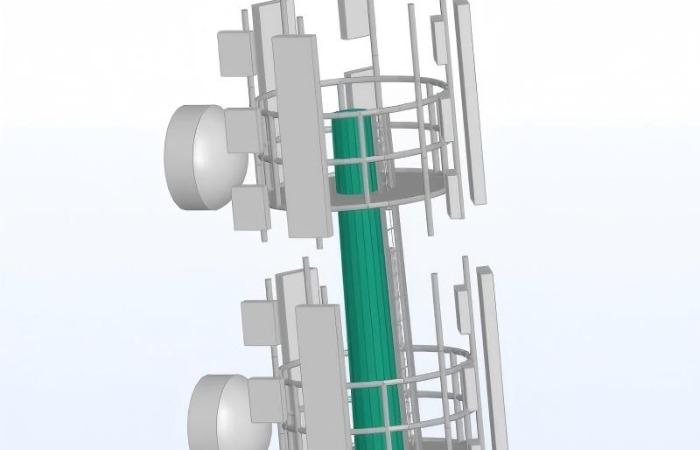
To successfully host multiple carriers, a standard monopole must be re-engineered from the ground up. This involves three critical areas of optimization:

1. Optimized Platform Design: Creating Vertical Real Estate
A single platform is insufficient for multi-operator collocation. The solution is a tiered platform system.

  1. · Sector-Specific Tiering: Multiple platforms are installed at different heights, allowing each operator to have a dedicated, interference-free zone for their antenna arrays.

  2. · Customized Layouts: Platforms are designed with specific mounting patterns to accommodate various antenna types (e.g., massive MIMO, legacy 2G/3G panels) and sizes from different manufacturers.

  3. · Access and Safety: Each platform is designed with adequate working space, certified fall protection systems, and clear cable routing pathways to ensure safe and efficient maintenance for all tenants.

2. Advanced Antenna Mounting Solutions: Flexibility is Key
A one-size-fits-all mounting approach doesn't work in a multi-operator environment. Flexibility is achieved through:

  1. · Universal Bracketry: Customizable, hot-dip galvanized antenna mounting brackets can be configured to hold equipment from all major OEMs (e.g., Ericsson, Huawei, Nokia).

  2. · Offset Mounts and Extension Arms: These are used to position antennas further from the pole, preventing "tower shadow" (signal blockage by the pole itself) and ensuring optimal radio frequency (RF) performance for every operator.

  3. · Pre-Installed Cable Management: Integrated ladder racks and conduit systems prevent cable chaos, reducing installation time and minimizing wind load.


monopole towers


3. Rigorous Load Capacity and Structural Analysis
The addition of multiple operators significantly increases the structural demand. A robust engineering analysis is non-negotiable:

  1. · Comprehensive Load Calculation: Engineers must account for the combined weight of all antennas and RRUs, increased wind load from the larger collective surface area, and potential ice loading in certain climates.

  2. · Dynamic Analysis: The tower's dynamic response to wind is modeled using Finite Element Analysis (FEA) to ensure it can withstand extreme weather events without excessive deflection or vibration that could impact radar or network performance.

  3. · Future-Proofing with Margin: Designs incorporate a generous reserve capacity margin, allowing for the addition of future tenants or next-generation equipment (e.g., 6G antennas) without requiring costly structural reinforcement.


monopole mast


The Economic Advantage: A Compelling Value Proposition

The financial benefits of a multi-operator monopole are transformative for site owners and operators alike.


Beneficiary Economic Advantages
Site Owner / TowerCo Maximized Revenue: Recurring rental income from multiple tenants.
Higher Asset Valuation: The site becomes a more valuable, cash-flow-generating asset.
Optimized CAPEX: The cost of one superior structure is shared, improving return on investment.
Mobile Network Operators Reduced CAPEX: Eliminates the cost of acquiring land and building a new tower.
Faster Time-to-Market: Can deploy services in months, not years.
Lower OPEX: Shared costs for power, security, and site maintenance.

Case Study: A 40-Meter Urban Monopole Hosting 3 Operators

A 40-meter monopole in a major European city was designed from the outset to host three mobile operators. The design featured:

  1. Four-tiered platform system with dedicated levels for each operator and a shared top tier for microwave backhaul.

  2. Customized offset mounts to ensure precise antenna positioning for optimal sector alignment.

  3. A 30% reserve capacity in the structural design to accommodate future equipment.

Result: The site was fully tenanted within six months of completion, generating triple the revenue of a single-operator site and providing 5G coverage to a key urban area two years faster than through traditional methods.


gsm monopole tower


Conclusion: The Monopole as a Strategic Asset

The modern multi-operator monopole is far more than a simple steel tube; it is a highly engineered, revenue-optimizing platform. By focusing on intelligent platform design, flexible mounting solutions, and rigorous structural engineering, tower companies and network operators can unlock unprecedented site value. In an era defined by connectivity demands and cost pressures, the ability to host multiple carriers on a single, aesthetically pleasing structure is not just an advantage—it is the ultimate strategy for building the resilient, high-capacity networks of the future.


 Learn more at   www.alttower.com
 

Contact Us

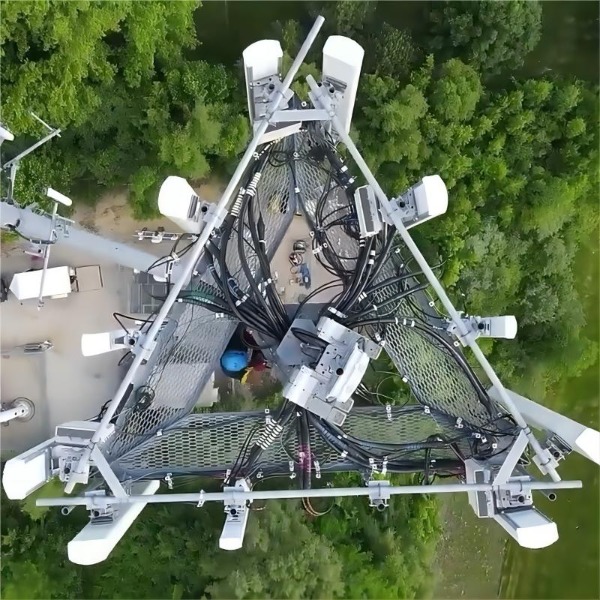
The rollout of 5G technology promises unprecedented speed, low latency, and massive connectivity. However, achieving these goals in densely populated urban areas presents a significant challenge: space constraints. Traditional lattice towers and macro sites are often impractical due to their large footprint, aesthetic intrusion, and zoning restrictions. Enter the monopole tower—a sleek, space-efficient solution that is driving 5G densification in cities worldwide. This blog explores how monopoles are addressing urban infrastructure challenges and enabling the next generation of wireless networks.


telecom monopole


1. The Challenge: 5G Densification in Urban Areas

5G networks rely on densification—deploying more small cells and antennas per square kilometer—to deliver high capacity and coverage. Unlike 4G, which used larger cells spaced farther apart, 5G requires smaller cells placed closer together, especially in urban environments. Key challenges include:


  • Limited Physical Space: Rooftops, streets, and public areas are already crowded with existing infrastructure.

  • Aesthetic Concerns: Communities often resist unsightly towers that disrupt cityscapes.

  • Zoning Regulations: Municipalities impose strict guidelines on tower height, appearance, and placement.


2. Why Monopoles? The Space-Saving Advantage

Monopoles are single, slender poles made of steel or concrete, typically ranging from 10 to 40 meters in height. Their design offers several critical advantages for urban deployments:


  1. Small Footprint: Monopoles require minimal ground space, often as little as 1–2 square meters, making them ideal for sidewalks, medians, and building rooftops.

  2. Stealth Design: They can be camouflaged as streetlights, flagpoles, or architectural features, addressing aesthetic concerns and easing regulatory approval.

  3. Rapid Deployment: Prefabricated components and modular designs reduce installation time, minimizing disruption in busy urban areas.

  4. Multi-Functionality: Monopoles can host 5G antennas, small cells, IoT sensors, and public lighting, consolidating infrastructure and reducing clutter.


3. Technical Innovations Driving Urban Adoption

Monopoles are evolving to meet the specific demands of 5G densification:

  • Structural Adaptability: Engineers design monopoles to support the weight and wind load of multiple antennas and equipment, often using high-strength steel or composite materials.

  • RF Optimization: Their height and placement are optimized for line-of-sight propagation, reducing signal interference and improving network performance.

  • Power and Fiber Integration: Monopoles can incorporate concealed conduit for fiber backhaul and power lines, simplifying connectivity.


telecom monopole


4. Real-World Applications and Case Studies

  • Smart Streetlights: Cities like Los Angeles and Singapore deploy monopoles disguised as streetlights, hosting 5G small cells and sensors for traffic management and public safety.

  • Rooftop Deployments: In dense areas like Hong Kong, monopoles on rooftops provide coverage without occupying valuable ground space.

  • Transportation Hubs: Monopoles at airports and train stations (e.g., London’s Canary Wharf) deliver high-capacity connectivity to large crowds.


5. Overcoming Urban Deployment Barriers

Monopoles help operators navigate common urban challenges:

  • Community Acceptance: Stealth designs blend into the environment, reducing NIMBY (“Not In My Backyard”) opposition.

  • Regulatory Compliance: Manufacturers work with cities to ensure designs meet zoning height and aesthetic requirements.

  • Cost Efficiency: While installation costs vary, monopoles’ modularity and shared infrastructure (e.g., hosting multiple carriers) lower long-term expenses.


6. The Future: Monopoles and Beyond

As cities advance toward 6G and smart city ecosystems, monopoles will play an even greater role:

  1. AI-Driven Maintenance: Sensors on monopoles can monitor structural health and optimize network performance in real time.

  2. Sustainability Integration: Solar panels and energy-efficient designs will reduce the carbon footprint of urban networks.

  3. Edge Computing: Monopoles may house edge servers to process data locally, enabling ultra-low-latency applications.


Conclusion: The Urban Connectivity Backbone

Monopole towers are the unsung heroes of urban 5G densification, offering a pragmatic solution to space constraints while enabling the high-performance networks of tomorrow. Their versatility, stealth capabilities, and technical adaptability make them indispensable for building connected, smart, and sustainable cities. As demand for bandwidth grows, monopoles will continue to evolve, ensuring that urban areas remain at the forefront of the digital revolution.


 Learn more at   www.alttower.com
 

Contact Us

keyboard_arrow_up