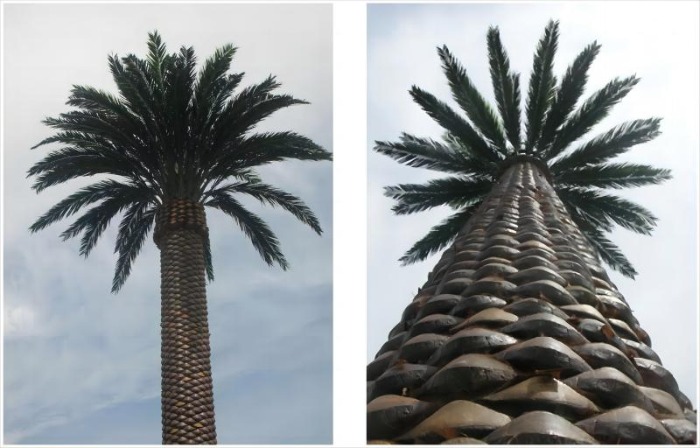
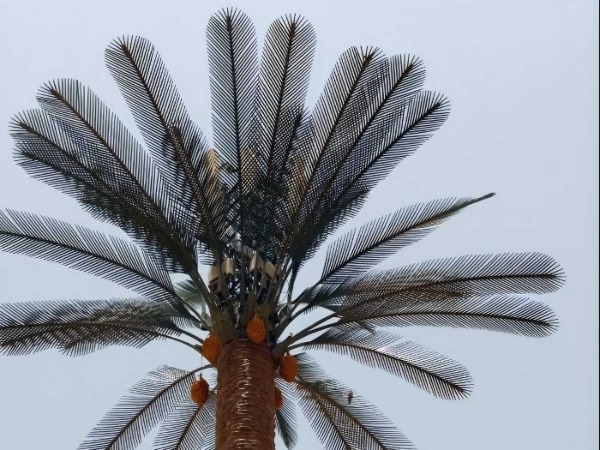
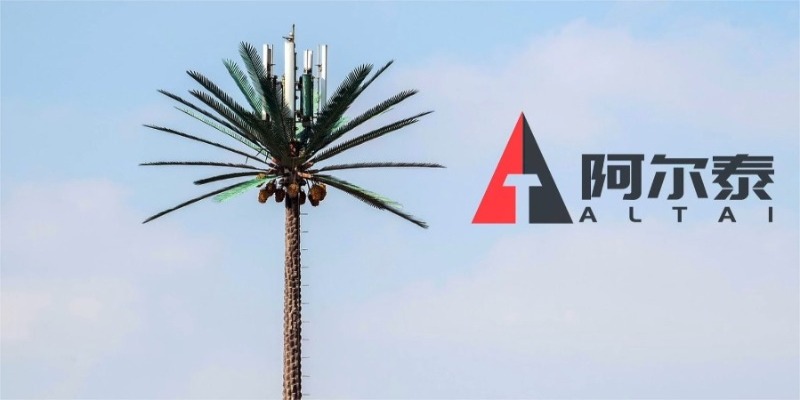
The collision between digital connectivity and natural preservation is one of the defining infrastructure challenges of our time. National parks, wilderness preserves, and scenic landscapes represent the planet's most treasured places—yet they are also among the most dangerous for visitors without reliable communication. As mobile network operators seek to extend coverage into these environmentally sensitive areas, they face a formidable adversary: the very essence of what makes these places special. The solution lies not in brute-force infrastructure but in stealth, sensitivity, and strategic design.
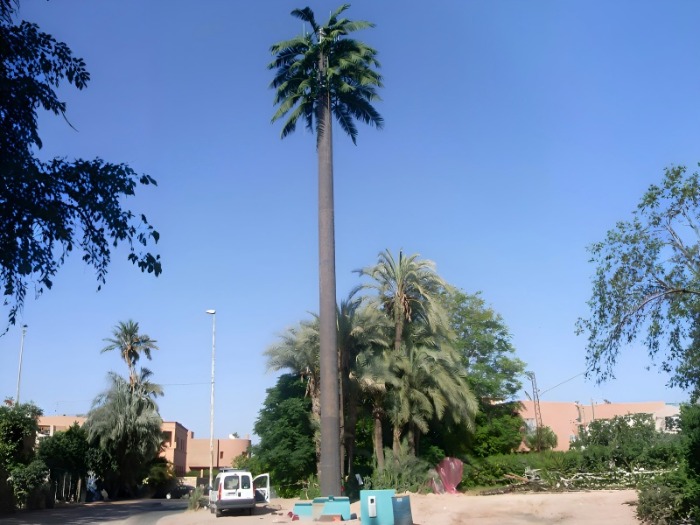
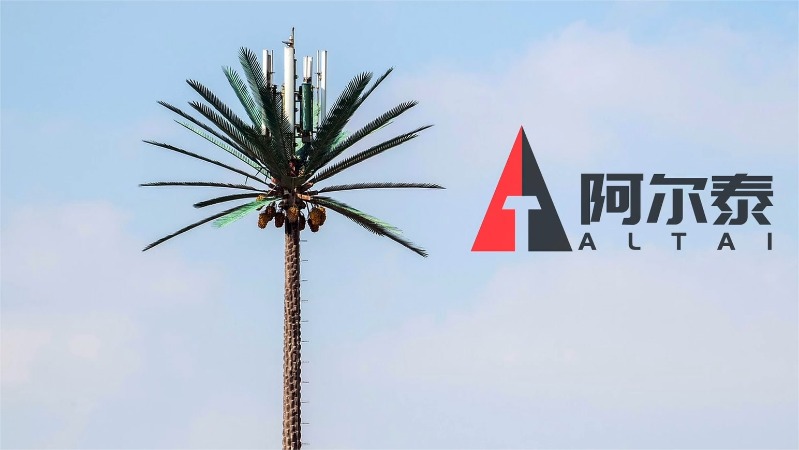
monopalm tree tower


The Core Challenge: Connectivity Without Compromise

Environmentally sensitive areas present a unique paradox. Visitors demand the safety and convenience of modern communication, yet they come precisely to escape the visual clutter of the built environment. National park superintendents, planning boards, and conservation authorities must balance two competing mandates: public safety and landscape preservation.

The stakes are high. In Taiwan's Taroko National Park, authorities cited "improving communication and disaster relief" as the primary justification for deploying a camouflaged tower near the Pingshan mountain climbing area . The remote peaks of the Central Mountain Range, with 27 peaks exceeding 3,000 meters, had become a growing concern as mountain climbers increased following the government's open mountain policy. When accidents occur, every minute of delayed communication can be fatal.

Yet the opposition is equally passionate. When Verizon sought approval for a 138-foot (42-meter) "monopine" tower in California's Sequoia National Park, a monthlong public comment period revealed deep divisions . Critics argued that adding cell service "could detract from one of the main reasons many people visit in the first place: solitude" . The National Park Service's own assessment acknowledged concerns about "solitude, self-reliance, natural soundscapes, and the ability to disconnect from technology" .

The task, therefore, is not merely technical—it is diplomatic, ecological, and aesthetic.


The Camouflage Solution: When Disappearing is the Goal

Camouflage towers—often called "monopines," "monopalms," or simply "fake trees"—represent the leading edge of aesthetic compromise. Their fundamental premise is simple: if a tower must exist, it should not look like one.
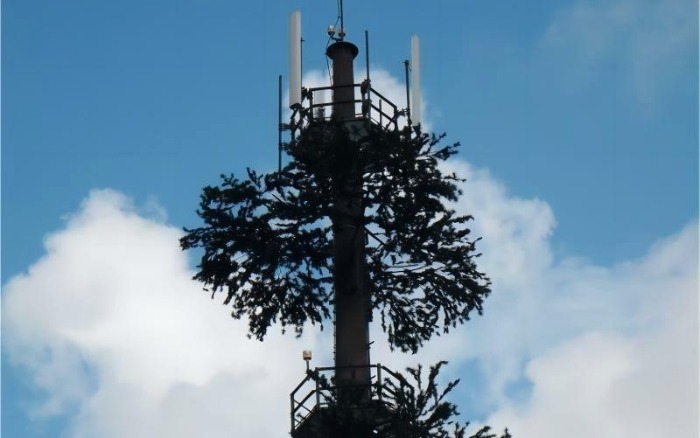
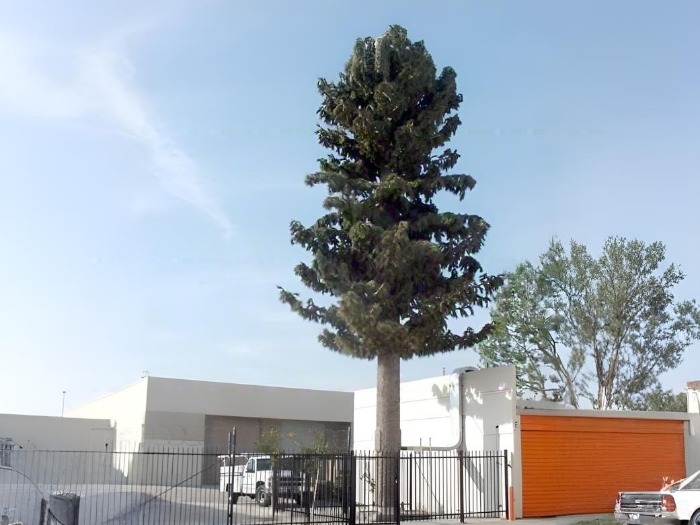
monopine tower


Species Matching: The Art of Belonging

The most critical design decision is selecting the correct species. A tower that mimics a tree not found in the local ecosystem can be more jarring than an exposed steel structure.

The United Kingdom's Dartmoor National Park provides a cautionary tale. A proposal to erect a "fake cypress tree mast" was rejected precisely because the Lawson cypress is "an alien species which would be entirely out of place" in the open fields edged with broad-leaved woodland . The planning inspector noted that the structure would be visible from numerous public viewpoints and "would be even more apparent in winter when the deciduous trees had shed their leaves" . The need for emergency services communication (the Airwave TETRA network) was deemed insufficient to override the harm to "the character and appearance of the national park" .

Conversely, successful deployments prioritize authenticity. In Maine's Acadia National Park region, AT&T's subsidiary New Cingular Wireless won approval for a 125-foot white pine tower on private land in Otter Creek . White pine is native to the region, and the design was carefully coordinated with park and town officials to ensure it would not "obstruct any of the park's scenery" .

Material Science and Fabrication

Modern camouflage towers are typically constructed using fiberglass-reinforced plastic (FRP) for the trunk and foliage elements. Taroko National Park's "fake tree base station," built at a cost exceeding NT$1 million (approximately $32,000 USD) through collaboration between two telecom companies, uses FRP construction to achieve both structural integrity and realistic texture .

The material must satisfy three competing requirements:

  1. Durability to withstand decades of UV exposure, wind, and precipitation

  2. Aesthetic fidelity to replicate bark texture, branch patterns, and foliage color

  3. RF transparency to ensure the concealment material does not attenuate or distort the signals passing through it

Advanced manufacturers now offer patent-pending technologies like InvisiWave™ that can conceal even 5G millimeter-wave equipment "without degrading its performance and coverage" .
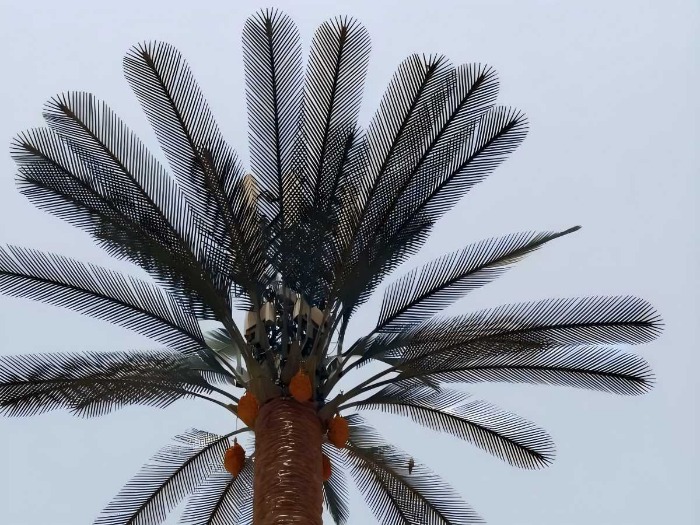

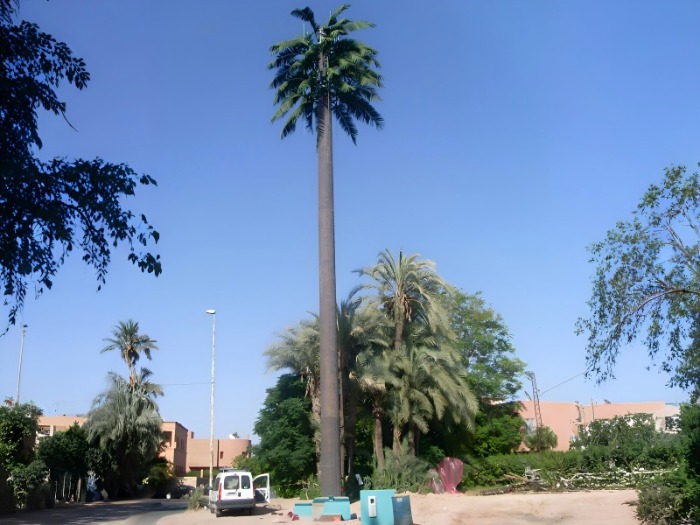
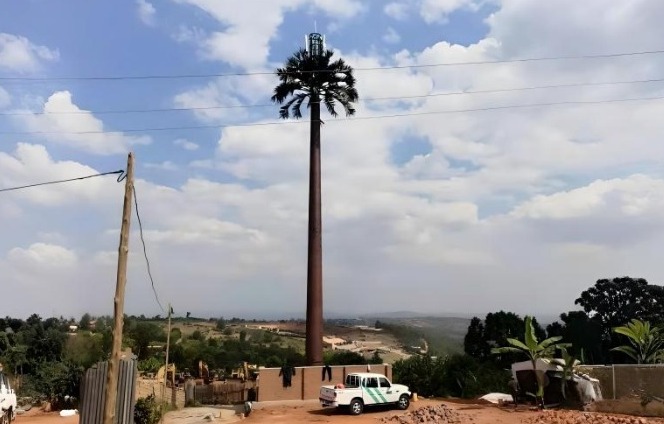
palm tree monopole


The Regulatory Pathway: Securing Approval in Sensitive Zones

Obtaining permission to build in a national park or preserve is fundamentally different from conventional zoning approval. The process demands multi-agency coordination, environmental assessment, and often, legislative oversight.

Environmental Assessment Requirements

In Australia's Royal National Park, a Telstra telecommunications tower proposal underwent a formal Review of Environmental Factors (REF) process, documented in a comprehensive 6.46 MB report filed with the New South Wales government . This document examined potential impacts on "parks reserves and protected areas" and established the framework for mitigation .

South Africa's National Environmental Management Act (NEMA) explicitly requires that "a telecommunications tower exceeding 15 meters must be subjected to an Environmental Impact Assessment" . Failure to comply can result in enforcement action, as demonstrated by the Democratic Alliance's complaint regarding an illegal 45-meter tower erected in Harrismith without proper public participation or heritage assessment .

The Public Participation Imperative

The Sequoia National Park approval process revealed the complexity of public engagement. While a majority of commenters opposed the tower during the comment period, the National Park Service proceeded with approval based on a nuanced balancing test . Superintendent Woody Smeck's recommendation concluded that "the selected alternative will not have significant effect on the quality of the human environment or the park's cultural or natural resources" .

The agency's final determination explicitly weighed competing values:

"The NPS has determined that the long-term health, safety, and communication benefits associated with enhanced communications"—including better ability to report emergencies—"outweighs the disruption some visitors may experience in response to other visitors' use of cell phones in public spaces" .

This reasoning was accompanied by a commitment to "a public education program to promote considerate use of cell phones in shared public facilities and spaces" —acknowledging that the infrastructure itself is only part of the equation.
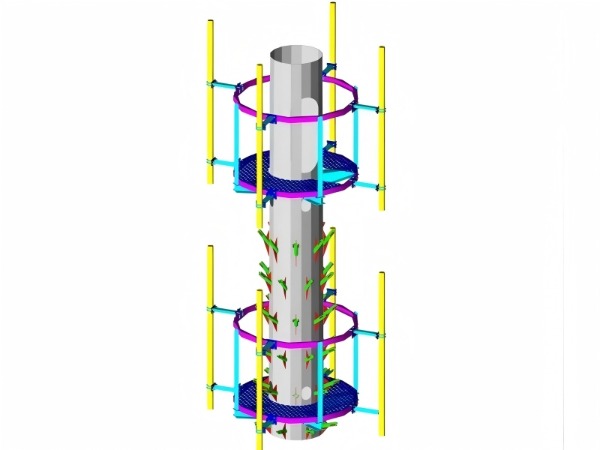

bionic tree tower


Site Selection Optimization

Choosing the right location within a sensitive area can determine project success or failure. Key strategies include:

  1. Proximity to Existing Development: The Sequoia tower was sited near Wuksachi Village, an existing commercial area, rather than in pristine wilderness . This concentrated infrastructure where human impact was already present.

  2. Forest Edge Placement: A proposed mast in Ireland's Lisnagra forest would be set "approximately 35 metres back from the nearby local road," with existing Sitka spruce trees screening most of the structure except the upper section that rises above the treeline .

  3. Mitigation Through Vegetation Retention: The Irish proposal included a commitment to "permanent retention of forest around the tower" as a visual mitigation measure .


Environmental Impact Mitigation: Beyond Visuals

Visual impact is the most obvious concern, but comprehensive environmental assessment must address multiple dimensions.

Ecological Disruption

Construction in sensitive areas can disturb soil, damage root systems, and introduce invasive species via construction equipment. Mitigation measures include:

  1. Timing construction to avoid wildlife breeding seasons

  2. Using existing roads and trails for access

  3. Implementing strict vehicle washing protocols to prevent seed transport

  4. Restoring disturbed areas with native vegetation
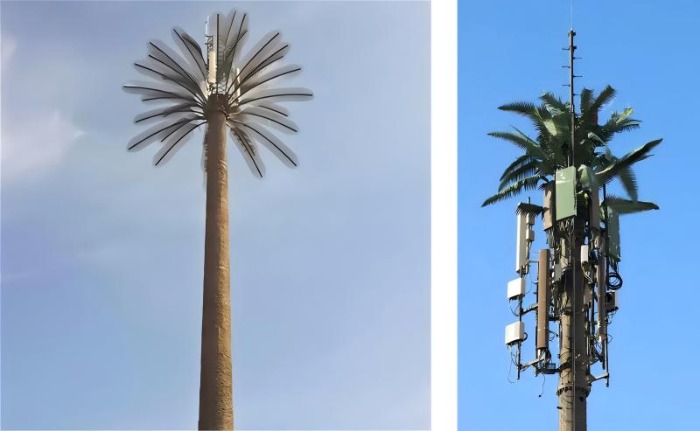

bionic tree tower


Light and Noise Pollution

Towers require periodic maintenance, and some facilities include backup generators. These can introduce light and noise into previously dark, quiet environments. Solutions include:

  1. Minimizing exterior lighting and using motion-activated, shielded fixtures

  2. Specifying low-noise generator sets with sound-attenuating enclosures

  3. Restricting nighttime maintenance activities

Electromagnetic Field Considerations

Public comments on the Sequoia project included "concern about exposure to electromagnetic frequencies from the tower" . While scientific consensus supports compliance with safety standards, addressing public perception requires:

  1. Transparent communication of RF emissions data

  2. Compliance with FCC or equivalent national standards

  3. Educational outreach explaining the difference between near-field and far-field exposure


 Learn more at   www.alttower.com


Contact Us

In the world of luxury hospitality, every detail matters. The sweeping ocean view, the manicured golf course, the infinity pool perched above a tropical forest—each element is curated to create an experience of effortless beauty. Yet today’s guests arrive with an expectation that challenges this aesthetic perfection: flawless 4G, 5G, and Wi-Fi connectivity. The paradox of modern luxury is that guests demand to be simultaneously present in paradise and connected to the world. For resort owners, the solution lies not in hiding infrastructure, but in transforming it into part of the landscape itself. Enter the camouflage tree tower—a palm for the beachfront, a pine for the mountains—that seamlessly merges connectivity with the art of hospitality.


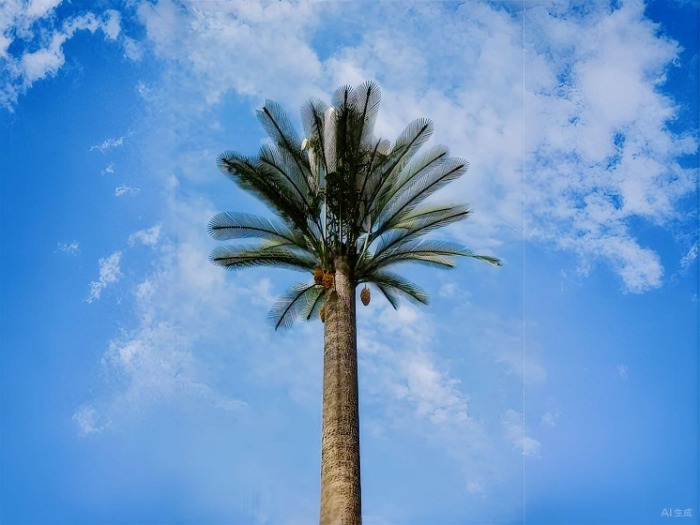
palm tree tower


The Resort Challenge: Connectivity Without Compromise

Luxury resorts face a unique infrastructure dilemma. Their properties are often located in precisely the places where conventional towers are least welcome: pristine coastlines, forested hillsides, and protected landscapes. Yet their guests, paying premium rates, expect uninterrupted service.

A guest checking into a five-star beach resort expects to stream, share, video call, and conduct business from their suite or sun lounger. A golfer on the 14th fairway needs reliable coverage to manage work calls between swings. A family exploring the resort grounds wants their children to stay connected while playing.


The traditional solution—a standard telecommunications tower—is unacceptable. It disrupts sightlines, clashes with architectural themes, and diminishes the very natural beauty that commands premium rates. The modern solution is infrastructure that serves without intruding: palm trees that transmit, pines that perform.


Palm and Pine: Site-Specific Design Philosophy

The choice between palm and pine is not merely aesthetic; it reflects the resort's geography and architectural context.

The Palm Tower: Coastal and Tropical Elegance

Palm towers are the quintessential solution for beachfront resorts, island properties, and coastal developments. Their slender trunks and graceful fronds harmonize with natural palm groves, making them virtually indistinguishable from living trees. Advanced manufacturing uses fiber-reinforced polymer (FRP) for fronds and trunk cladding, with fronds individually hand-painted to match local species. The result is a structure that appears to sway with the trade winds while providing robust connectivity.

For golf courses, palm towers offer dual functionality. Positioned strategically, they can serve as both hazard markers and coverage nodes—blending into the landscape while ensuring golfers remain connected for reservations, pace-of-play tracking, and emergency communication.

pine tree tower

The Pine Tower: Mountain and Forest Integration

For mountain resorts, alpine lodges, and forest retreats, the pine tower is the natural choice. Tall, tapered, and authentically textured, these structures mimic native conifers with remarkable fidelity. The trunk is clad in bark-textured panels cast from real tree molds, while branches are arranged in natural, asymmetric patterns that avoid the "lollipop" look of early designs.

These towers are particularly valuable in ski areas, where reliable coverage is a safety necessity. Guests on the slopes, families at the base lodge, and event planners coordinating weddings


The Value Proposition: Beyond Connectivity

For resort owners and developers, the decision to invest in camouflage towers is driven by a clear economic and experiential calculus.

1. Guest Experience: The Ultimate Differentiator
In the luxury segment, guest experience is paramount. A resort with poor connectivity faces negative reviews, frustrated guests, and diminished return visits. A resort with invisible but flawless coverage delivers a seamless experience that guests remember—without remembering why. The infrastructure disappears, allowing the beauty of the property to take center stage.

2. Property Value: Aesthetic Integrity as an Asset
Real estate value in luxury hospitality is intrinsically tied to aesthetics. A property marred by visible industrial towers loses its premium positioning. Camouflage towers protect that value. By maintaining unobstructed views and preserving landscape integrity, they ensure the property remains as photogenic in marketing materials as it is in person.

palm tree tower

3. Operational Efficiency: Staff and Management Connectivity
Beyond guest services, resorts themselves depend on reliable connectivity. From reservation systems and housekeeping coordination to security monitoring and emergency response, seamless coverage improves operational efficiency. Camouflage towers support these internal networks without compromising the guest experience.

4. Event and Wedding Revenue
Many resorts derive significant revenue from weddings, corporate retreats, and special events. These gatherings demand reliable connectivity for streaming, social sharing, and coordination. A property with robust, aesthetically integrated coverage can market this capability as a premium feature.


Case Examples: Integration in Practice

While specific projects often remain confidential due to resort branding sensitivities, the patterns of successful deployment are clear:

  1. Coastal Resort in the Caribbean: A 30-meter palm tower near the main pool area supports 5G coverage across the property. The tower is sited among existing coconut palms, with frond density adjusted to match the surrounding grove. Equipment cabinets are housed in a "dead frond skirt" at the base—a detail that enhances realism while concealing infrastructure.
  2. Mountain Resort in the Alps: A pine tower at mid-mountain provides coverage for both winter sports and summer hiking trails. The tower's height is limited to remain below the treeline when viewed from the valley, preserving the pristine silhouette of the peak.
  3. Golf Course Community in Florida: Multiple palm towers along the fairways serve dual purposes: they provide coverage for golfers and guests while functioning as visual landmarks that enhance course navigation.

Technical Considerations for Resort Deployments

Successful resort installations require careful attention to several factors:

Height Optimization: Towers must be tall enough to clear tree canopies and provide adequate coverage but not so tall as to dominate the landscape. Typical heights for resort applications range from 15 to 30 meters, with custom heights available for specific site conditions.

Load Capacity: Resorts often require multi-operator hosting to accommodate guests from various carriers. The camouflage structure must be engineered to support the combined weight and wind load of multiple antenna arrays.


palm tree tower


Environmental Compliance: Siting within protected coastal zones or forested areas requires rigorous environmental assessment. Experienced manufacturers work with local authorities to ensure compliance with all permitting requirements.

Long-Term Durability: Resort investments are long-term. Quality camouflage materials are rated for 20-30 years of UV exposure, with UV-stabilized polymers and durable bark coatings that resist fading, cracking, and degradation.


The ROI of Invisible Infrastructure

For resort owners, the return on investment in camouflage towers is measured not only in connectivity but in preserved value:

  1. · Premium room rates justified by uninterrupted service

  2. · Higher occupancy driven by positive reviews and word-of-mouth

  3. · Event bookings enabled by reliable coverage

  4. · Asset preservation maintaining the property's visual integrity


A property that invests $150,000 in a camouflage tower may recoup that investment many times over through enhanced guest satisfaction and the ability to command premium pricing.


Conclusion: The Future of Resort Connectivity

As guest expectations for connectivity continue to rise, and as 5G networks demand greater infrastructure density, the pressure to deploy towers in sensitive locations will only intensify. Luxury resorts that embrace camouflage technology are not merely solving a technical problem—they are making a strategic investment in their brand, their guest experience, and their long-term value.

The palm that provides coverage, the pine that performs—these structures represent the perfect synthesis of engineering and artistry. They prove that in the world of luxury hospitality, the best infrastructure is the infrastructure no one notices, quietly ensuring that paradise remains perfectly connected.


palm tree tower

For telecom operators battling NIMBY ("Not In My Backyard") resistance in scenic or urban areas, palm tree towers offer a revolutionary solution. These stealth telecommunication structures mimic natural palm trees while housing antennas, microwave links, and IoT systems. Here's a deep dive into their production, technical specs, and performance parameters – engineered for minimal visual impact and maximal functionality.


Core Technical Specifications

Modern palm tree towers balance structural integrity, RF efficiency, and aesthetic camouflage.

Key parameters include:


Parameter Standard Range Advanced Models
Height 6–20m (20–65 ft) Up to 25m (82 ft)
Trunk Diameter 0.8–1.2m 1.5m (with internal ladder)
Wind Resistance 150 km/h (93 mph) 200 km/h (124 mph)
Antenna Capacity 6–9 sector antennas 12+ antennas + 4 dishes
RF Transparency Loss <0.7 dB <0.3 dB (specialized coatings)
Camouflage Fidelity 90% match (50m distance) 95%+ (species-specific)

Structural Materials:

  • Trunk: Galvanized steel core with fiber-reinforced polymer (FRP) bark.

  • Fronds: UV-resistant polyethylene (PE) or glass-reinforced plastic (GRP) with embedded antenna slots .

  • Foundation: Reinforced concrete base (4–6m depth, 3–5m diameter) .


palm tree tower


Camouflage Technology: The Science of "Invisibility"

1. Biomimetic Design:

  1. Fronds replicate species like Phoenix dactylifera (date palm) using 3D laser scans of native trees.

  2. Color stability maintained for 10+ years via UV-resistant coatings (ASTM D4329 compliant).

2. RF-Optimized Materials:

  1. FRP trunk cladding with dielectric constant <2.8 ensures minimal signal attenuation.

  2. Concealed ground plane under faux "roots" reduces electromagnetic interference.

3. Environmental Integration:

  1. Bird-safe frond spacing deters nesting.

  2. Infrared-reflective coatings blend with natural canopy in aerial surveys.


Production Workflow: From CAD to Installation

1. Customization & Modeling:

  1. Site-specific scans determine local palm species morphology.

  2. 3D BIM software (e.g., Tekla Structures) designs load-bearing lattice and antenna mounts.

2. Fabrication:

  1. Trunk sections: Steel tubes galvanized (150μm zinc coating) for corrosion resistance.

  2. Fronds: Injection-molded PE/GRP with radome slots for antennas.

3. Assembly & Installation:

  1. Modular segments bolted on-site (5–7 days).

  2. Crane-assisted erection + drone-verified antenna alignment.

4. Concealment Tech:

  1. Antennas nested in upper fronds; RRUs hidden in hollow trunk compartments.

  2. Soil/landscaping masks foundation and counterpoise ring.


palm tree tower


Deployment Case Study: Dubai's Smart Palms

Location: Surf Beach & waterfront parks.
Specs:

  • Height: 6m (20 ft).

  • Frond area: 18m² for solar harvesting.

  • Services: Free Wi-Fi, device charging, emergency call points.
    Results:

  • 2.5x faster charging vs. home outlets.

  • Zero visual complaints in UNESCO heritage zones.

  • 103+ units planned across Dubai.


Critical Constraints & Solutions


Challenge Engineering Fix
Payload Limits Hybrid aluminum-steel trunk reinforcements
High-Wind Sway Tuned mass dampers + aerodynamic frond profiling
Corrosion (Coastal) ISO 12944 C5-M marine-grade coatings
Maintenance Access Retractable internal ladder + canopy platforms


Learn more at   www.alttower.com


Contact Us


palm tree telecom tower

keyboard_arrow_up