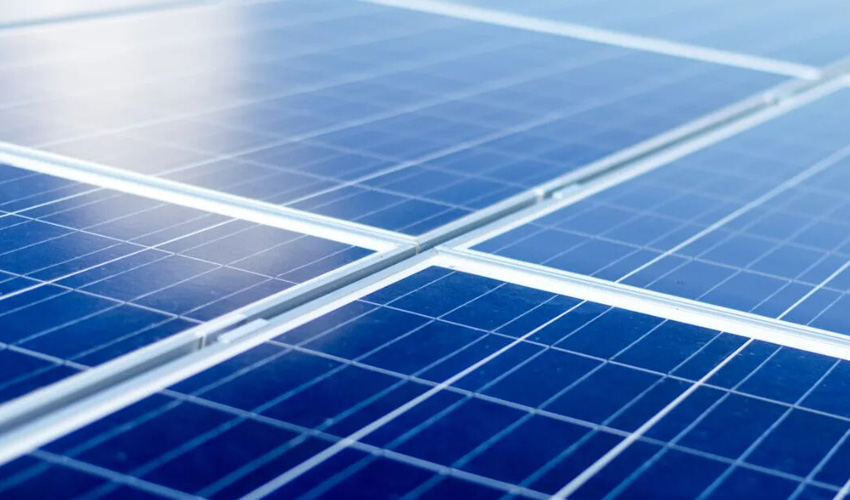
In the photovoltaic industry, the production and maintenance of solar panels and modules impose extremely high requirements on cleanliness. Studies have shown that dust accumulation can reduce the efficiency of solar panels, and power loss can be substantial under scenarios with heavy dust coverage. Therefore, implementing strict cleanliness control in production, assembly and daily operation & maintenance has become an industry consensus for photovoltaic enterprises.


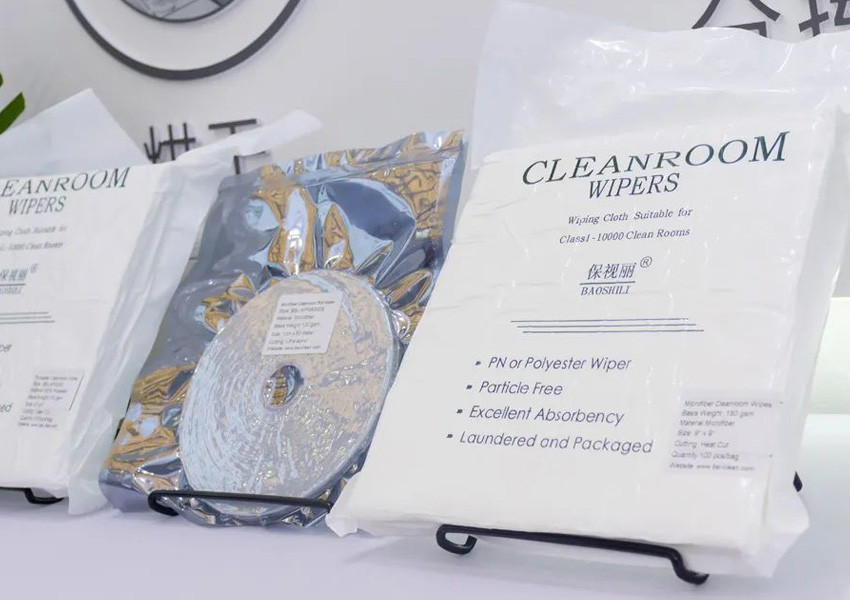
With superior properties including low lint generation, high wiping efficiency, strong adsorption capacity, anti-static performance and soft surface texture, BSL (Baoshili) Cleanroom Wiper has evolved into an indispensable cleaning consumable in the photovoltaic industry.

01 Precision Cleaning of Module Surfaces

During the manufacturing and subsequent power inspection of solar panels, their surfaces are highly prone to deposited dust and processing oil residues. Wiping with professional low-ion-release Cleanroom Wiper can efficiently remove contaminants while avoiding micro-scratches on the surface, ensuring the light absorption efficiency of modules remains intact.

02 Internal Maintenance of Production Equipment

In high-precision processes such as screen printing and laser cutting, free particles attached to the interior of equipment and fixture surfaces may easily mix into solar cells, causing appearance defects or performance failure. Regular cleaning of key contact surfaces of production equipment with Cleanroom Wiper is crucial to stabilizing the yield rate of continuous production.

03 Emergency Handling of Liquid Contaminants

Photovoltaic production lines often encounter accidental splashes of cleaning solutions, bonding additives and organic solvents. Improper disposal will contaminate adjacent workstations. Featuring a microfiber structure, Cleanroom Wiper boasts far stronger liquid adsorption capacity than ordinary cotton cloth. It can quickly remove residual liquids spilled accidentally during production, reducing secondary risks caused by chemical diffusion.

04 Prevention of Static Damage Risks

Given that photovoltaic module packaging and lamination processes are vulnerable to electrostatic impact, anti-static Cleanroom Wiper is required to timely dissipate static charges generated by operational friction. This prevents static electricity from breaking down precision power generation structures, damaging cell grid lines or transparent conductive films, and improves electrical safety in precision operations.

05 Daily Maintenance Support

From pre-cleaning before lamination and glue overflow treatment after lamination, to wiping optical lenses of testing equipment and maintaining laboratory countertops, the high wiping efficiency of Cleanroom Wiper fully meets daily cleaning and maintenance needs.

Core Advantages of BSL Cleanroom Wiper

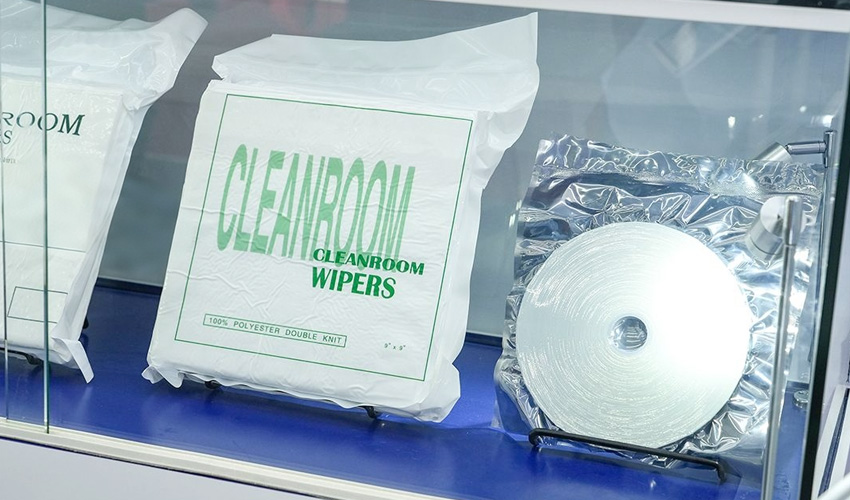
BSL Cleanroom Wiper is available in multiple material specifications and models, including microfiber and 100% polyester fiber variants. It meets high industry standards in core indicators such as particle release, lint shedding and ion residue. Founded in 1999, the company has accumulated advanced technological craftsmanship over decades, endowing BSL Cleanroom Wiper with outstanding performance across multiple dimensions.

Cleanroom Wipes


Low Lint Generation

Adopting continuous knitting technology as well as laser and ultrasonic edge sealing, BSL Cleanroom Wiper effectively avoids scratches on photovoltaic glass and backsheets caused by loose threads from traditional hot cutting.

High Adsorption Capacity

The microfiber structure endows the material with powerful capillary wicking effect, delivering excellent instant capture and locking performance against dust, processing oil stains, residual glue and additive liquids.

Anti-Static Design

Optional anti-static wiping variants effectively inhibit static charge accumulation and eliminate potential impacts of point discharge on sensitive photovoltaic modules and precision manufacturing environments.

Soft and Damage-Free Surface

The Cleanroom Wiper features a soft and smooth surface, causing no micro-marks or damage even when repeatedly wiping high-transmittance coated photovoltaic glass.

Wet and Dry Dual-Purpose

Whether for dry dust removal before sampling inspection or precision wet wiping with solvents such as isopropyl alcohol, BSL Cleanroom Wiper maintains stable material strength and cleaning efficiency under various working conditions.
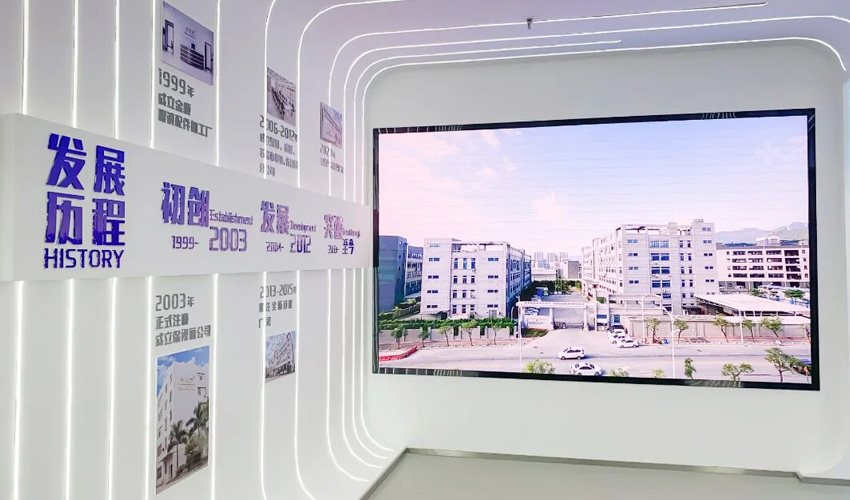


As the photovoltaic industry raises higher requirements for process yield and module service life, high-quality cleanroom consumables have become a key factor for differentiated competition. Drawing on over two decades of large-scale production capacity in cleanroom wiper materials, BSL continues to provide stable and reliable Cleanroom Wiper Solutions for solar cell factories and end-user operation & maintenance service providers.
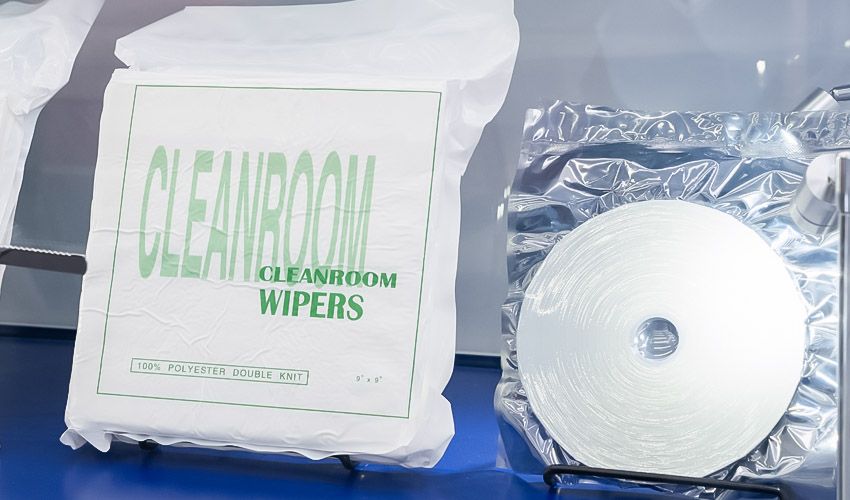
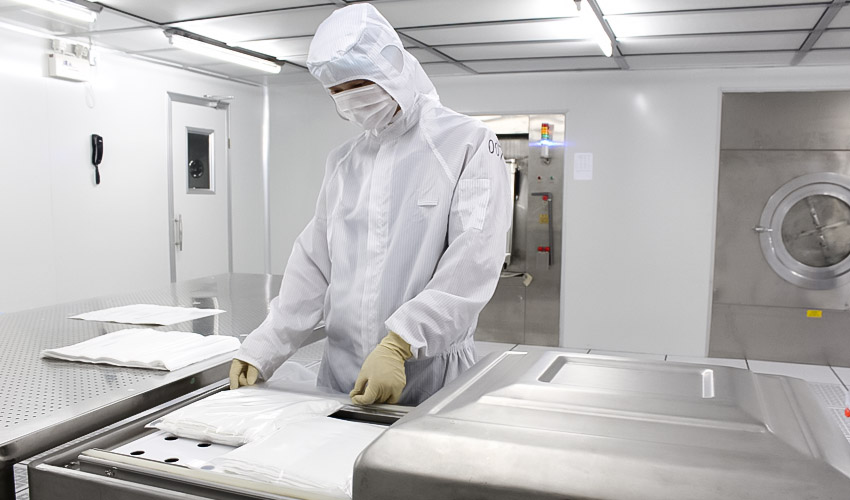
In precision manufacturing sectors such as semiconductors, liquid crystal displays, photovoltaics and microelectronics, extremely stringent cleanliness standards are required throughout production processes. Featuring ultra-low residue, ultra-low particle generation and ultra-low ion emission, BSL (Baoshili) Cleanroom Wipers have been widely adopted and applied in the above industries.


Cleanroom Wipes


The recognition from customers stems from BSL’s rigorous professional quality control. Taking BSL microfiber Cleanroom Wipers as the research object, this article breaks down the key testing items of Cleanroom Wipers in detail.


01. Abrasion Resistance Test

Abrasion resistance is generally categorized as a physical property test of fabrics. Nevertheless, in the Cleanroom Wiper industry, abrasion will directly generate particulate matter, so this indicator shall be incorporated into the scope of cleanliness control. With advanced continuous weaving and ultrasonic edge sealing processes, BSL microfiber Cleanroom Wipers achieve nearly zero particle shedding, effectively preventing secondary contamination during wiping.


02. Liquid Absorption Capacity and Absorption Rate

The liquid absorption test is implemented in accordance with Section 8 of IEST-RP-CC004.3, focusing on evaluating the absorption performance of Cleanroom Wipers.


  • Liquid absorption capacity: Approximately 450 milliliters per square meter, with excellent liquid storage capacity.
  • Liquid absorption rate: Deionized water climbs 1 centimeter via capillary action within 3 seconds, which enables rapid liquid adsorption and reduces liquid residue after wiping.

03. Ion Content Test

Cleanroom Wipers are often in contact with sensitive materials such as electronic components and semiconductor chips during cleaning. Harmful impurity ions including chloride ions (Cl⁻) and sodium ions (Na⁺) inside the wiper may transfer to product surfaces, resulting in circuit short circuits, material corrosion and equipment performance degradation.


Therefore, Cleanroom Wipers must be tested for inorganic anions and cations as specified in Section 7.2 of IEST-RP-CC004.3. Professional testing verifies that BSL Cleanroom Wipers maintain stable ion content, which effectively avoids ionic contamination.


04. NVR Test

Cleanroom Wipers are commonly used in high-cleanliness demanding fields including electronics, semiconductors, optics and medical treatment. The NVR test is designed to detect non-volatile residues precipitated from Cleanroom Wipers, such as grease, silicone oil, plasticizers and inorganic salts. These residual substances may remain on working surfaces after wiping and undermine product performance and yield.


All BSL Cleanroom Wiper products are tested in compliance with Section 7.1 of IEST-RP-CC004.3. At present, BSL Cleanroom Wipers deliver outstanding test results in deionized water, isopropyl alcohol and other test solutions, and can thoroughly prevent non-volatile residue contamination.


05. LPC Test

The LPC test simulates wet application scenarios to quantify the number of particles released by wiping cloths, so as to assess the contamination risk to high-precision instruments, optical surfaces and other delicate products. As a core link in the quality control of Cleanroom Wipers, LPC testing safeguards production safety and product quality in high-grade clean environments.


In accordance with the requirements of Section 5.1 and 5.2 of IEST-RP-CC004.3, all LPC indicators of BSL Cleanroom Wipers fully meet industry standards.


To guarantee consistent and stable product performance, BSL has established a Class 100 laboratory, equipped with professional testing equipment including infrared spectrometers, ion chromatographs, liquid particle counters, energy dispersive X-ray fluorescence spectrometers, Hamiltons tumble testers and microscopes. It ensures that every batch of products steadily reaches the standard in core indicators such as LPC, NVR and ion content. With a complete portfolio of specifications, our Cleanroom Wipers are dedicated to meeting the usage demands of Class 10, Class 100, Class 1000 cleanrooms and other differentiated application scenarios.


The global smartphone market is undergoing a critical transition from scale expansion to value deepening. According to the latest statistics from IDC, global market shipments reached 1.26 billion units in 2025, a year-on-year slight increase of 1.9%. Against the backdrop of slowing overall growth, high-end positioning and technological innovation have become a clear mainline. Goldman Sachs' 2026 Top 10 Trends Report also predicts that foldable screens and AI features may become the dual engines driving transformation in the smartphone market.


With the high-end positioning and technological complexity of smartphone manufacturing, cleanliness in the production process has evolved from a basic guarantee to a cornerstone that directly impacts product performance and production yield. This article aims to analyze the cleanliness challenges across the entire smartphone industrial chain and elaborate on BSL Cleanroom Wiper solutions, providing reliable support for high-end smartphone manufacturing.

Smartphone manufacturing is a highly complex system engineering project, with cleanliness control running through the entire process from upstream component manufacturing to downstream complete machine assembly.


Upstream Key Component Manufacturing

In the smartphone chip manufacturing process, maintaining an extremely clean and stable environment is crucial. Cleanroom Wipers used for wiping equipment and wafer carriers must feature ultra-low particle generation and zero chemical residues. In the camera module assembly process, the requirements for cleaning processes are extremely stringent. Micron-level scratches or residues on lens surfaces can damage optical coatings, directly affecting imaging quality—this demands that Cleanroom Wipers be extremely soft and lint-free, ensuring traceless and fog-free cleaning. In the production of OLED or LCD panels, especially during polarizer lamination and flexible substrate processing, particles can cause fatal bright or dark spots. Meanwhile, static electricity can adsorb dust and potentially break down microcircuits. Therefore, this segment requires Cleanroom Wipers to have the dual functions of efficient dirt adsorption and anti-static performance.


Midstream Complete Machine Assembly & Testing

Entering the Surface Mount Technology (SMT) and complete machine assembly stage, the focus of cleanliness shifts from ambient air to interface cleaning. Before soldering, ionic contaminants and organic residues on PCB motherboards are potential risks leading to cold solder joints or short circuits, requiring Cleanroom Wipers to have extremely low chemical and particle residues.


Full-Process Support


In cleanrooms, Cleanroom Wipers are mainly used for daily maintenance wiping of equipment surfaces, workbenches and tools, imposing extremely high requirements on product cleanliness levels and durability.


BSL boasts leading technological innovation advantages and profound experience accumulation in the industrial wiping field. Through the in-depth integration of material R&D with specific industrial scenarios, it can provide systematic and highly reliable Cleanroom Wiper solutions for high-end smartphone manufacturing.


To address the diverse cleaning needs in high-end smartphone manufacturing, BSL has built a complete product system:


  • Material Segmentation: The core product line includes 100% polyester fiber wipers, featuring good chemical compatibility and durability; microfiber wipers, with superior adsorption and dust-locking capabilities due to their high-density fiber structure, suitable for high-cleanliness requirements.
  • Form Adaptation: Products are available in single-piece format (for manual precision wiping), roll format (adapted for continuous operation of automated equipment) and finished cloth with customizable sizes, flexibly meeting the requirements of different production scenarios from manual operation by personnel to equipment integration.
  • Quality Control: BSL owns an independent production base, realizing integrated production from spinning and weaving, grey cloth cleaning, precision cutting to vacuum packaging, ensuring stable product quality.

Currently, the technology of the smartphone industry is continuously evolving, and the standards for manufacturing cleanliness are constantly upgrading. The complex screen structure of foldable screens, the dense circuits of AI high-computing power chips, and the precision optical components of multi-camera modules all require stricter control of particles and static electricity in the production process.


Relying on a systematic product matrix, full-link manufacturing capabilities and strict quality control, BSL is committed to assisting industrial chain partners in systematically addressing cleaning challenges in precision manufacturing with stable and professional BSL Cleanroom Wiper solutions, and jointly safeguarding the superior quality of smartphone terminal products.

keyboard_arrow_up