Recently released "Recommendations of the Communist Party of China Central Committee on Formulating the 15th Five-Year Plan for National Economic and Social Development" (hereinafter referred to as the "15th Five-Year Plan Recommendations") emphasizes strengthening original innovation and tackling key core technologies. It proposes improving the new nationwide system, adopting extraordinary measures, and promoting decisive breakthroughs in key core technologies in key fields such as integrated circuits across the entire industrial chain.


According to analysis by China International Capital Corporation (CICC), during the 15th Five-Year Plan period, the global geopolitical landscape will undergo profound adjustments, characterized by accelerated supply chain restructuring, continued strengthening of technological barriers by some countries, and a significant rise in demand for key industrial chain security. Against this new geopolitical backdrop, the semiconductor industry—an essential cornerstone of the information technology industry—will see an increasingly prominent trend toward localized production. It is expected that during the 15th Five-Year Plan period, domestic production capacity for advanced process nodes will achieve sustained and substantial growth. This growth will benefit from the successive commissioning of new domestic wafer fabs and the capacity ramping of existing fabs, as well as the supporting capabilities of upstream industrial chain links such as equipment and materials. Meanwhile, the yield rate of advanced processes will continue to improve with the accumulation of process optimization experience, breakthroughs in core technical bottlenecks, and the maturity of professional technical teams. In this context, enterprises engaged in advanced logic chips and advanced memory chips, as well as the complete industrial chain covering chip design, manufacturing, packaging and testing, and upstream materials and equipment, will directly benefit from market opportunities brought by capacity expansion and yield improvement.


In response to the 15th Five-Year Plan Recommendations, Baoshili will accelerate breakthroughs in industrial chain collaboration and independent innovation, expedite the R&D of semiconductor-grade chemical packaging and transmission materials, expand product models, and help enhance the collaborative efficiency and supply chain autonomy of China's semiconductor industry chain.

01. Based on Technological Innovation: From "Usable" to "High-Performance"


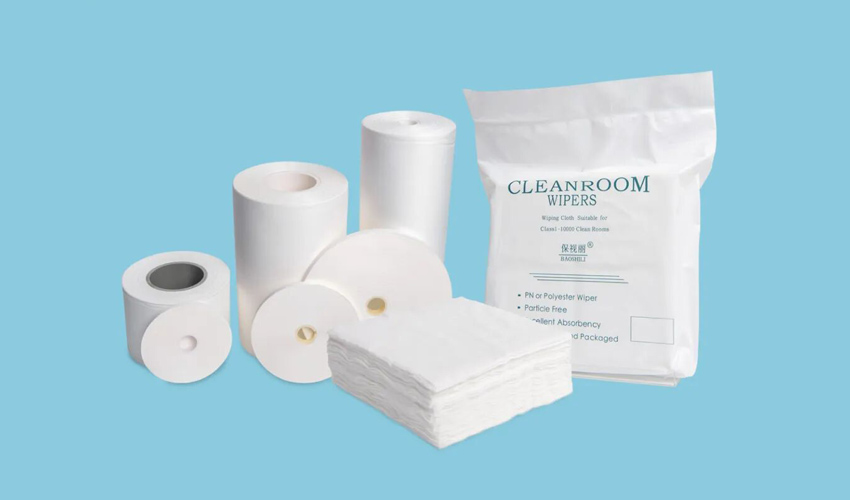
With over 20 years of deep engagement in the cleanroom consumables sector, Baoshili has continuously enriched its product portfolio—from Cleanroom Wipers and Ultra-Clean PFA Tubes/Connectors to Ultra-Clean HDPE Drums. Its business scope has gradually expanded from high-tech fields to semiconductor manufacturing, with a continuously improved product matrix, achieving a transformation from "usable" to "high-performance." To date, Baoshili has accumulated more than 70 independent R&D patents and has been certified as a "National High-Tech Enterprise" and a Shanghai "Specialized, Refined, Characteristic, and Innovative" Small and Medium-sized Enterprise, establishing itself as a leading domestic high-tech manufacturing enterprise.


02. Deep Dive into Cleanroom Consumables to Promote Industrial Chain Collaboration


Taking Ultra-Clean PFA tubes and connectors as an example—known as the "golden pipelines" for transporting high-purity chemicals in semiconductor manufacturing—their performance directly affects process cleanliness and product yield. Due to their excellent corrosion resistance, temperature resistance, and chemical inertness, PFA materials have become the preferred choice for transmitting electronic-grade chemicals in high-end fabs. As process nodes advance, higher requirements are placed on chemical purity, with Grade G5 having become the standard for advanced processes. Correspondingly, the control of metal ion content in transmission pipelines must reach the ppt (parts per trillion) level.


Meeting this high standard, Baoshili is one of the few domestic enterprises capable of producing semiconductor-grade high-purity Ultra-Clean PFA tubes and connectors. It is committed to breaking the monopoly of foreign manufacturers in key consumables, promoting the autonomy and controllability of packaging and transmission links, and enhancing the overall collaborative capacity of the industrial chain.


03. Remarkable Cleanliness Achievements, Accelerating Semiconductor Domestic Substitution


Currently, Baoshili's ultra-clean product series have achieved technological breakthroughs in tube/connector manufacturing processes, passed verification by major domestic semiconductor manufacturers, and entered the mass application phase. In the future, the company will continue to expand its product matrix, develop consumables with higher cleanliness levels and stronger process adaptability, actively respond to the strategic deployment of industrial chain collaboration outlined in the 15th Five-Year Plan Recommendations, assist in the comprehensive domestic substitution of semiconductor materials, and contribute to the independent development of China's semiconductor industry.
The global smartphone market is undergoing a critical transition from scale expansion to value deepening. According to the latest statistics from IDC, global market shipments reached 1.26 billion units in 2025, a year-on-year slight increase of 1.9%. Against the backdrop of slowing overall growth, high-end positioning and technological innovation have become a clear mainline. Goldman Sachs' 2026 Top 10 Trends Report also predicts that foldable screens and AI features may become the dual engines driving transformation in the smartphone market.


With the high-end positioning and technological complexity of smartphone manufacturing, cleanliness in the production process has evolved from a basic guarantee to a cornerstone that directly impacts product performance and production yield. This article aims to analyze the cleanliness challenges across the entire smartphone industrial chain and elaborate on BSL Cleanroom Wiper solutions, providing reliable support for high-end smartphone manufacturing.

Smartphone manufacturing is a highly complex system engineering project, with cleanliness control running through the entire process from upstream component manufacturing to downstream complete machine assembly.


Upstream Key Component Manufacturing

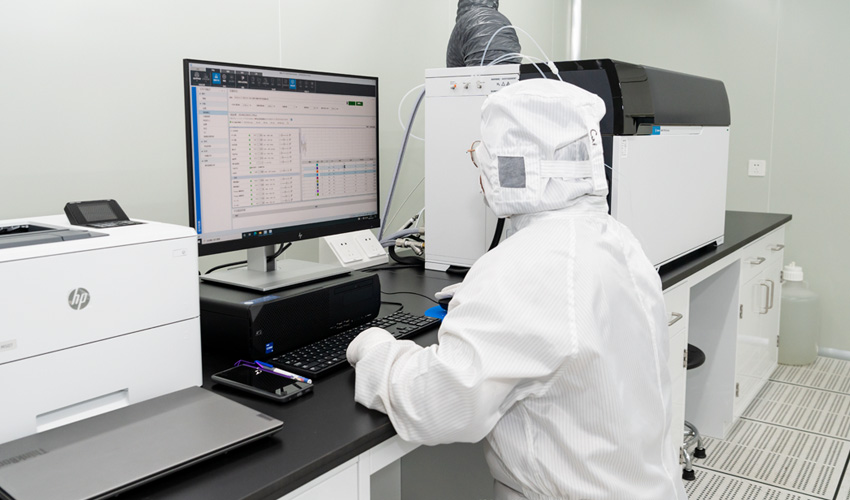
In the smartphone chip manufacturing process, maintaining an extremely clean and stable environment is crucial. Cleanroom Wipers used for wiping equipment and wafer carriers must feature ultra-low particle generation and zero chemical residues. In the camera module assembly process, the requirements for cleaning processes are extremely stringent. Micron-level scratches or residues on lens surfaces can damage optical coatings, directly affecting imaging quality—this demands that Cleanroom Wipers be extremely soft and lint-free, ensuring traceless and fog-free cleaning. In the production of OLED or LCD panels, especially during polarizer lamination and flexible substrate processing, particles can cause fatal bright or dark spots. Meanwhile, static electricity can adsorb dust and potentially break down microcircuits. Therefore, this segment requires Cleanroom Wipers to have the dual functions of efficient dirt adsorption and anti-static performance.


Midstream Complete Machine Assembly & Testing

Entering the Surface Mount Technology (SMT) and complete machine assembly stage, the focus of cleanliness shifts from ambient air to interface cleaning. Before soldering, ionic contaminants and organic residues on PCB motherboards are potential risks leading to cold solder joints or short circuits, requiring Cleanroom Wipers to have extremely low chemical and particle residues.


Full-Process Support


In cleanrooms, Cleanroom Wipers are mainly used for daily maintenance wiping of equipment surfaces, workbenches and tools, imposing extremely high requirements on product cleanliness levels and durability.


BSL boasts leading technological innovation advantages and profound experience accumulation in the industrial wiping field. Through the in-depth integration of material R&D with specific industrial scenarios, it can provide systematic and highly reliable Cleanroom Wiper solutions for high-end smartphone manufacturing.


To address the diverse cleaning needs in high-end smartphone manufacturing, BSL has built a complete product system:


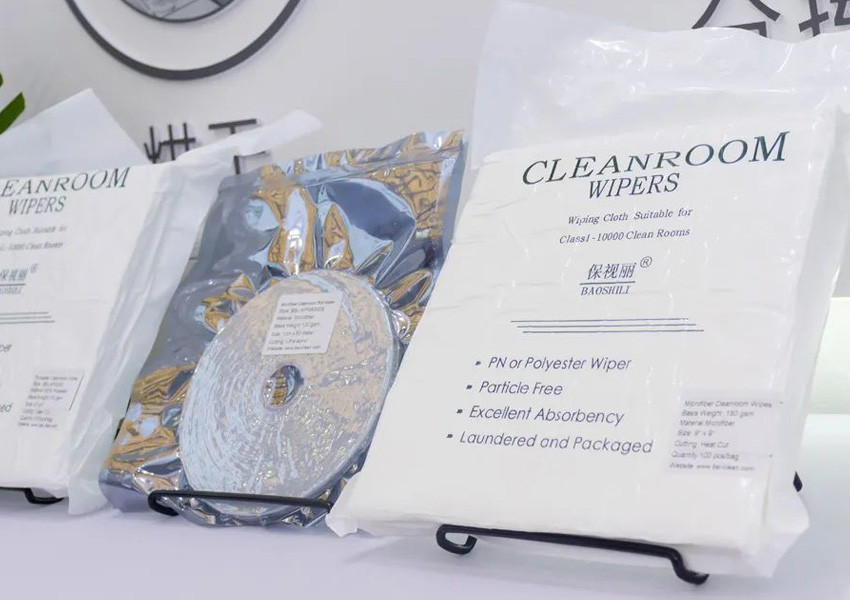
  • Material Segmentation: The core product line includes 100% polyester fiber wipers, featuring good chemical compatibility and durability; microfiber wipers, with superior adsorption and dust-locking capabilities due to their high-density fiber structure, suitable for high-cleanliness requirements.
  • Form Adaptation: Products are available in single-piece format (for manual precision wiping), roll format (adapted for continuous operation of automated equipment) and finished cloth with customizable sizes, flexibly meeting the requirements of different production scenarios from manual operation by personnel to equipment integration.
  • Quality Control: BSL owns an independent production base, realizing integrated production from spinning and weaving, grey cloth cleaning, precision cutting to vacuum packaging, ensuring stable product quality.

Currently, the technology of the smartphone industry is continuously evolving, and the standards for manufacturing cleanliness are constantly upgrading. The complex screen structure of foldable screens, the dense circuits of AI high-computing power chips, and the precision optical components of multi-camera modules all require stricter control of particles and static electricity in the production process.


Relying on a systematic product matrix, full-link manufacturing capabilities and strict quality control, BSL is committed to assisting industrial chain partners in systematically addressing cleaning challenges in precision manufacturing with stable and professional BSL Cleanroom Wiper solutions, and jointly safeguarding the superior quality of smartphone terminal products.

As the global new energy vehicle (NEV) market enters a phase of high-speed growth, it has imposed unprecedentedly high requirements for clean production standards across all industrial chain links. According to forecasts, the global NEV market size will exceed 102.278 billion US dollars by 2025 and is expected to grow to 184.905 billion US dollars by 2030, with a compound annual growth rate (CAGR) of 13.12%. In the Chinese market, NEV sales are projected to reach 16.5 million units in 2025, with the domestic market penetration rate expected to hit 55%, marking the industry’s entry into a new stage of large-scale and high-quality development.


In this process, a clean production environment has become the foundation for ensuring product reliability and safety. From Class 100 cleanrooms required for battery production to micron-level particle control in the painting process, the cleanliness of each production link directly affects the overall vehicle performance and service life. Therefore, high-performance cleaning materials have become a common demand for NEV manufacturers.


As an industry-leading enterprise with over 20 years of focus on Cleanroom Wiper R&D, Baoshili is committed to providing reliable Cleanroom Wiper solutions for the NEV industry, supporting "Made in China" to make steady progress in the global new energy race.


01. Excellent Cleaning Efficiency

The core of NEVs lies in the three-electric system (covering battery packs, motors, and electronic control systems). Their production and assembly processes are extremely sensitive to static electricity and micro-dust. Ordinary cleaning tools tend to leave residual fibers, particles, or generate static electricity, which may cause short circuits, reduced battery performance, or even potential safety hazards.


Baoshili’s Cleanroom Wipers adopt independently developed ultra-fine fiber weaving technology, boasting excellent adsorption and dust-locking capabilities. Contaminants migrate inward during wiping and are not easily left behind, enabling efficient cleaning and effectively avoiding secondary pollution.


02. Systematic Product Matrix

To meet the cleanliness requirements of different workshops and processes in NEV manufacturing, Baoshili has built a complete product matrix, including:
  • Polyester/Ultra-fine Fiber Wipes: Suitable for general cleaning and medium-cleanliness environments;
  • Anti-static Wipes: Specifically designed for static-sensitive areas such as batteries and electronic control systems;
  • Roll-type Wipes and Finished Fabric Rolls: Customizable in size to adapt to automated production lines and the cleaning needs of special-shaped components.


The products can meet the requirements of production scenarios with cleanliness levels ranging from Class 10 to Class 10,000, providing targeted cleaning support for battery production lines, painting workshops, final assembly lines, and final inspection processes.


03. Standardized Production Processes

Baoshili owns a self-built factory of over 30,000 square meters in Xiamen, with a production environment that strictly complies with high cleanliness standards. The production process of Cleanroom Wipers covers spinning, weaving, grey fabric cleaning, setting, cutting, cleanroom cleaning, drying, sorting, and packaging, realizing end-to-end integrated clean production. This ensures that every wipe meets the stringent requirements for high cleanliness and reliability in NEV manufacturing.


Currently, Baoshili’s Cleanroom Wipers have been applied in the production systems of many leading NEV brands. Supported by technology and guided by cleanliness standards, Baoshili will continue to provide safe, reliable, and efficient cleaning solutions for the NEV industry, helping "Made in China" forge ahead steadily in the global new energy wave.

keyboard_arrow_up