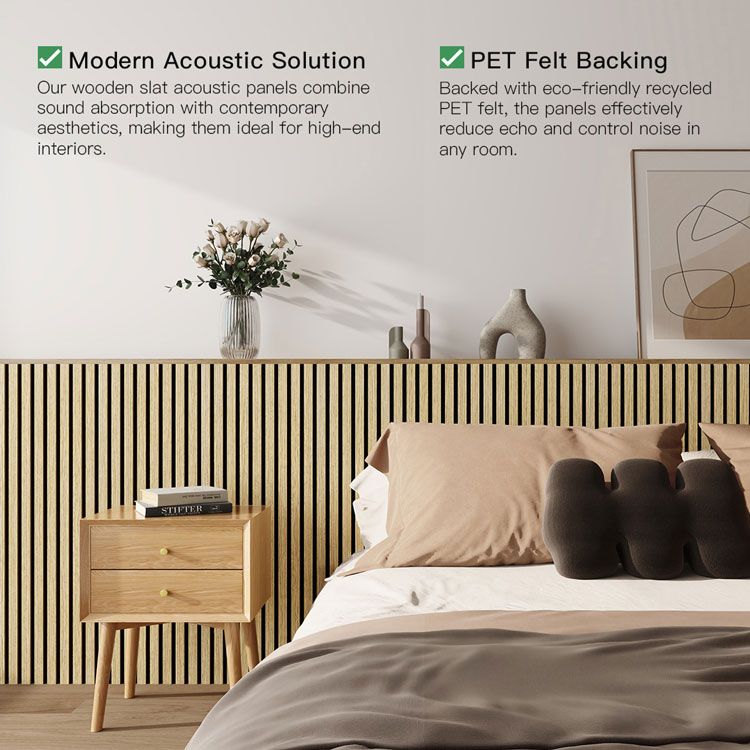
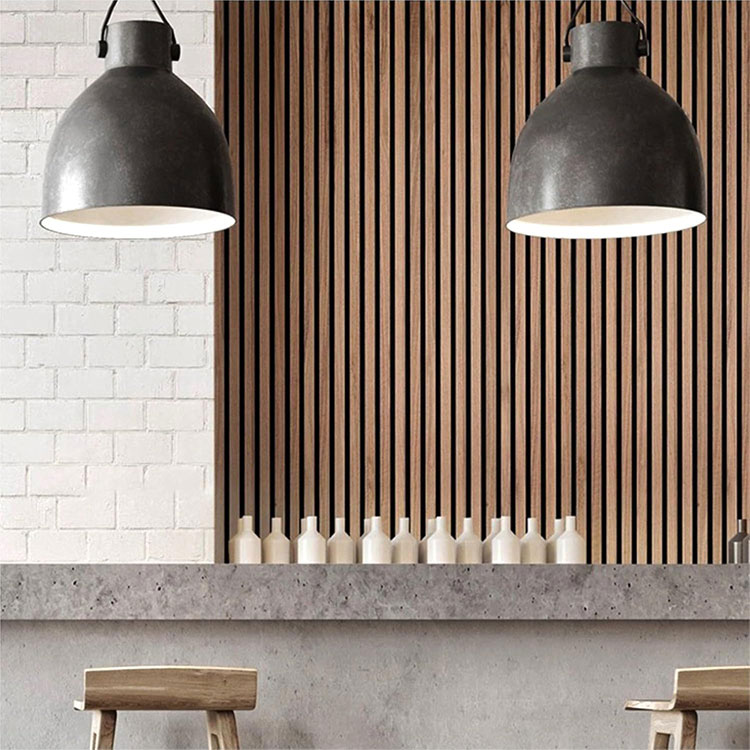
When choosing acoustic panels, most buyers focus on surface design, thickness, or installation. However, one of the most critical factors affecting acoustic performance, durability, and application suitability is the panel core material.

Two of the most commonly used cores today are MDF (Medium-Density Fiberboard) and Polyester Fiber (PET Fiber). But which one is better?

The answer depends on how the panel is used, where it is installed, and what level of performance is required. In this article, we compare MDF and polyester fiber cores in detail to help you make the right decision.
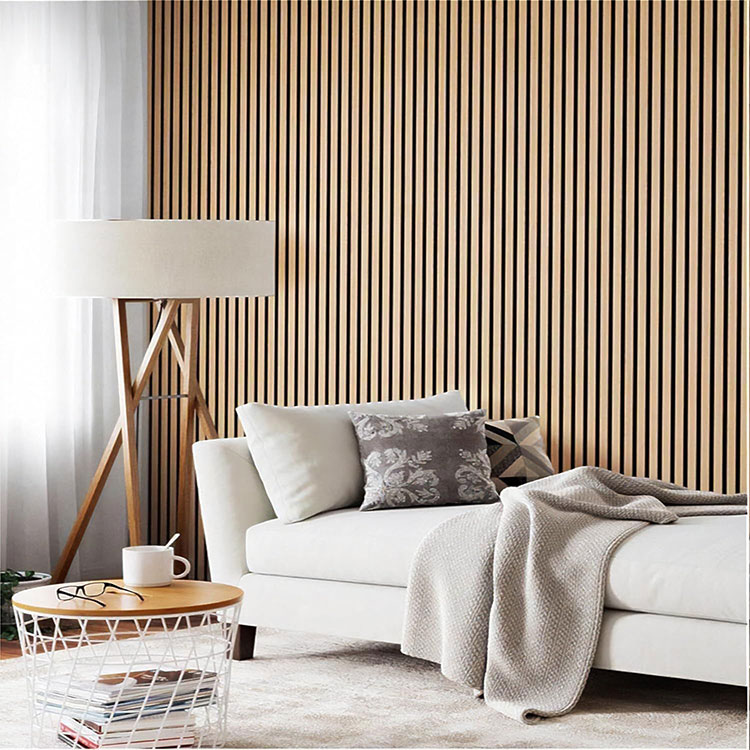
 Custom Solutions Acoustic Wood Slat Panels


Understanding Acoustic Panel Core Materials

The core material of an acoustic panel directly influences:

  • Sound absorption efficiency

  • Structural stability

  • Durability and lifespan

  • Fire resistance and safety compliance

  • Visual and architectural applications

Let’s look at how MDF and polyester fiber perform across these key factors.


What Is MDF in Acoustic Panels?

MDF (Medium-Density Fiberboard) is a highly engineered wood-based material made from compressed wood fibers bonded under high pressure.

In acoustic applications, MDF is commonly used in:

Key Characteristics of MDF:

  • High density and uniform structure

  • Excellent dimensional stability

  • Strong load-bearing capacity

  • Ideal for precision machining and slat spacing


What Is Polyester Fiber in Acoustic Panels?

Polyester fiber (often PET fiber) is a synthetic, non-woven acoustic material made from recycled or virgin polyester.

It is widely used in:

  • Fabric-wrapped acoustic panels

  • Felt acoustic boards

  • Lightweight sound absorption panels

Key Characteristics of Polyester Fiber:

  • Lightweight and flexible

  • Good mid-to-high frequency absorption

  • Easy to install

  • Often eco-friendly (recycled PET)


MDF vs Polyester Fiber: Acoustic Performance Comparison

1. Sound Absorption Efficiency

  • Polyester Fiber
    Excellent at absorbing mid and high frequencies due to its porous structure.

  • MDF (in wood slat panels)
    MDF itself is reflective, but when combined with slat spacing and acoustic backing, it creates a hybrid system that offers controlled diffusion and absorption.

👉 Best Result:
MDF-based wood slat panels with PET felt or mineral wool backing provide balanced acoustic control, not just absorption.


2. Structural Strength and Stability

  • MDF
    High-density MDF offers superior rigidity, ensuring panels remain flat, aligned, and stable over time—especially important for large wall installations.

  • Polyester Fiber
    Lightweight but less rigid; prone to bending or deformation if unsupported.

👉 Winner: MDF
Ideal for architectural wall systems and long-term commercial use.


3. Aesthetic and Design Flexibility

  • MDF
    Perfect for wood veneer finishes, CNC cutting, and precise slat designs. Creates a premium architectural look.

  • Polyester Fiber
    Limited design options; typically flat panels or felt shapes.

👉 Winner: MDF
Preferred for modern interiors where design and acoustics must coexist.


4. Fire Safety and Compliance

  • MDF (treated)
    Can meet international fire standards when produced with certified treatments and finishes.

  • Polyester Fiber
    Fire performance varies significantly by grade and manufacturer.

👉 Key Point:
Fire performance depends heavily on manufacturing standards, not just material type.


5. Durability and Lifespan

  • MDF
    Long-lasting, resistant to wear, ideal for high-traffic commercial spaces.

  • Polyester Fiber
    Softer material; more susceptible to surface damage.

👉 Winner: MDF for commercial and long-term projects.


MDF vs Polyester Fiber: Application Scenarios

Application Better Choice
Wood slat acoustic wall panels MDF
Architectural interiors MDF
Offices & commercial spaces MDF
Lightweight acoustic treatment Polyester Fiber
Temporary installations Polyester Fiber
Budget acoustic solutions Polyester Fiber

Why MDF Is the Preferred Core for Wood Slat Acoustic Panels

In wood slat acoustic panels, MDF plays a critical structural and acoustic role:

  • Maintains precise slat spacing

  • Enhances sound diffusion

  • Supports high-quality veneer finishes

  • Ensures long-term stability

This is why professional manufacturers consistently choose high-density MDF for premium wood slat acoustic systems.


Manufacturing Quality Makes the Real Difference

Material choice alone does not guarantee performance. How the panel is manufactured is just as important.

At Guangdong Leeyin Acoustics, we specialize in:

  • Wood slat acoustic panels

  • MDF-based acoustic wall systems

  • Integrated acoustic panel solutions

Our manufacturing strengths include:

  • 20,000㎡ modern production facility

  • Strict MDF density selection and control

  • Precision CNC machining

  • High-performance acoustic backing integration

  • Quality management aligned with international standards

  • Leading exporter of wood slat wall panels in China

This ensures every panel delivers consistent acoustic performance, structural reliability, and visual excellence.


Final Verdict: MDF or Polyester Fiber?

There is no one-size-fits-all answer—but for wood slat acoustic panels and architectural acoustic applications, MDF is the superior core material.

  • Choose MDF for:

    • Premium wood slat acoustic panels

    • Commercial and architectural projects

    • Long-term durability and design-driven spaces

  • Choose Polyester Fiber for:

    • Lightweight acoustic absorption

    • Simple installations

    • Budget-focused solutions

For projects that demand both acoustic performance and high-end aesthetics, MDF-based wood slat acoustic panels remain the industry standard.
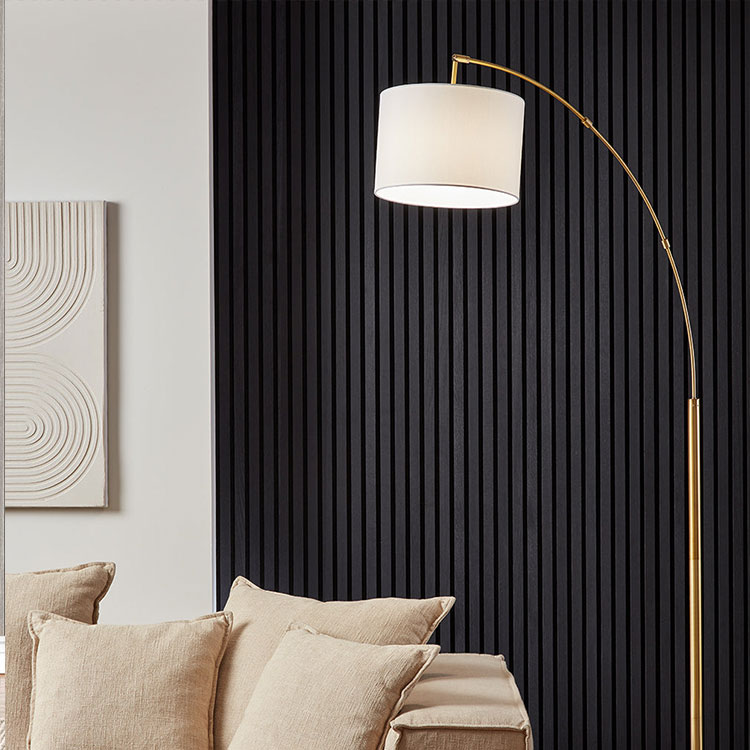
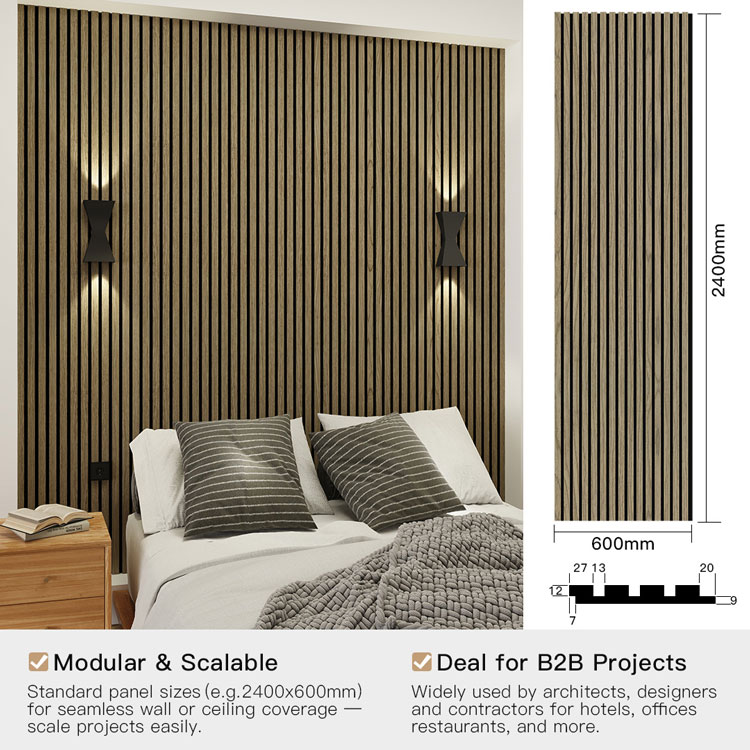
As sustainability becomes a core consideration in modern architecture and interior design, many designers, developers, and homeowners are asking an important question: Are acoustic panels eco-friendly and sustainable?

The short answer is yes—when they are designed and manufactured responsibly. In this article, we explore what makes acoustic panels sustainable, which materials matter most, and how professional manufacturers ensure both acoustic performance and environmental responsibility.

Leading Acoustic Wood Slat Panel Distributor


What Makes an Acoustic Panel Eco-Friendly?

An eco-friendly acoustic panel is defined by more than just sound absorption. True sustainability involves the entire product lifecycle, including:

  • Raw material sourcing

  • Manufacturing processes

  • Product durability and lifespan

  • Indoor air quality impact

  • End-of-life recyclability

High-quality acoustic panels are designed to improve acoustic comfort without compromising environmental standards.


Sustainable Materials Used in Acoustic Panels

1. Wood Slat Acoustic Panels from Responsible Sources

Wood slat acoustic panels are highly popular due to their natural appearance and excellent acoustic performance. When produced using:

  • Engineered wood or MDF from sustainable forestry

  • Optimized material usage to reduce waste

  • Long-lasting surface finishes

they become a renewable and eco-conscious wall solution.

Wood-based acoustic panels also store carbon throughout their lifecycle, contributing positively to sustainable building goals.


2. Polyester Fiber Acoustic Panels (PET Panels)

Polyester fiber acoustic panels are widely recognized as one of the most sustainable acoustic materials available today.

Key eco-friendly advantages include:

  • Made from recycled PET plastic bottles

  • Fully recyclable

  • Low VOC emissions

  • Lightweight and energy-efficient to transport

These panels offer excellent sound absorption while supporting circular economy principles.


3. Low-Emission & Safe Indoor Materials

Eco-friendly acoustic panels should contribute to healthy indoor environments by:

  • Minimizing formaldehyde emissions

  • Using non-toxic adhesives

  • Meeting international indoor air quality standards

This is especially important for offices, schools, homes, and public buildings.


Manufacturing Processes Matter

Sustainability is not only about materials—it also depends on how acoustic panels are produced.

Professional manufacturers focus on:

  • Efficient material utilization

  • Energy-saving production lines

  • Waste reduction and recycling systems

  • Consistent quality control to reduce product replacement

Well-made acoustic panels last longer, reducing environmental impact over time.


Guangdong Leeyin Acoustics: Sustainability with Scale and Expertise

As a leading manufacturer and exporter of wood slat acoustic panels in China, Guangdong Leeyin Acoustics integrates sustainability into both product design and production management.

Our Strengths Include:

  • 20,000㎡ modern manufacturing facility

  • Large-scale production capacity for global supply

  • Specialized focus on wood slat wall panels and acoustic panels

  • Strict quality management aligned with international standards

  • Stable, long-term export experience in global markets

By combining efficient manufacturing with responsible material selection, we help clients achieve both acoustic excellence and sustainable building goals.


Are Acoustic Panels Worth It for Green Buildings?

Yes. Eco-friendly acoustic panels:

  • Improve sound comfort and productivity

  • Enhance interior aesthetics using natural materials

  • Support green building certifications

  • Offer long service life with minimal maintenance

For architects and developers, acoustic panels are a functional and sustainable investment.


How to Choose Sustainable Acoustic Panels

When selecting acoustic panels, look for:

  • Recycled or renewable core materials

  • Low-emission certifications

  • Long product lifespan

  • Experienced manufacturers with export and quality control expertise

A reliable supplier ensures sustainability is verified, not just claimed.


Conclusion

So, are acoustic panels eco-friendly and sustainable?
Absolutely—when they are thoughtfully designed and professionally manufactured.


With advanced production facilities, international quality management, and deep expertise in wood slat acoustic panels and sound-absorbing solutions, Guangdong Leeyin Acoustics provides acoustic products that balance performance, aesthetics, and sustainability for modern spaces worldwide.

One of the most frequently asked questions by buyers when choosing acoustic panels is:


Are thicker acoustic panels better?

Custom Solutions Acoustic Wood Slat Panels

In short, the answer is yes—but not always in the way people expect.


Panel thickness does affect sound absorption, but it's only one part of the overall acoustic performance. In this article, we'll explain how thickness works, when thicker panels are more beneficial, and how to choose the right solution for your space.


How Acoustic Panels Absorb Sound


Acoustic panels reduce echoes and reverberation in a room by absorbing sound energy, especially mid-to-high frequency sound waves.


Key factors affecting performance include:


Panel thickness


Material density


Surface design


Installation method


Air gap behind the panel


Thickness alone does not guarantee better results.


Does thickness really improve sound absorption?


Yes—especially for low frequencies.


Generally speaking:


Thicker panels can absorb a wider frequency range.


They are more effective at low frequencies than thinner panels.


For example:


12-25 mm thick panels primarily absorb high frequencies.


40-50 mm thick panels absorb mid-frequency frequencies more effectively.


Thick panels with backing systems help control low-frequency energy.


However, for everyday residential and commercial spaces, ultra-thick panels are often unnecessary.


Thicker with Smarter Design


Modern acoustic solutions are not simply about increasing thickness, but about balancing design.


For example, wood slat acoustic panels use:


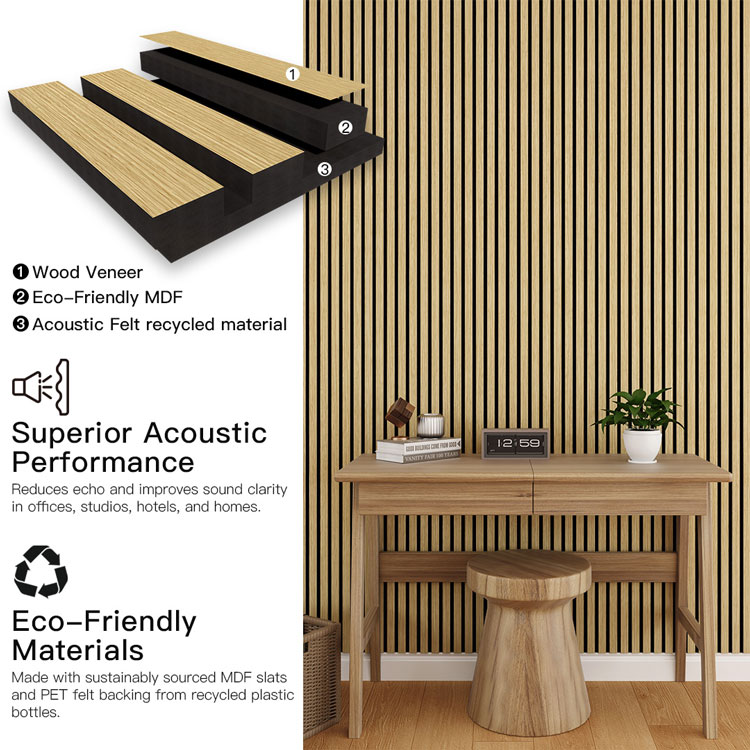
Rigid medium-density fiberboard slats for sound diffusion


High-density polyethylene terephthalate (PET) felt for sound absorption


Thickness optimized for the actual space


This combination achieves effective acoustic control without adding excessive volume or visual clutter.


When to Need Thicker Acoustic Panels


Thicker acoustic panels are best suited for:


Recording studios


Music rehearsal rooms


Home theaters


Large open-plan commercial spaces


In these environments, low-frequency control is crucial.


When Thicker Acoustic Panels Are Not Needed


For example:


Living rooms


Bedrooms


Offices


Conference rooms


Restaurants and hotels


Standard-thickness acoustic panels or wood strip acoustic panels, if installed properly, already provide excellent sound absorption.


In these cases, installation location and coverage are more important than thickness.


The Role of Air Gap (Often Overlooked)


An important professional insight:


Adding an air gap behind the acoustic panel can significantly improve low-frequency absorption—sometimes even better than increasing thickness.


This is why wall-mounted wood strip acoustic panels with felt backing are so effective in actual installations.


Why Wood Strip Acoustic Panels are the Ideal Balanced Choice


Wood strip acoustic panels offer the following advantages:


Moderate thickness, suitable for most environments


Natural sound diffusion and absorption


Aesthetically pleasing, perfectly complementing modern interior design


Highly effective sound absorption without excessive space occupation


Achieving an ideal balance between functionality, design, and ease of installation

Living in an apartment often means enduring various noises—neighbors' conversations, TV noise, footsteps, and even echoes in your own room. This leads many renters and landlords to ask:


Is it worth installing acoustic panels in an apartment?

Acoustic Wood Slat Panels Supplier

The answer is yes—provided they are used correctly. While acoustic panels cannot completely block out noise, they can significantly improve comfort, clarity, and overall sound quality. In this guide, we'll explain the role and limitations of acoustic panels in apartments, and why they are a smart upgrade for modern urban living.


Common Noise Problems in Apartments


Apartment buildings typically have the following characteristics:


Shared walls and ceilings


Hard surfaces such as concrete and drywall


Limited finishing options


This often leads to:


Echoes and reverberation within rooms


Poor speech intelligibility


Noise easily propagates throughout the space


Constant background noise increases stress


Acoustic treatment can solve many of these problems without altering the building structure.


The Practical Role of Sound-Absorbing Panels in Apartments


Sound-absorbing panels are designed to absorb sound reflections, not completely block sound.


In apartments, sound-absorbing panels serve several purposes:


Reducing echoes and reverberation


Improving speech and television clarity


Making rooms feel quieter and more comfortable


Minimizing noise from neighbors


Preventing sound reflections within the room


While they are not a complete soundproofing solution, they can significantly improve the quality of daily life.


Sound-Absorbing Panels vs. Soundproofing: What Apartment Owners Need to Know


Understanding the difference is crucial:


Sound-absorbing panels → Improve sound quality in the apartment


Soundproofing → Prevent sound from entering or leaving the apartment


True soundproofing requires extensive construction and structural modifications, which is often impractical in apartments. Sound-absorbing panels, on the other hand, are a non-invasive, effective, and renter-friendly option.


Why Wood Strip Sound-Absorbing Panels are Ideal for Apartments


Wood strip sound-absorbing panels are particularly popular in apartments due to their combination of performance and aesthetic design.


Advantages of using acoustic panels in apartments:


Effectively absorbs mid-to-high frequency noise


Reduces echoes in living rooms and bedrooms


Adds warmth and visual depth to interior spaces


Suitable for modern, minimalist, and luxury designs


Requires no major renovations for installation


Especially suitable for behind TVs, shared walls, and home office or bedroom spaces.


Installation Locations for Apartment Acoustic Panels


For best results, focus on the following problem areas:


Shared walls with neighbors


Behind TVs or entertainment systems


Home office or study areas


Bedroom walls near noise sources


Strategic installation is generally more effective than covering the entire room.


Are acoustic panels worth installing for renters?


Yes. Many modern acoustic panels:


Require only a few holes for installation


Removable and reusable


Won't damage walls when installed correctly


Therefore, they are an excellent choice for renters who want to improve acoustics without making permanent modifications.

Want to create a clean, modern, and cable-free TV wall? Acoustic panels—especially wood slat acoustic panels—are a stylish and effective way to hide TV cables while improving room acoustics.


Guangdong Leeyin Acoustics is dedicated to helping homeowners, designers, and builders upgrade their spaces with smart acoustic and aesthetic solutions.

Hot Selling Acoustic Wood Slat Panels

🔧 How to Hide TV Cables Behind Acoustic Panels


✔ 1. Plan the Cable Route


Before installing the acoustic panels, plan the routing of your TV power cord and HDMI cable. The gaps created by the wood slats and felt backing provide a natural cable hiding channel.


✔ 2. Utilize the Gaps in the Wood Slat Acoustic Panels


Liyin's wood slat acoustic panels feature a felt backing and wood slat structure, allowing cables to pass through without altering the panels.


Simply route the cables vertically or horizontally behind the acoustic panels. ✔ 3. Cut a Hole for Cable Socket Installation


You can cut a small hole in the felt backing (instead of the slot) to allow cables to pass through neatly.


Our PET felt is easy to cut, maintaining a seamless look for the panel.


✔ 4. Add Conduit for Heavier Cables


If multiple cables are needed, install thin conduit behind the panel for better cable management and improved airflow.


✔ 5. Mount a TV Bracket Above the Panel


With cables concealed, the TV can be mounted directly on the wall or run through the slot for a clean and aesthetically pleasing look.

Acoustic panels aren't just for recording studios—they're a powerful upgrade for any home looking to reduce noise, improve sound quality, and enhance interior design. Here are some of the best ways to use acoustic panels in your home!

Top Manufacturer and Wholesaler of Acoustic Wood Slat Panels

🛋 1. Living Room


Reduce echoes, make conversations clearer, and enhance the sound of your home theater system.


Liyin wood strip acoustic panels combine aesthetics and performance to create a comfortable and modern living space.


🎶 2. Home Theater or Media Room


Acoustic panels absorb excess reflected sound, delivering cinematic-quality clarity.


Our high-density MDF and PET felt construction provides deep sound absorption while maintaining a premium aesthetic.


🧑‍💻 3. Home Office


Working from home? Benefits of Acoustic Panels:


Reduces interference


Improves call clarity


Creates a professional, sophisticated background


Perfect for video conferencing and a quiet, efficient work environment.


🎧 4. Bedroom


Improves sleep quality by reducing external noise and suppressing echoes.


Liyin Acoustic Panels create a calm and quiet atmosphere, ideal for relaxation.


🎤 5. DIY Music Room or Hobby Area


Whether you're playing guitar or recording a podcast, acoustic panels can:


Improve room acoustics


Reduce noise propagation


Enhance your auditory experience


Liyin Acoustic Panels are favored by musicians, content creators, and enthusiasts worldwide.


👶 6. Children's Room and Play Area


Acoustic panels help soften the noise of playtime while adding a safe, modern design element to the room.

In short: They don't completely stop it—but they can significantly improve sound insulation.


Acoustic panels are designed to absorb indoor sound, reduce echoes, and prevent excessive reverberation. While they don't completely block sound, they do reduce overall noise energy, meaning less sound leaks out through walls, ceilings, and doors and windows.

Customizable Acoustic Wood Slat Panels Supplier

🎧 How acoustic panels help prevent noise leakage


✔ Reduce echoes and reverberation


When sound is absorbed instead of reflected, fewer sound waves reach the walls and escape outside.


✔ Reduce overall room volume


By absorbing mid-to-high frequency noise, acoustic panels help reduce the sound heard by neighbors or in other rooms.


✔ Control specific types of noise


Especially effective for talking, television noise, musical instrument sounds, and office environments.


To achieve complete sound insulation, soundproofing panels can be used in conjunction with the following materials:


🔸 Door seals


🔸 Thickened soundproofing felt


🔸 Double-layer gypsum board


🔸 Shared soundproofing materials within the wall structure

Absolutely—and they are one of the most effective ways to improve the comfort of your apartment.


If you live in an apartment, you know how common noise problems are:

Custom Solutions Acoustic Wood Slat Panels

🔊 Living room echo


🔊 Neighbors' footsteps or voices


🔊 Traffic noise entering the room


🔊 Poor sound quality on the phone, TV, or music


While soundproofing panels can't completely block building noise, they do make a significant improvement in several important areas.


🎧 How soundproofing panels improve the acoustics of your apartment


✔ Reduce echoes and reverberation


Hard surfaces produce noisy reflections. Soundproofing panels—especially wood slats backed with PET felt—absorb sound, instantly quieting your space.


✔ Improve indoor privacy


By reducing sound reflections within a room, conversations, TV sounds, and everyday activity are less likely to travel through walls.


✔ Enhance work and leisure comfort


Perfect for:


💼 Home office


📺 TV wall


🎶 Music corner


🛏 Bedroom


🐶 Pet-friendly home (reduces dog barking echo)


✔ No major construction required


Sound-absorbing panels are ideal for apartments:


Easy to install


Easy to remove


No major renovations required


Stylish and modern

If you're tired of your neighbor's footsteps, conversations, or TV noise, you're not alone. Many people wonder if sound barriers can reduce neighbor noise—the answer is: yes, they do help, but there are limitations.


🎧 The Role of Sound Barriers

Premium Acoustic Wood Slat Panels Manufacturer

Sound barriers are designed to absorb indoor sound, reduce echoes, improve clarity, and make your space feel quieter and more comfortable. If installed properly—especially high-density sound barriers—they can also reduce some noise from outside.


🚫 Limitations of Sound Barriers


Traditional sound barriers don't completely block out noise. If your neighbors are very noisy, or if the noise is coming from the building structure (such as walls, floors, pipes), you may need to use a combination of soundproofing materials, such as high-density fiberboard (MDF), thermal insulation, or other soundproofing solutions.

Want to create a space that boasts stunning aesthetics and perfect sound quality?


Guangdong Leeyin Acoustics makes it easy to customize your own acoustic panel solution – seamlessly integrating aesthetics, acoustic control, and brand image.

Premium Acoustic Wood Slat Panels Manufacturer

Here's how we help you turn your vision into reality 👇


🧩 1. Customized Design Consultation


Our team of experts will work with you to gain a deep understanding of your project goals, whether it's an office, recording studio, hotel, or home. We will provide acoustic design advice and material recommendations to ensure both beauty and performance.


🎨 2. Customizable Panel Options


From wood slatted wall panels to fabric acoustic panels, you can choose:


Panel size and pattern


Finish type (oak, walnut, ash, etc.)


Color, texture, and finish options


Fire-retardant or environmentally friendly materials


🏗️ 3. Flexible Installation and Superior Acoustic Performance


Leeyin panels can be installed vertically, horizontally, or suspended, providing flexibility for creative interior layouts while maintaining top-notch sound absorption performance.

keyboard_arrow_up