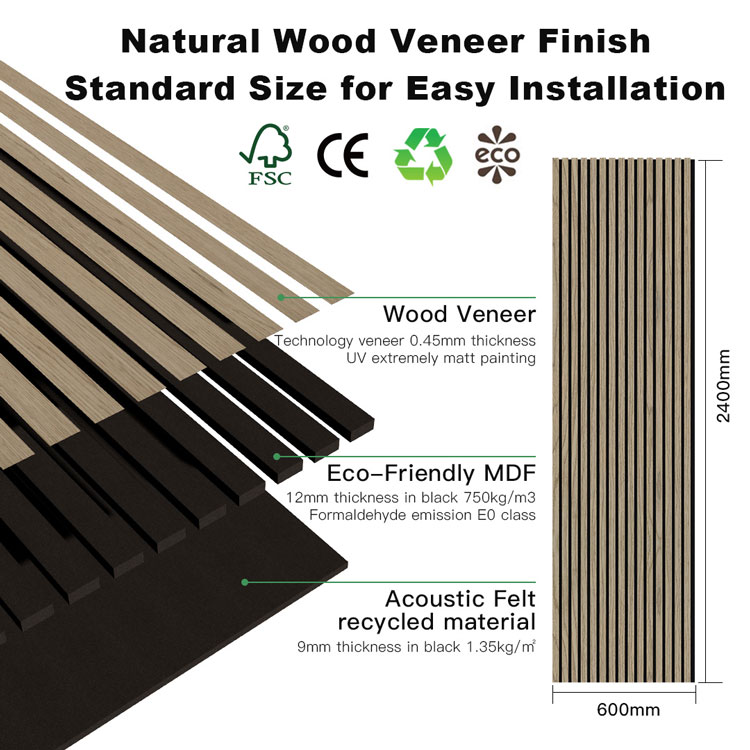
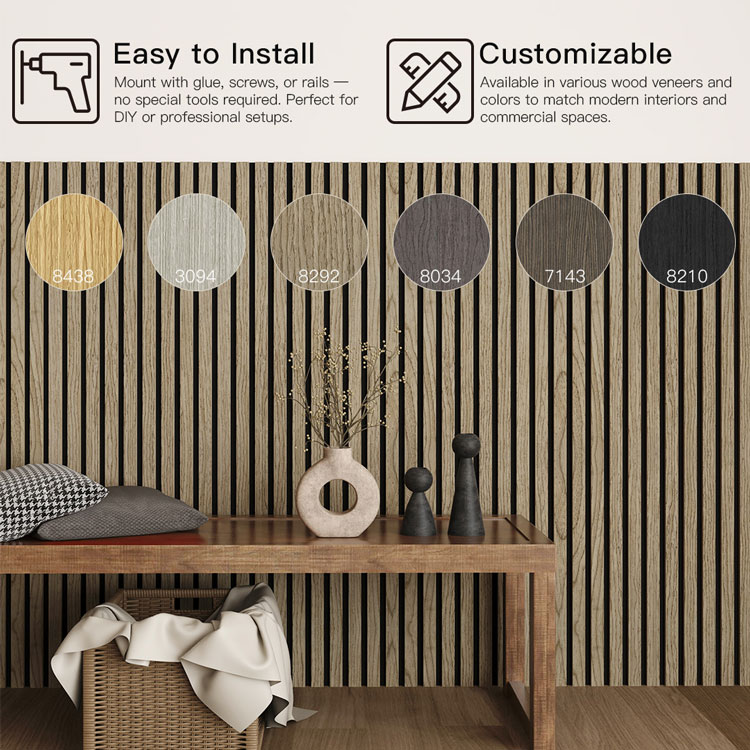
As sustainability becomes a core consideration in modern architecture and interior design, many designers, developers, and homeowners are asking an important question: Are acoustic panels eco-friendly and sustainable?

The short answer is yes—when they are designed and manufactured responsibly. In this article, we explore what makes acoustic panels sustainable, which materials matter most, and how professional manufacturers ensure both acoustic performance and environmental responsibility.
Leading Acoustic Wood Slat Panel Distributor


What Makes an Acoustic Panel Eco-Friendly?

An eco-friendly acoustic panel is defined by more than just sound absorption. True sustainability involves the entire product lifecycle, including:

  • Raw material sourcing

  • Manufacturing processes

  • Product durability and lifespan

  • Indoor air quality impact

  • End-of-life recyclability

High-quality acoustic panels are designed to improve acoustic comfort without compromising environmental standards.


Sustainable Materials Used in Acoustic Panels

1. Wood Slat Acoustic Panels from Responsible Sources

Wood slat acoustic panels are highly popular due to their natural appearance and excellent acoustic performance. When produced using:

  • Engineered wood or MDF from sustainable forestry

  • Optimized material usage to reduce waste

  • Long-lasting surface finishes

they become a renewable and eco-conscious wall solution.

Wood-based acoustic panels also store carbon throughout their lifecycle, contributing positively to sustainable building goals.


2. Polyester Fiber Acoustic Panels (PET Panels)

Polyester fiber acoustic panels are widely recognized as one of the most sustainable acoustic materials available today.

Key eco-friendly advantages include:

  • Made from recycled PET plastic bottles

  • Fully recyclable

  • Low VOC emissions

  • Lightweight and energy-efficient to transport

These panels offer excellent sound absorption while supporting circular economy principles.


3. Low-Emission & Safe Indoor Materials

Eco-friendly acoustic panels should contribute to healthy indoor environments by:

  • Minimizing formaldehyde emissions

  • Using non-toxic adhesives

  • Meeting international indoor air quality standards

This is especially important for offices, schools, homes, and public buildings.


Manufacturing Processes Matter

Sustainability is not only about materials—it also depends on how acoustic panels are produced.

Professional manufacturers focus on:

  • Efficient material utilization

  • Energy-saving production lines

  • Waste reduction and recycling systems

  • Consistent quality control to reduce product replacement

Well-made acoustic panels last longer, reducing environmental impact over time.


Guangdong Leeyin Acoustics: Sustainability with Scale and Expertise

As a leading manufacturer and exporter of wood slat acoustic panels in China, Guangdong Leeyin Acoustics integrates sustainability into both product design and production management.

Our Strengths Include:

  • 20,000㎡ modern manufacturing facility

  • Large-scale production capacity for global supply

  • Specialized focus on wood slat wall panels and acoustic panels

  • Strict quality management aligned with international standards

  • Stable, long-term export experience in global markets

By combining efficient manufacturing with responsible material selection, we help clients achieve both acoustic excellence and sustainable building goals.


Are Acoustic Panels Worth It for Green Buildings?

Yes. Eco-friendly acoustic panels:

  • Improve sound comfort and productivity

  • Enhance interior aesthetics using natural materials

  • Support green building certifications

  • Offer long service life with minimal maintenance

For architects and developers, acoustic panels are a functional and sustainable investment.


How to Choose Sustainable Acoustic Panels

When selecting acoustic panels, look for:

  • Recycled or renewable core materials

  • Low-emission certifications

  • Long product lifespan

  • Experienced manufacturers with export and quality control expertise

A reliable supplier ensures sustainability is verified, not just claimed.


Conclusion

So, are acoustic panels eco-friendly and sustainable?
Absolutely—when they are thoughtfully designed and professionally manufactured.


With advanced production facilities, international quality management, and deep expertise in wood slat acoustic panels and sound-absorbing solutions, Guangdong Leeyin Acoustics provides acoustic products that balance performance, aesthetics, and sustainability for modern spaces worldwide.
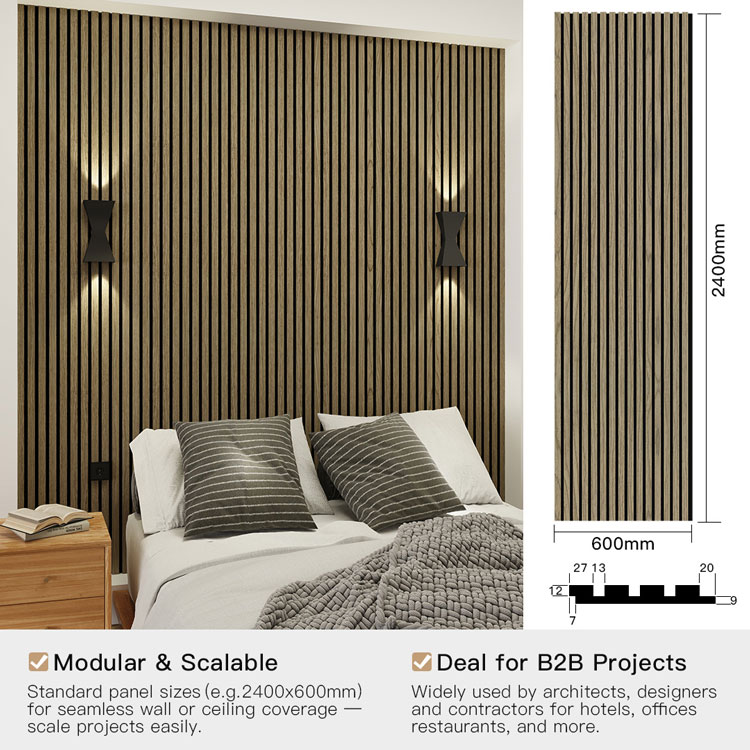
Sound-absorbing panels work by absorbing sound energy and reducing reflections, thus eliminating echoes and reverberation. Their effectiveness largely depends on:


Material density and porosity

Leading Distributor of Acoustic Wood Slat Panels

Internal structure


Fire resistance and safety


Environmental performance


Visual design compatibility


Choosing the wrong material can lead to poor sound insulation, short product lifespan, or safety hazards.


Common Materials for Sound-Absorbing Panels


1. PET Felt (Recycled Polyester Fiber)


PET felt boards are widely used for basic sound absorption.


Advantages:


Lightweight and easy to install


Made from recycled plastic bottles


Good sound absorption for mid-to-high frequencies


Environmentally friendly and recyclable


Disadvantages:


Limited sound absorption for low frequencies


Softer surface, lower impact resistance


Functionality outweighs aesthetics


PET felt is commonly used in offices, schools, and projects with limited budgets.


2. Sound-Absorbing Foam


Sound-absorbing foam is commonly found in small recording studios and home recording studios.


Advantages:


Affordable entry-level option


Easy to install yourself


Reduces flutter echo


Disadvantages:


Weaker low-frequency performance


Will deform over time


Limited fire resistance of low-quality foam


Not suitable for high-end interior decoration


Foam is best suited for temporary or small-scale acoustic treatments.


3. Mineral Wool/Glass Fiber (Core)


Mineral wool and glass fiber are typically used inside acoustic panels, not as exposed surfaces.


Advantages:


Excellent sound absorption across the entire frequency range


High density enhances performance


Fire-resistant after proper treatment


Disadvantages:


Requires fabric or solid surface covering


Less aesthetically pleasing


Requires careful handling during production


These materials form the core of many professional-grade acoustic panels.


4. Medium-Density Fiberboard (MDF)


High-density medium-density fiberboard is a key structural material for high-end acoustic panels, especially wood slat wall panels.


Advantages:


Stable density ensures consistent acoustic performance


Strong structural integrity


Smooth surface for easy veneer application


Ideal for strip and perforated designs


Limitations:


Performance depends on density and quality


Low-grade MDF may release higher levels of volatile organic compounds (VOCs)


Our company uses rigorously selected high-density MDF that meets international standards.


5. Natural Wood Veneer (Decorative and Functional Layer)


Natural wood veneer plays a crucial role in wood strip acoustic panels.


Advantages:


Enhances aesthetics and interior value


Utilizes slat spacing to diffuse and absorb sound


Natural, warm appearance


Complements modern and luxury design styles


Limitations:


Vene thickness and bonding quality are critical


Requires specialized production control


When used in conjunction with acoustic backing, wood veneer offers both performance and aesthetics.

One of the most frequently asked questions by buyers when choosing acoustic panels is:


Are thicker acoustic panels better?

Custom Solutions Acoustic Wood Slat Panels

In short, the answer is yes—but not always in the way people expect.


Panel thickness does affect sound absorption, but it's only one part of the overall acoustic performance. In this article, we'll explain how thickness works, when thicker panels are more beneficial, and how to choose the right solution for your space.


How Acoustic Panels Absorb Sound


Acoustic panels reduce echoes and reverberation in a room by absorbing sound energy, especially mid-to-high frequency sound waves.


Key factors affecting performance include:


Panel thickness


Material density


Surface design


Installation method


Air gap behind the panel


Thickness alone does not guarantee better results.


Does thickness really improve sound absorption?


Yes—especially for low frequencies.


Generally speaking:


Thicker panels can absorb a wider frequency range.


They are more effective at low frequencies than thinner panels.


For example:


12-25 mm thick panels primarily absorb high frequencies.


40-50 mm thick panels absorb mid-frequency frequencies more effectively.


Thick panels with backing systems help control low-frequency energy.


However, for everyday residential and commercial spaces, ultra-thick panels are often unnecessary.


Thicker with Smarter Design


Modern acoustic solutions are not simply about increasing thickness, but about balancing design.


For example, wood slat acoustic panels use:


Rigid medium-density fiberboard slats for sound diffusion


High-density polyethylene terephthalate (PET) felt for sound absorption


Thickness optimized for the actual space


This combination achieves effective acoustic control without adding excessive volume or visual clutter.


When to Need Thicker Acoustic Panels


Thicker acoustic panels are best suited for:


Recording studios


Music rehearsal rooms


Home theaters


Large open-plan commercial spaces


In these environments, low-frequency control is crucial.


When Thicker Acoustic Panels Are Not Needed


For example:


Living rooms


Bedrooms


Offices


Conference rooms


Restaurants and hotels


Standard-thickness acoustic panels or wood strip acoustic panels, if installed properly, already provide excellent sound absorption.


In these cases, installation location and coverage are more important than thickness.


The Role of Air Gap (Often Overlooked)


An important professional insight:


Adding an air gap behind the acoustic panel can significantly improve low-frequency absorption—sometimes even better than increasing thickness.


This is why wall-mounted wood strip acoustic panels with felt backing are so effective in actual installations.


Why Wood Strip Acoustic Panels are the Ideal Balanced Choice


Wood strip acoustic panels offer the following advantages:


Moderate thickness, suitable for most environments


Natural sound diffusion and absorption


Aesthetically pleasing, perfectly complementing modern interior design


Highly effective sound absorption without excessive space occupation


Achieving an ideal balance between functionality, design, and ease of installation

Living next to noisy neighbors can be annoying—but with the right soundproofing strategies, you can create a quieter, more comfortable space. Here are some ways to effectively block noise from shared walls.

Custom Solutions Acoustic Wood Slat Panels

🧱 1. Increase Wall Mass


Noise can easily penetrate thin walls. Increasing wall density helps block sound.


Options include:


High-density materials


Double-layer gypsum board


High-density sound-absorbing panels


High-density MDF sound-absorbing panels, produced by Guangdong Liyin Acoustics Technology Co., Ltd., increase wall mass and enhance aesthetics.


🔊 2. Use Sound-absorbing panels to Absorb Sound


Installing sound-absorbing panels helps reduce sound reflections within the room, significantly reducing noise from the other side.


Our wood strip sound-absorbing panels combine:


✔ High-density medium-density fiberboard (MDF)


✔ Sound-absorbing PET felt


✔ Natural wood veneer


✔ Modern interior design aesthetics


Perfect for bedrooms, home offices, and apartments.


🔧 3. Seal Gaps and Cracks


Small cracks around sockets, windows, and walls can leak a lot of noise.


Seal these gaps with sealant or weatherstripping.


🛠 4. Create Air Gaps


For more severe noise problems, leave small air gaps on the back of the sound-absorbing panels.


This enhances low-frequency absorption and significantly improves sound insulation.

If you're planning to upgrade your space with acoustic panels but are worried they might affect your WiFi signal—the good news is: acoustic panels won't block WiFi signals.

Leading Acoustic Wood Slat Panel Manufacturer & Distributor

✔ Why Acoustic Panels Won't Affect WiFi


WiFi signals can easily pass through materials commonly used in acoustic panels, including:


Medium-Density Fiberboard (MDF)


Recycled PET felt


Wood veneer or PET/PVC finish


These materials don't contain metals or dense barriers that interfere with electromagnetic signals. This means your WiFi signal will remain strong even if you install acoustic panels in your room.


⭐ What Do Acoustic Panels Affect?


They improve the acoustic comfort of a room but don't affect WiFi signals.


Liyin Wood Strip Acoustic Panels are designed to:


Absorb echoes and reduce reverberation


Improve sound clarity in homes, offices, and recording studios


Add beauty and warmth with premium wood veneer finishes


Contribute to eco-friendly building using E0 grade MDF and recycled PET materials.

keyboard_arrow_up