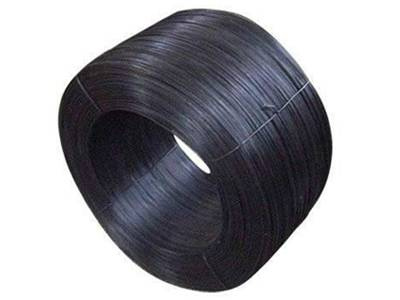
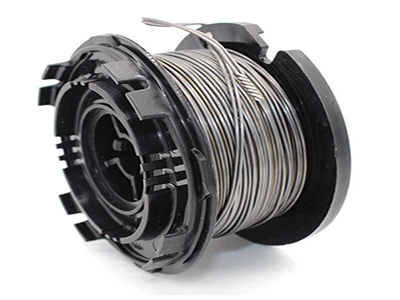
In the construction industry, rebar tying is a crucial step in ensuring structural stability, and the choice of tying wire directly affects construction quality and subsequent maintenance costs. Black annealed wire and galvanized wire are two common tying materials, each with its own characteristics and suitable for different scenarios. Below, we will compare these two materials in detail.


Feature Dimension Black Annealed Wire Black Annealed Wire Galvanized wire Galvanized wire
Process and Appearance Low-carbon steel wire is annealed (heated and then slowly cooled), resulting in a black color. The surface may be coated with anti-rust oil. The surface of low-carbon steel wire is hot-dip or electro-galvanized, giving it a silvery-white color.
Core Advantages It has excellent flexibility, is easy to bend and wrap, and requires little effort to operate. It has strong corrosion resistance, and the zinc coating provides long-lasting protection and a long service life.
Main Limitations It has poor corrosion resistance and is prone to rust when exposed to humid environments. It has high hardness and poor flexibility, making it relatively difficult to handle manually.
Cost Relatively economical. The cost is usually higher due to the galvanizing process.
Typical Application Scenarios Rebar tying, handicraft making, and material bundling in indoor or dry environments. Outdoor, damp environments: building tying, fencing, and barbed wire.


How to Choose?

The choice of binding wire depends primarily on your project requirements and work environment:

Prioritize Black Annealed Wire: If your project is indoors or in a dry environment, and you require high efficiency and ease of handling, black annealed wire is the ideal choice. Its flexibility makes binding faster and more economical.

Prioritize Galvanized Wire:If your project is in a humid or corrosive environment such as outdoors, in a basement, or near the sea, galvanized wire is essential. Although the initial investment is slightly higher, its superior rust resistance ensures long-term stability and avoids safety hazards and maintenance costs caused by corrosion.


In summary, both black annealed steel wire and galvanized steel bar binding wire have their advantages and disadvantages. In practical applications, construction personnel should comprehensively consider factors such as cost, corrosion resistance, and ease of construction based on the specific circumstances of the project to rationally select binding wire materials in order to ensure construction quality and project safety.
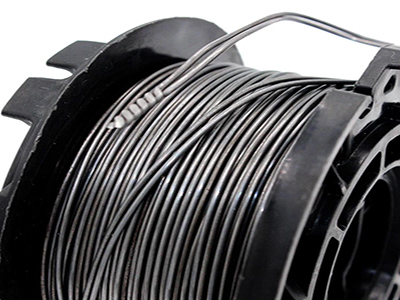
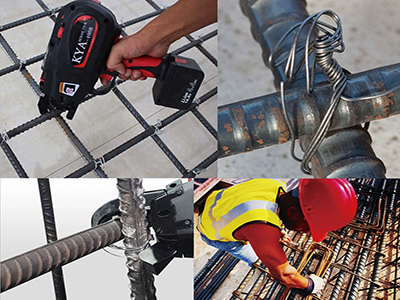
 

On construction sites, rebar tying wire is often considered an inconspicuous auxiliary material, but its quality directly affects the structural integrity and safe lifespan of the entire building. Although it does not directly bear weight, it is crucial for ensuring the coordinated operation of reinforced concrete.


The core function of tying wire: "Positioner" and "Fixer" for rebars. Before pouring concrete, the rebar cage or mesh must be securely fixed with tying wire to ensure:

Precise design positioning: Each rebar functions correctly on the design coordinates, guaranteeing the effectiveness of structural calculations.

Shared load-bearing: The rebar mesh forms a unified whole, evenly distributing the load.

Pouring stability: Resisting the impact and vibration during concrete pouring, preventing rebar displacement.


Tie Wire Rebar Tie Wire for Rebar Tying MachineTie Wire Rebar Tie Wire for Rebar Tying Machine


The impact of rebar tying wire quality on structural integrity will be discussed in detail below.

First, the quality of the rebar tying wire directly affects the structure's load-bearing capacity. Using inferior rebar tying wire can lead to insecure binding, resulting in weak connections between rebars or even loosening. This directly reduces the overall load-bearing capacity of the structure, increasing the risk of building collapse. Therefore, selecting high-quality rebar tying wire during construction is crucial to ensure structural stability and safety.

Second, the quality of the rebar tying wire affects the structure's durability. During building use, rebar is exposed to the external environment. Using inferior tying wire makes it susceptible to oxidation and corrosion, reducing the rebar's lifespan. This directly impacts the durability of the entire building structure and may even lead to premature aging and damage.

Furthermore, the quality of the rebar tying wire also affects the construction quality and project progress. Using substandard tying wire can easily cause problems during construction, increasing construction difficulty and time costs. Choosing reliable rebar tying wire ensures smooth construction, improves project efficiency, and guarantees the quality of the structure.


How to Choose Qualified Binding Wire?

To ensure project quality, the following should be considered when selecting binding wire:

Material and Process: For humid environments, galvanized wire (especially hot-dip galvanized) is preferred, as its rust resistance is far superior to ordinary black iron wire.

Specification Matching: The diameter must match the rebar specification (commonly 20-22 gauge) to ensure sufficient strength.

Product Standards: Select qualified products that meet national or industry standards.

keyboard_arrow_up