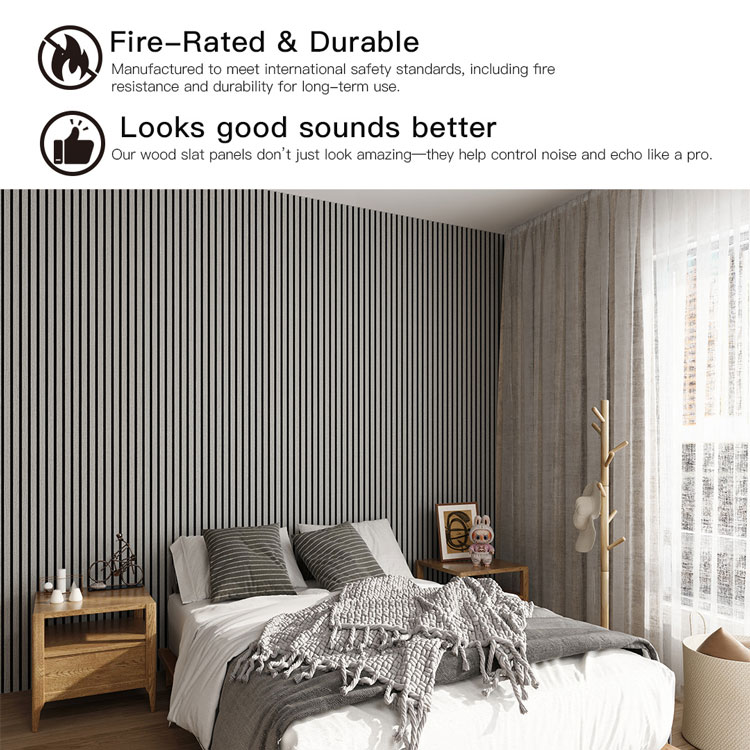
When choosing acoustic panels, most buyers focus on surface design, thickness, or installation. However, one of the most critical factors affecting acoustic performance, durability, and application suitability is the panel core material.
Two of the most commonly used cores today are MDF (Medium-Density Fiberboard) and Polyester Fiber (PET Fiber). But which one is better?
The answer depends on how the panel is used, where it is installed, and what level of performance is required. In this article, we compare MDF and polyester fiber cores in detail to help you make the right decision.
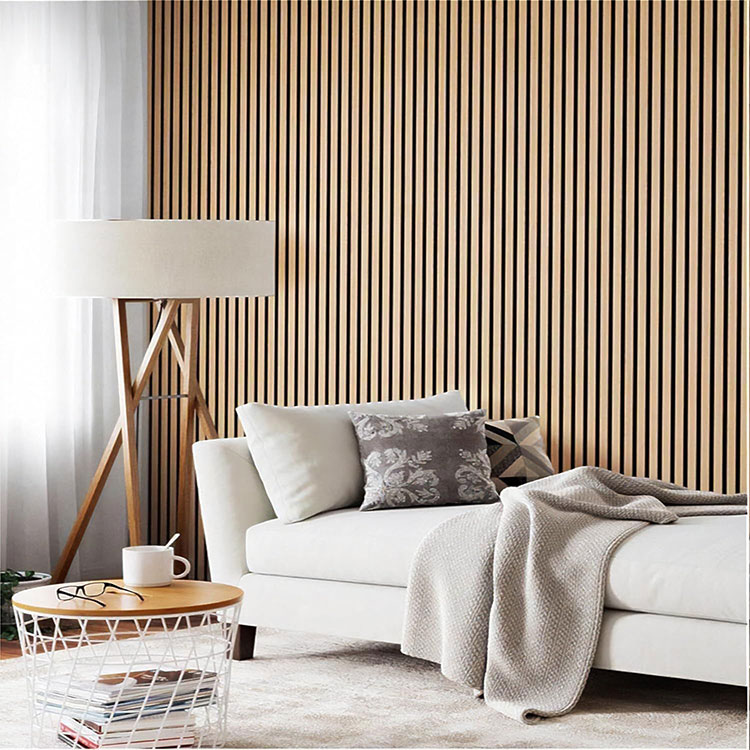
Understanding Acoustic Panel Core Materials
The core material of an acoustic panel directly influences:
-
Sound absorption efficiency
-
Structural stability
-
Durability and lifespan
-
Fire resistance and safety compliance
-
Visual and architectural applications
Let’s look at how MDF and polyester fiber perform across these key factors.
What Is MDF in Acoustic Panels?
MDF (Medium-Density Fiberboard) is a highly engineered wood-based material made from compressed wood fibers bonded under high pressure.
In acoustic applications, MDF is commonly used in:
-
Decorative acoustic wall panels
-
Architectural sound treatment systems
Key Characteristics of MDF:
-
High density and uniform structure
-
Excellent dimensional stability
-
Strong load-bearing capacity
-
Ideal for precision machining and slat spacing
What Is Polyester Fiber in Acoustic Panels?
Polyester fiber (often PET fiber) is a synthetic, non-woven acoustic material made from recycled or virgin polyester.
It is widely used in:
-
Fabric-wrapped acoustic panels
-
Felt acoustic boards
-
Lightweight sound absorption panels
Key Characteristics of Polyester Fiber:
-
Lightweight and flexible
-
Good mid-to-high frequency absorption
-
Easy to install
-
Often eco-friendly (recycled PET)
MDF vs Polyester Fiber: Acoustic Performance Comparison
1. Sound Absorption Efficiency
-
Polyester Fiber
Excellent at absorbing mid and high frequencies due to its porous structure. -
MDF (in wood slat panels)
MDF itself is reflective, but when combined with slat spacing and acoustic backing, it creates a hybrid system that offers controlled diffusion and absorption.
👉 Best Result:
MDF-based wood slat panels with PET felt or mineral wool backing provide balanced acoustic control, not just absorption.
2. Structural Strength and Stability
-
MDF
High-density MDF offers superior rigidity, ensuring panels remain flat, aligned, and stable over time—especially important for large wall installations. -
Polyester Fiber
Lightweight but less rigid; prone to bending or deformation if unsupported.
👉 Winner: MDF
Ideal for architectural wall systems and long-term commercial use.
3. Aesthetic and Design Flexibility
-
MDF
Perfect for wood veneer finishes, CNC cutting, and precise slat designs. Creates a premium architectural look. -
Polyester Fiber
Limited design options; typically flat panels or felt shapes.
👉 Winner: MDF
Preferred for modern interiors where design and acoustics must coexist.
4. Fire Safety and Compliance
-
MDF (treated)
Can meet international fire standards when produced with certified treatments and finishes. -
Polyester Fiber
Fire performance varies significantly by grade and manufacturer.
👉 Key Point:
Fire performance depends heavily on manufacturing standards, not just material type.
5. Durability and Lifespan
-
MDF
Long-lasting, resistant to wear, ideal for high-traffic commercial spaces. -
Polyester Fiber
Softer material; more susceptible to surface damage.
👉 Winner: MDF for commercial and long-term projects.
MDF vs Polyester Fiber: Application Scenarios
| Application | Better Choice |
|---|---|
| Wood slat acoustic wall panels | MDF |
| Architectural interiors | MDF |
| Offices & commercial spaces | MDF |
| Lightweight acoustic treatment | Polyester Fiber |
| Temporary installations | Polyester Fiber |
| Budget acoustic solutions | Polyester Fiber |
Why MDF Is the Preferred Core for Wood Slat Acoustic Panels
In wood slat acoustic panels, MDF plays a critical structural and acoustic role:
-
Maintains precise slat spacing
-
Enhances sound diffusion
-
Supports high-quality veneer finishes
-
Ensures long-term stability
This is why professional manufacturers consistently choose high-density MDF for premium wood slat acoustic systems.
Manufacturing Quality Makes the Real Difference
Material choice alone does not guarantee performance. How the panel is manufactured is just as important.
At Guangdong Leeyin Acoustics, we specialize in:
-
Wood slat acoustic panels
-
MDF-based acoustic wall systems
-
Integrated acoustic panel solutions
Our manufacturing strengths include:
-
20,000㎡ modern production facility
-
Strict MDF density selection and control
-
Precision CNC machining
-
High-performance acoustic backing integration
-
Quality management aligned with international standards
-
Leading exporter of wood slat wall panels in China
This ensures every panel delivers consistent acoustic performance, structural reliability, and visual excellence.
Final Verdict: MDF or Polyester Fiber?
There is no one-size-fits-all answer—but for wood slat acoustic panels and architectural acoustic applications, MDF is the superior core material.
-
Choose MDF for:
-
Premium wood slat acoustic panels
-
Commercial and architectural projects
-
Long-term durability and design-driven spaces
-
-
Choose Polyester Fiber for:
-
Lightweight acoustic absorption
-
Simple installations
-
Budget-focused solutions
-
For projects that demand both acoustic performance and high-end aesthetics, MDF-based wood slat acoustic panels remain the industry standard.