On the construction site of precast concrete buildings, when huge wall panels or floor slabs are steadily hoisted, few people notice the inconspicuous metal anchors on the components. However, the two key components, "installation anchors" and "lifting anchors," although similar in appearance, play completely different roles. Confusing them can lead to serious safety hazards.


I. Lifting Anchor: The Starting Point of Lifting

Lifting anchors are key devices used for lifting precast concrete components during the production stage. They are typically pre-embedded or installed on the component during production, primarily used to lift the component from the precast site and transport it to the installation location. The design focus of lifting anchors is to withstand the vertical tensile forces during lifting, ensuring the component remains stable and preventing damage due to uneven lifting forces.

Features

- Load-bearing capacity: Lifting anchors need to have sufficient load-bearing capacity to cope with the weight of the component and the dynamic loads during lifting.

- Installation location: Usually installed near the component's center of gravity to ensure balance during lifting.

- Single-use: After the component is installed in place, lifting anchors are usually no longer used; their main function is to facilitate transportation from precast to the installation location.
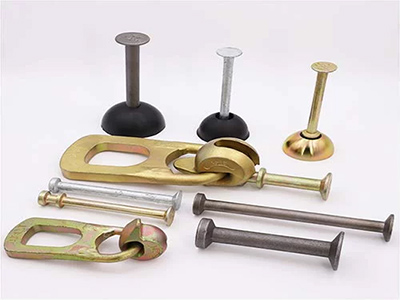
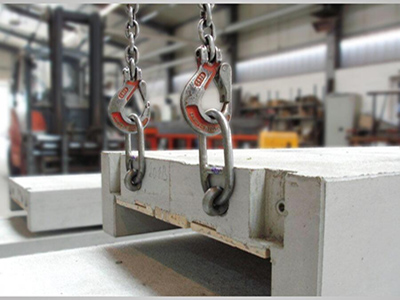
 

Lifting AnchorsLifting Anchors


II. Erection Anchors: The Key to Precise Positioning

Installation anchors are primarily used for fixing and positioning precast components at their installation locations. After the component is hoisted to the designated position, the installation anchor, through its connection with the main structure, ensures the component remains stable during installation and ultimately achieves a secure connection with the main structure. The design focus of installation anchors is to provide sufficient tensile, shear, and pull-out resistance to ensure the safety of the component during installation and use.

Features

- Connection Method: Installation anchors are typically connected to the main structure using bolts, welding, or chemical anchors.

- Long-Term Use: Installation anchors continue to function after the component is installed, ensuring the stability of the component throughout its entire service life.

-  Precision Requirements: Installation anchors require high precision in their installation position and connection to ensure accurate positioning of the component.
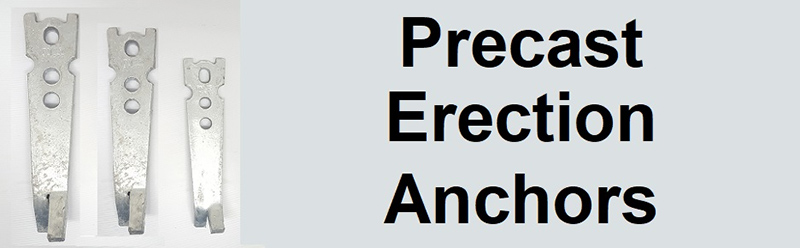
 

Erection Anchors


III. Differences between the two


characteristic Lifting Anchor Install anchor
Function Used for lifting and transporting prefabricated components Used for the installation, positioning, and fixing of precast components.
Load requirements Withstand vertical tension to ensure lifting stability Withstands various forces (tension, shear, pull) to ensure stable installation.
Use phase Transportation stage from prefabricated component production to installation location Installation location positioning and long-term fixation stage
Installation location Near the center of gravity of the component Determined based on installation requirements and structural connection points.
Number of times used Single use Long-term use


Why is strict differentiation necessary?

Safety Risk: If a temporary anchor intended only for lifting is mistakenly used as a permanent installation anchor, its load-bearing capacity and durability cannot be guaranteed, potentially leading to connection failure and posing a serious safety hazard.

Functional Mismatch: The location of the installation anchor is determined through precise structural calculations. If it is incorrectly subjected to force at a non-designed lifting point during temporary lifting, it may cause component cracking and damage.
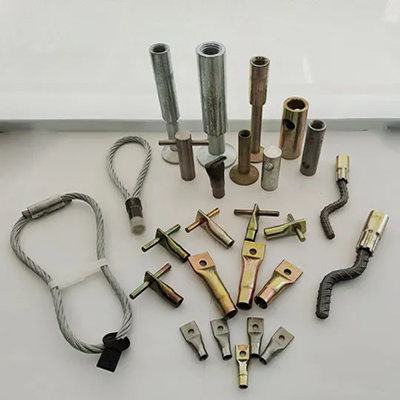
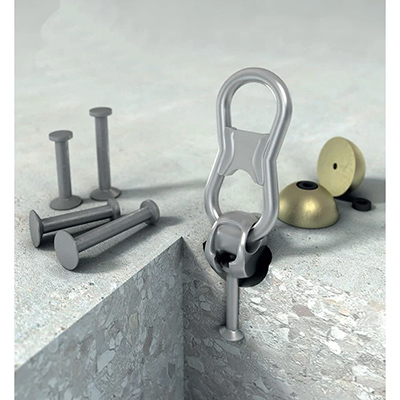
 

In the modern construction industry, prefabricated building technology is transforming traditional construction methods with its advantages of high efficiency, environmental friendliness, and controlled quality. During the production, transportation, and installation of prefabricated components, the importance of lifting and anchoring systems, as key components connecting components to lifting equipment, is self-evident. More than just simple connectors, they provide a safety guarantee for the entire component, bearing its weight.


Lifting AnchorsLifting Anchors


Definition and Function of a Lifting Anchor

A lifting anchor is a mechanical anchor pre-embedded within a concrete structure, designed specifically for lifting. It works with a lifting device (clutch, eye, shackle, etc.) to form a removable temporary lifting point. Its main functions include:

Safely transmitting lifting force to the concrete structure;

Preventing local damage such as splitting and edge chipping during lifting;

Enabling rapid hooking and unhooking, improving the operating efficiency of tower cranes or mobile cranes;

Meeting the complex load requirements of multiple turnovers (demolding, flipping, and on-site repositioning).

A typical lifting anchor system typically consists of three components:

Anchor rod: The portion embedded in the concrete, typically with a hook, thread, or a special tail shape (such as a wavy shape) to ensure maximum grip with the concrete and prevent pullout.

Exposed portion: The structure used to connect the lifting device, which can be a eye, threaded hole, or ball head.

Lifting device: The component used with the lifting anchor, such as a shackle or specialized sling, connected between the crane hook and the anchor.


The following are common lifting anchor types and characteristics used in precast components.

1. Spherical Head Anchor

Construction: Round steel with a forged spherical head on one end and an anchor foot or straight rod on the other; used with a lifting clutch.

Advantages:

360° rotation and oscillation to accommodate diagonal tension;

Small anchor head embedment depth, suitable for thin-walled panels;

Automatic clutch lock, installation and removal takes seconds.

Load range: 1.3–32 t.

Applications: General components such as staircases, exterior wall panels, columns, and beams, especially suitable for diagonal tension or tilting applications.

2. Threaded Socket/Foot Anchor

Construction: Thick-walled socket with a bottom anchor foot (or corrugated tail), internally threaded for eyebolt connection.

Advantages:

The lifting point is flush with the concrete surface, resulting in a clean appearance;

Replaceable bolts can be reused repeatedly;

Balanced shear and tensile properties. Load range: 0.5–20 t.

Applications: Components requiring high aesthetics, such as exposed concrete exterior walls, decorative panels, and pipe gallery roofs.

3. Double Head Anchor

Construction: A single anchor rod with forged ends and equipped with a dual-point clutch.

Advantages: Two-point load application, minimal out-of-plane deflection, and smoother rollover.

Applications: Rollover of slender components such as large floor slabs and hollow bridge decks.

4. Spread Anchor

Construction: The lower end of the anchor rod spreads out in a "swallowtail" or "fishtail" shape.

Advantages: Load distribution, reducing the risk of splitting at thin-wall edges.

Applications: Stair treads, balcony railings, and precast decorative tiles with a thickness of less than 80 mm.

5. Wavy Tail Anchor

Construction: The anchor tail is bent into a "wavy" shape in multiple sections, increasing the anchoring length. Advantages: Provides high pull-out strength without requiring additional anchors; suitable for low-strength early-stage concrete.

Applications: Components requiring rapid demolding, such as pipe corridors, box culverts, and thin-walled beams.

6. Disk Anchor (QuikLift® Disk)

Construction: Short rod + large-diameter disk. Used for the outer panels of sandwich insulated walls.

Advantages: Single-point lifting without penetrating the insulation layer; the disk provides a large bearing surface.

Applications: Lifting the outer panels of prefabricated sandwich insulated walls to avoid cold bridging.

7. Pin Anchor

Construction: Plain round pin + removable adapter head with a tapered hole.

Advantages: Low cost; the adapter head is recyclable; after removal, only a small tapered hole remains, making it easy to repair.

Applications: Components with low to medium loads, such as pipelines, box culverts, and curbs.


The selection and use of lifting anchors is not arbitrary and requires consideration:

Working load: The weight of the component to be lifted.

Dynamic factor: The effects of dynamic loads caused by sudden starts and stops during lifting. This factor is typically multiplied by a safety factor (e.g., 1.5 or higher) based on the static load.

Concrete strength: Concrete strength is typically low during demolding, and it is essential to ensure that it is strong enough to withstand the lifting forces.

Lifting angle: The angle between the slings significantly increases the actual load on the anchor rod; 60 degrees is a common and recommended angle.

Safety factor: The lifting anchor is designed with a high safety factor (typically ≥3 for the material itself and ≥2.5 for concrete cone failure) to ensure a safe and reliable lift.

Component shape and center of gravity: The number and location of anchor points must be calculated to ensure a balanced lift.

keyboard_arrow_up