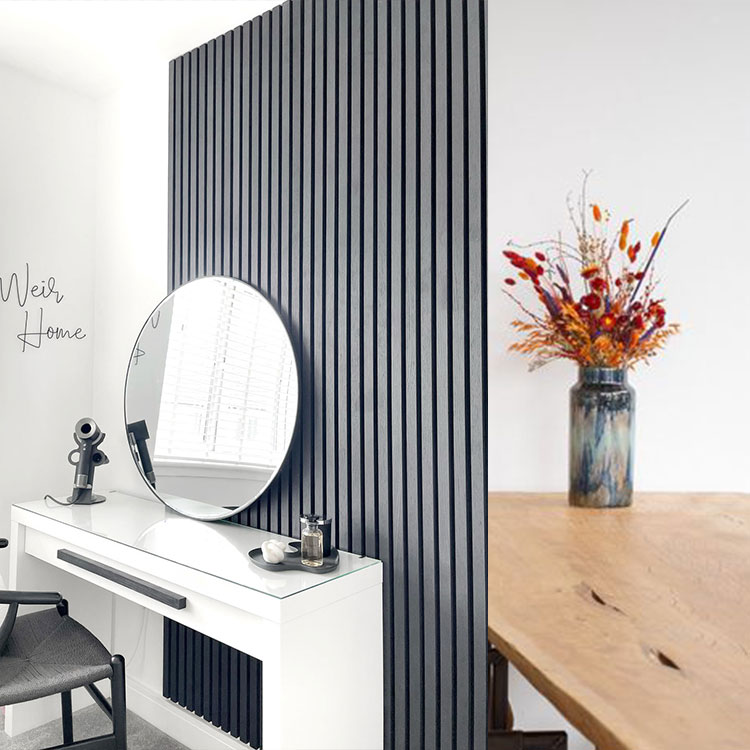
One of the most frequently asked questions before undertaking any acoustic treatment of a space is:
How many acoustic panels do you need in a room?
In short—it depends on the specific situation.
The appropriate number of acoustic panels depends on the size, function, layout of the room, and the type of acoustic problem you want to solve.
In this guide, we'll explain it in a clear and practical way to help you make the right decision and avoid over- or under-treating.
The Actual Role (and Limitations) of Acoustic Panels
Before discussing specific numbers, it's important to understand one thing:
Acoustic panels absorb sound reflections.
They reduce echoes and reverberation.
They improve sound clarity and comfort.
They do not completely isolate room noise.
This means you don't need to cover all surfaces to achieve the desired effect.
General Principle: Coverage 20%–30%
The generally accepted guideline in acoustics is:
👉 Cover 20%–30% of the total surface area of walls and ceilings.
Such coverage is sufficient to:
Control reflections
Improve speech intelligibility
Balance music and audio playback
For most residential or commercial spaces, it's rarely necessary to exceed this range.
How Room Size Affects the Number of Acoustic Panels
Small Rooms (Bedrooms, Home Offices)
Typical Area: 10–15 square meters
Recommended Number of Acoustic Panels: 4–8
Key Areas:
First Reflection Point
Wall behind the speaker or desk
Rear Wall
Even a small number of well-placed acoustic panels can bring significant improvement.
Medium-sized rooms (living room, home office)
Typical area: 15–30 square meters
Recommended number of panels: 8–16
Additions:
Side walls
Ceiling panels can be installed if needed
Suitable for larger areas with decorative wood strip acoustic panels
Large rooms (studios, meeting rooms, commercial spaces)
Area: 30 square meters and above
Recommended number of panels: 16 or more
Strategy:
Combined wall and ceiling treatment
Use large-size acoustic panels
Combined use of wood strip panels for both aesthetics and performance
Placement is more important than quantity
Using a small number of panels in appropriate locations is far more effective than randomly covering walls.
Priority placement areas:
First reflection point
Front wall (behind the speaker)
Rear wall (behind the listener)
Ceiling above the listening or working area
This method achieves maximum acoustic effect with minimal materials.
Are there too many acoustic panels?
Yes.
Over-processing the acoustics of a room can lead to:
a lifeless or unnatural sound
excessive high-frequency attenuation
creating an uncomfortable listening environment
Therefore, professional acoustic design focuses on balance, not comprehensive coverage.