Wood slat acoustic panels have become increasingly popular in offices, homes, studios, and commercial interiors. They are praised for their modern design and natural wood appearance—but a common question remains:

Are wood slat acoustic panels really effective for sound absorption, or are they just decorative?

The answer is yes—when properly designed and manufactured, wood slat acoustic panels are highly effective at absorbing sound. In this article, we explain how they work, what affects their performance, and why professional manufacturing makes all the difference.
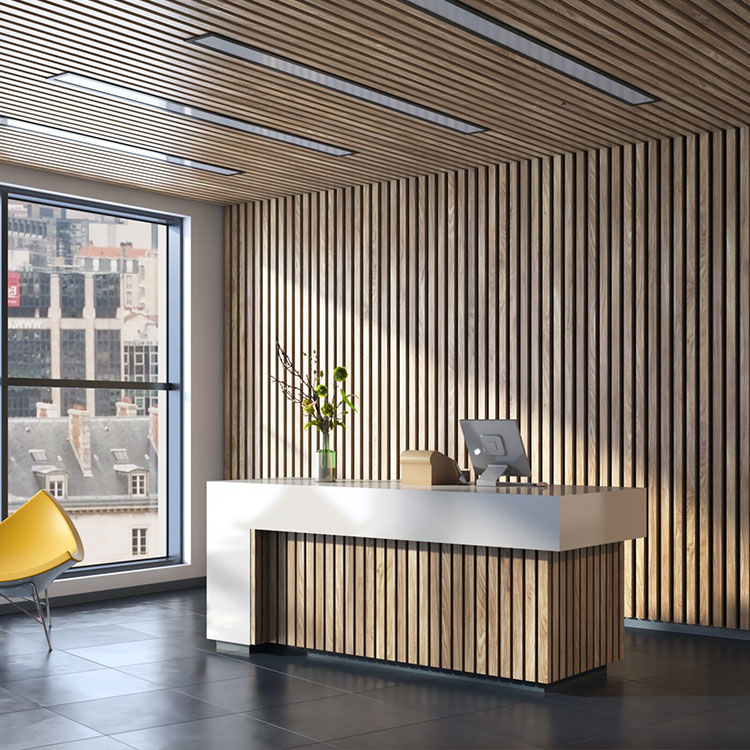
Leading Acoustic Wood Slat Panel Manufacturer & Distributor


What Are Wood Slat Acoustic Panels?

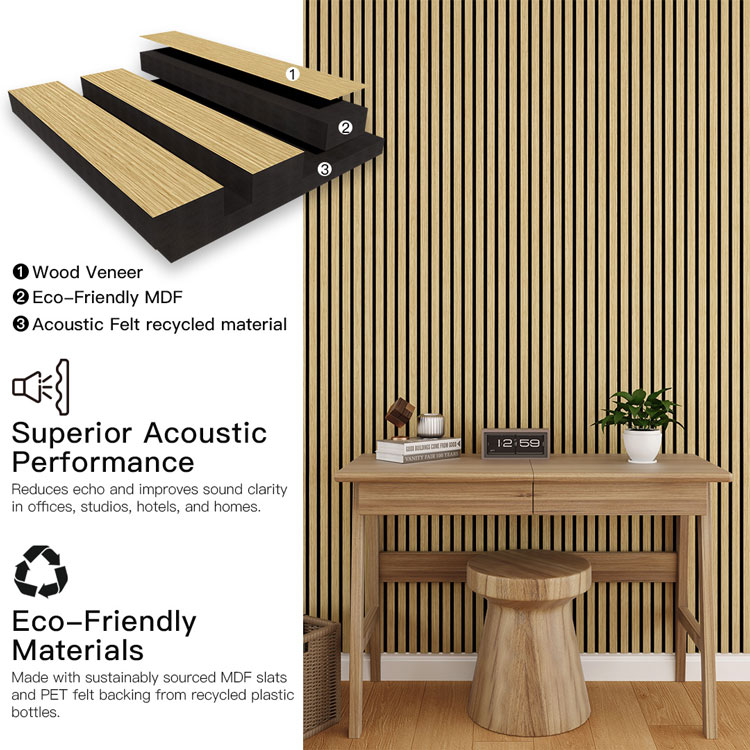
Wood slat acoustic panels are engineered acoustic systems, not solid wood boards.

A typical high-quality wood slat acoustic panel consists of:

  • Natural wood veneer or finished wood slats

  • High-density MDF core

  • Acoustic backing such as PET felt or mineral wool

This layered construction allows the panel to control sound reflections while maintaining a warm, architectural aesthetic.


How Do Wood Slat Acoustic Panels Absorb Sound?

Unlike soft foam panels, wood slat acoustic panels work through a combination of diffusion and absorption.

1. Slat Spacing Diffuses Sound

The gaps between wood slats:

  • Break up direct sound reflections

  • Reduce flutter echo

  • Improve sound clarity

This diffusion helps prevent harsh reflections, especially in medium and large spaces.


2. Acoustic Backing Absorbs Sound Energy

Behind the slats is the real acoustic engine.

High-quality acoustic backing:

  • Traps sound waves

  • Converts sound energy into heat

  • Absorbs mid and high frequencies effectively

When paired with the right density and thickness, backing materials significantly improve overall absorption.


3. MDF Density Enhances Performance

High-density MDF slats:

  • Improve structural stability

  • Enhance mid-frequency sound control

  • Maintain consistent spacing over time

Low-density materials often warp or lose performance, which is why professional manufacturers carefully control material density.


Are Wood Slat Acoustic Panels as Effective as Traditional Acoustic Panels?

Yes—in many real-world applications, they perform just as well or better, with added design benefits.

Feature Wood Slat Acoustic Panels Foam Panels
Sound Absorption High (engineered systems) Moderate
Aesthetics Premium, architectural Basic
Durability Long-lasting Shorter lifespan
Fire Safety Easier to certify Often limited
Commercial Use Ideal Limited

For offices, meeting rooms, home theaters, restaurants, and apartments, wood slat acoustic panels offer an excellent balance of performance and appearance.


What Affects the Sound Absorption Performance?

Not all wood slat acoustic panels perform the same. Key factors include:

✔ Slat Thickness and Spacing

Proper spacing improves diffusion and absorption efficiency.

✔ MDF Density

Higher density provides better sound control and durability.

✔ Acoustic Backing Material

PET felt and mineral wool perform better than thin foam layers.

✔ Installation Method

Adding a small air gap between the panel and wall can further improve absorption, especially at lower frequencies.


Are Wood Slat Acoustic Panels Suitable for Noise Reduction?

It’s important to clarify:

  • Wood slat acoustic panels absorb sound inside a room

  • They reduce echo, reverb, and noise buildup

  • They do not fully soundproof or block sound transmission

For neighbors’ noise or soundproofing, additional construction methods are required. However, for improving room acoustics and comfort, wood slat acoustic panels are highly effective.


Why Professional Manufacturing Matters

Effective sound absorption depends on precision engineering, not just appearance.

At Guangdong Leeyin Acoustics, we specialize in the production of wood slat wall panels and acoustic panels for global markets.

Our manufacturing advantages include:

  • 20,000㎡ modern production facility

  • Controlled MDF density selection

  • Engineered acoustic backing systems

  • Strict quality management following international standards

  • Leading exporter of wood slat acoustic panels in China

This ensures every panel delivers consistent acoustic performance, durability, and visual quality.


Where Are Wood Slat Acoustic Panels Most Effective?

They are widely used in:

  • Offices and meeting rooms

  • Home theaters and living spaces

  • Recording studios and media rooms

  • Restaurants, hotels, and lobbies

  • Apartments and shared living spaces

In these environments, wood slat acoustic panels significantly improve speech clarity, comfort, and overall sound quality.


Final Verdict: Are Wood Slat Acoustic Panels Effective for Sound Absorption?

Yes—when designed and manufactured correctly, wood slat acoustic panels are highly effective for sound absorption.

They combine:

  • Acoustic performance

  • Architectural aesthetics

  • Structural durability

  • Long-term reliability

This makes them a preferred solution for both residential and commercial projects worldwide.


With professional production, optimized materials, and strict quality control, Guangdong Leeyin Acoustics delivers wood slat acoustic panels that meet both design and performance expectations for global clients.
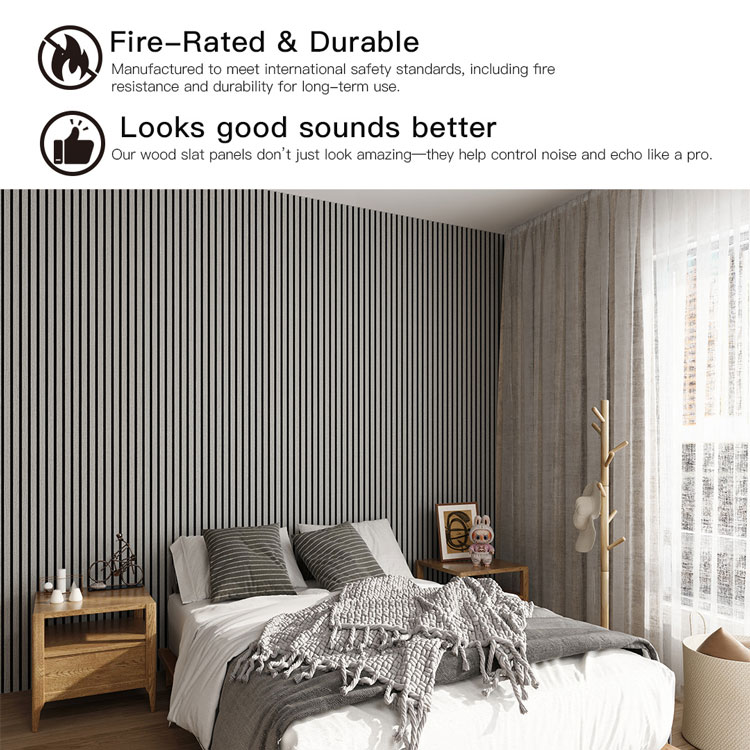
What Exactly Does Acoustic Panel Do? A Beginner's Guide


If you've ever experienced echoes, noise build-up, or unclear sound in a room, then you've encountered an acoustic challenge. With the growing interest in home studios, modern offices, and high-quality interior design, more and more people are starting to wonder about a simple question: What exactly does an acoustic panel do?

Premium Acoustic Wood Slat Panels Manufacturer

In this beginner's guide, we'll explain how acoustic panels work, what problems they can solve, and how to choose the right solution for your space, from the perspective of a professional acoustic panel manufacturer.


What is an Acoustic Panel?


Acoustic panels are specially designed engineered products designed to control indoor sound. They help reduce echoes, reverberation, and excessive noise reflection by absorbing sound waves, especially mid-to-high frequencies.


Unlike exposed walls, glass, or concrete surfaces that reflect sound, acoustic panels convert sound energy into heat energy through porous materials, such as:


Sound-absorbing PET fibers


High-density MDF boards with felt backing


Mineral wool or sound-absorbing core materials


These materials are commonly used in wood slat wall panels, fabric panels, and decorative acoustic systems.


What are the actual functions of acoustic panels?


1. Reduce Echoes and Reverberation


One of the main functions of acoustic panels is to reduce reverberation time. In an untreated room, sound reflects repeatedly between hard surfaces, creating echoes and a muddy sound. Acoustic panels absorb these reflections, creating a clearer, more controlled acoustic environment.


This is especially important in the following settings:


Home theaters


Music studios


Meeting rooms


Dining rooms and open-plan offices


2. Improve Sound Clarity


By reducing unwanted reflections, acoustic panels improve speech clarity and audio detail. Conversations are easier to understand, music sounds more balanced, and auditory fatigue is reduced.


This is why acoustic panels are widely used in:


Recording studios


Podcast recording studios


Classrooms and training centers


Business meeting spaces


3. Enhance Acoustic Comfort (Not Complete Soundproofing)


People often mistakenly believe that acoustic panels completely block noise from entering and leaving a room. In reality, acoustic panels are designed to absorb sound, not completely isolate it.


They help to:


Reduce indoor noise buildup


Minimize sound reflections


Improve indoor acoustics


To achieve complete sound insulation, additional construction methods such as massing, vibration damping, and sealing are required. However, acoustic panels are a cost-effective and essential first step in most acoustic treatments.


Where are acoustic panels commonly found?


Acoustic panels are suitable for residential and commercial spaces, including:


Living rooms and home theaters


Bedrooms and apartments


Offices and coworking spaces


Hotels, lobbies, and restaurants


Recording studios, rehearsal rooms, and broadcasting studios


In modern interior design, wood slat acoustic wall panels are favored for their combination of sound absorption and modern aesthetics.


Why are wood slat acoustic panels so popular?


Wood slat wall panels achieve a unique balance between design and performance. The strip-shaped medium-density fiberboard (MDF) surface diffuses sound, while the sound-absorbing felt backing absorbs noise, making it both practical and beautiful.


Advantages include:


Highly efficient sound absorption


Warm and modern appearance


Easy wall or ceiling installation


Customizable colors, finishes, and sizes


Specialized manufacturing processes ensure superior quality


The performance of sound-absorbing panels depends heavily on material quality, density, and manufacturing precision.

If you're planning to create a modern home theater or stylish living room, you might be wondering:


"Can I mount the TV directly on a sound-absorbing wall?"


In short: It's not recommended.


Here are the reasons and the correct installation method.

Top Supplier of Acoustic Wood Slat Panels – Factory Direct

❌ Why you shouldn't mount a TV directly on a sound-absorbing panel


Sound-absorbing panels—especially felt-backed wooden slats—are for absorbing sound, not for bearing weight.


Mounting a TV directly on acoustic panels may result in:


Insufficient structural support


Risk of panel damage


Unsafe installation


Degraded acoustic performance


✔ Correct way to install a TV using acoustic panels


You can perfectly combine a TV wall mount with acoustic panels—simply follow these steps:


1. First, mount the TV bracket on a solid wall.


The TV should be securely fixed to the following wall surfaces:


Concrete wall


Brick wall


Use suitable anchors to secure to drywall


Wooden frame


2. Install the acoustic panels around the bracket.


Leeyin's wood slat acoustic panels are precisely cut to perfectly fit the wall mount, providing a seamless, high-quality look.


3. Hide cables behind the panel.


Our panels have small gaps between the wood slats and felt backing—perfect for concealing cable management.

keyboard_arrow_up