When choosing acoustic panels, most buyers focus on surface design, thickness, or installation. However, one of the most critical factors affecting acoustic performance, durability, and application suitability is the panel core material.

Two of the most commonly used cores today are MDF (Medium-Density Fiberboard) and Polyester Fiber (PET Fiber). But which one is better?

The answer depends on how the panel is used, where it is installed, and what level of performance is required. In this article, we compare MDF and polyester fiber cores in detail to help you make the right decision.
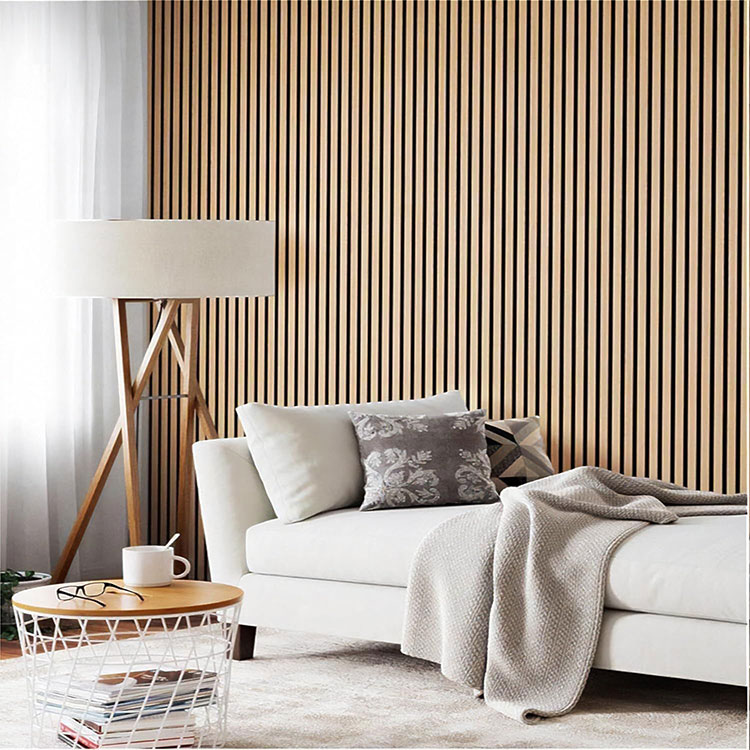
 Custom Solutions Acoustic Wood Slat Panels


Understanding Acoustic Panel Core Materials

The core material of an acoustic panel directly influences:

  • Sound absorption efficiency

  • Structural stability

  • Durability and lifespan

  • Fire resistance and safety compliance

  • Visual and architectural applications

Let’s look at how MDF and polyester fiber perform across these key factors.


What Is MDF in Acoustic Panels?

MDF (Medium-Density Fiberboard) is a highly engineered wood-based material made from compressed wood fibers bonded under high pressure.

In acoustic applications, MDF is commonly used in:

Key Characteristics of MDF:

  • High density and uniform structure

  • Excellent dimensional stability

  • Strong load-bearing capacity

  • Ideal for precision machining and slat spacing


What Is Polyester Fiber in Acoustic Panels?

Polyester fiber (often PET fiber) is a synthetic, non-woven acoustic material made from recycled or virgin polyester.

It is widely used in:

  • Fabric-wrapped acoustic panels

  • Felt acoustic boards

  • Lightweight sound absorption panels

Key Characteristics of Polyester Fiber:

  • Lightweight and flexible

  • Good mid-to-high frequency absorption

  • Easy to install

  • Often eco-friendly (recycled PET)


MDF vs Polyester Fiber: Acoustic Performance Comparison

1. Sound Absorption Efficiency

  • Polyester Fiber
    Excellent at absorbing mid and high frequencies due to its porous structure.

  • MDF (in wood slat panels)
    MDF itself is reflective, but when combined with slat spacing and acoustic backing, it creates a hybrid system that offers controlled diffusion and absorption.

👉 Best Result:
MDF-based wood slat panels with PET felt or mineral wool backing provide balanced acoustic control, not just absorption.


2. Structural Strength and Stability

  • MDF
    High-density MDF offers superior rigidity, ensuring panels remain flat, aligned, and stable over time—especially important for large wall installations.

  • Polyester Fiber
    Lightweight but less rigid; prone to bending or deformation if unsupported.

👉 Winner: MDF
Ideal for architectural wall systems and long-term commercial use.


3. Aesthetic and Design Flexibility

  • MDF
    Perfect for wood veneer finishes, CNC cutting, and precise slat designs. Creates a premium architectural look.

  • Polyester Fiber
    Limited design options; typically flat panels or felt shapes.

👉 Winner: MDF
Preferred for modern interiors where design and acoustics must coexist.


4. Fire Safety and Compliance

  • MDF (treated)
    Can meet international fire standards when produced with certified treatments and finishes.

  • Polyester Fiber
    Fire performance varies significantly by grade and manufacturer.

👉 Key Point:
Fire performance depends heavily on manufacturing standards, not just material type.


5. Durability and Lifespan

  • MDF
    Long-lasting, resistant to wear, ideal for high-traffic commercial spaces.

  • Polyester Fiber
    Softer material; more susceptible to surface damage.

👉 Winner: MDF for commercial and long-term projects.


MDF vs Polyester Fiber: Application Scenarios

Application Better Choice
Wood slat acoustic wall panels MDF
Architectural interiors MDF
Offices & commercial spaces MDF
Lightweight acoustic treatment Polyester Fiber
Temporary installations Polyester Fiber
Budget acoustic solutions Polyester Fiber

Why MDF Is the Preferred Core for Wood Slat Acoustic Panels

In wood slat acoustic panels, MDF plays a critical structural and acoustic role:

  • Maintains precise slat spacing

  • Enhances sound diffusion

  • Supports high-quality veneer finishes

  • Ensures long-term stability

This is why professional manufacturers consistently choose high-density MDF for premium wood slat acoustic systems.


Manufacturing Quality Makes the Real Difference

Material choice alone does not guarantee performance. How the panel is manufactured is just as important.

At Guangdong Leeyin Acoustics, we specialize in:

  • Wood slat acoustic panels

  • MDF-based acoustic wall systems

  • Integrated acoustic panel solutions

Our manufacturing strengths include:

  • 20,000㎡ modern production facility

  • Strict MDF density selection and control

  • Precision CNC machining

  • High-performance acoustic backing integration

  • Quality management aligned with international standards

  • Leading exporter of wood slat wall panels in China

This ensures every panel delivers consistent acoustic performance, structural reliability, and visual excellence.


Final Verdict: MDF or Polyester Fiber?

There is no one-size-fits-all answer—but for wood slat acoustic panels and architectural acoustic applications, MDF is the superior core material.

  • Choose MDF for:

    • Premium wood slat acoustic panels

    • Commercial and architectural projects

    • Long-term durability and design-driven spaces

  • Choose Polyester Fiber for:

    • Lightweight acoustic absorption

    • Simple installations

    • Budget-focused solutions

For projects that demand both acoustic performance and high-end aesthetics, MDF-based wood slat acoustic panels remain the industry standard.
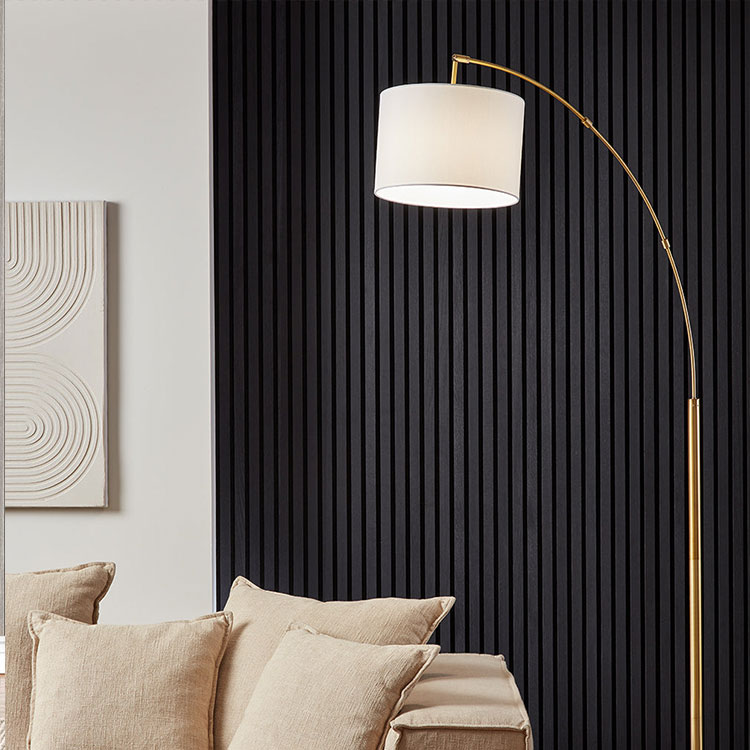
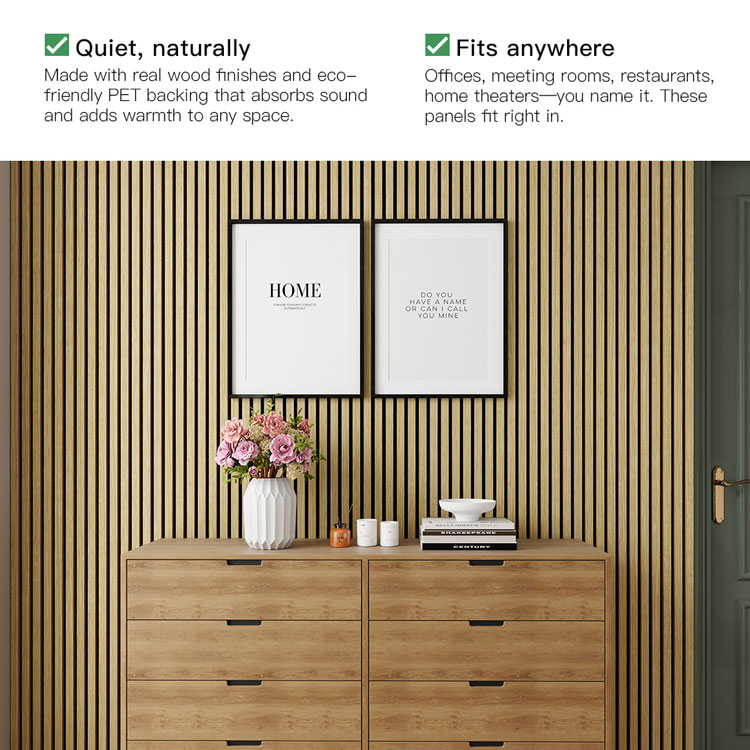
As sustainability becomes a core consideration in modern architecture and interior design, many designers, developers, and homeowners are asking an important question: Are acoustic panels eco-friendly and sustainable?

The short answer is yes—when they are designed and manufactured responsibly. In this article, we explore what makes acoustic panels sustainable, which materials matter most, and how professional manufacturers ensure both acoustic performance and environmental responsibility.

Leading Acoustic Wood Slat Panel Distributor


What Makes an Acoustic Panel Eco-Friendly?

An eco-friendly acoustic panel is defined by more than just sound absorption. True sustainability involves the entire product lifecycle, including:

  • Raw material sourcing

  • Manufacturing processes

  • Product durability and lifespan

  • Indoor air quality impact

  • End-of-life recyclability

High-quality acoustic panels are designed to improve acoustic comfort without compromising environmental standards.


Sustainable Materials Used in Acoustic Panels

1. Wood Slat Acoustic Panels from Responsible Sources

Wood slat acoustic panels are highly popular due to their natural appearance and excellent acoustic performance. When produced using:

  • Engineered wood or MDF from sustainable forestry

  • Optimized material usage to reduce waste

  • Long-lasting surface finishes

they become a renewable and eco-conscious wall solution.

Wood-based acoustic panels also store carbon throughout their lifecycle, contributing positively to sustainable building goals.


2. Polyester Fiber Acoustic Panels (PET Panels)

Polyester fiber acoustic panels are widely recognized as one of the most sustainable acoustic materials available today.

Key eco-friendly advantages include:

  • Made from recycled PET plastic bottles

  • Fully recyclable

  • Low VOC emissions

  • Lightweight and energy-efficient to transport

These panels offer excellent sound absorption while supporting circular economy principles.


3. Low-Emission & Safe Indoor Materials

Eco-friendly acoustic panels should contribute to healthy indoor environments by:

  • Minimizing formaldehyde emissions

  • Using non-toxic adhesives

  • Meeting international indoor air quality standards

This is especially important for offices, schools, homes, and public buildings.


Manufacturing Processes Matter

Sustainability is not only about materials—it also depends on how acoustic panels are produced.

Professional manufacturers focus on:

  • Efficient material utilization

  • Energy-saving production lines

  • Waste reduction and recycling systems

  • Consistent quality control to reduce product replacement

Well-made acoustic panels last longer, reducing environmental impact over time.


Guangdong Leeyin Acoustics: Sustainability with Scale and Expertise

As a leading manufacturer and exporter of wood slat acoustic panels in China, Guangdong Leeyin Acoustics integrates sustainability into both product design and production management.

Our Strengths Include:

  • 20,000㎡ modern manufacturing facility

  • Large-scale production capacity for global supply

  • Specialized focus on wood slat wall panels and acoustic panels

  • Strict quality management aligned with international standards

  • Stable, long-term export experience in global markets

By combining efficient manufacturing with responsible material selection, we help clients achieve both acoustic excellence and sustainable building goals.


Are Acoustic Panels Worth It for Green Buildings?

Yes. Eco-friendly acoustic panels:

  • Improve sound comfort and productivity

  • Enhance interior aesthetics using natural materials

  • Support green building certifications

  • Offer long service life with minimal maintenance

For architects and developers, acoustic panels are a functional and sustainable investment.


How to Choose Sustainable Acoustic Panels

When selecting acoustic panels, look for:

  • Recycled or renewable core materials

  • Low-emission certifications

  • Long product lifespan

  • Experienced manufacturers with export and quality control expertise

A reliable supplier ensures sustainability is verified, not just claimed.


Conclusion

So, are acoustic panels eco-friendly and sustainable?
Absolutely—when they are thoughtfully designed and professionally manufactured.


With advanced production facilities, international quality management, and deep expertise in wood slat acoustic panels and sound-absorbing solutions, Guangdong Leeyin Acoustics provides acoustic products that balance performance, aesthetics, and sustainability for modern spaces worldwide.

When building a home theater, many people focus only on the screen, speakers, and amplifier, neglecting a crucial factor: the room's acoustic environment.

Acoustic Wood Slat Panels Supplier

So the question is:


Do acoustic panels really improve the sound quality of a home theater?


The answer is yes, and significantly. This article will explain how acoustic panels work in a home theater, their installation location, and why wooden slat acoustic panels are increasingly becoming the preferred solution in modern home theater designs.


Why Room Acoustics Are Crucial for Home Theaters


Even the most expensive audio equipment cannot perform at its best in a room with poor acoustics.


Common problems include:


Echoes and excessive reverberation


Muddled or booming bass


Unclear dialogue


Harsh high-frequency reflections


These problems are caused by sound waves reflecting off hard surfaces such as walls, ceilings, and floors.


How Acoustic Panels Improve Home Theater Sound


Acoustic panels are designed to absorb unwanted sound reflections, allowing you to hear the sound you should hear.


Key advantages of home theater acoustic panels:


✔ Clearer dialogue and vocals


✔ More accurate surround sound imaging


✔ Reduced echo and reverberation


✔ Better bass, midrange, and treble balance


✔ A more immersive movie and gaming experience


You'll get clearer, more controllable sound, not just more volume.


The difference between home theater acoustic panels and soundproofing


Understanding the difference is crucial:


Acoustic panels improve room sound quality


Soundproofing blocks sound from entering or leaving the room


For most home theaters, acoustic treatment is far more important than complete soundproofing, especially when the goal is a better listening experience rather than complete noise isolation.


Why wood slat acoustic panels are ideal for home theaters


Wood slat acoustic panels combine sound absorption, diffusion, and aesthetics, making them a perfect choice for home theaters.


Advantages of wooden acoustic panels:


Effectively absorbs mid-to-high frequency sounds


Aids in sound diffusion, creating a more natural sound field


Delivers a warm, sophisticated visual effect


Integrates perfectly with modern interior design


In home theaters, they are especially suitable for behind the TV, on side walls, and the rear wall.


Where should acoustic panels be installed in a home theater?


For best results, acoustic panels should be installed at the primary reflection points:


The side wall near the front speakers


The wall behind the TV or projector screen


The rear wall behind the seats


The ceiling (optional, for high-end configurations)


Clever installation placement can significantly improve sound quality without covering all surfaces.


How many acoustic panels does a home theater need?


There is no one-size-fits-all solution, but general principles are as follows:


Cover 20%–30% of the total wall area


Prioritize reflection points


Match wall panels with soft furnishings whenever possible


A balanced approach yields optimal performance and visual harmony.

keyboard_arrow_up