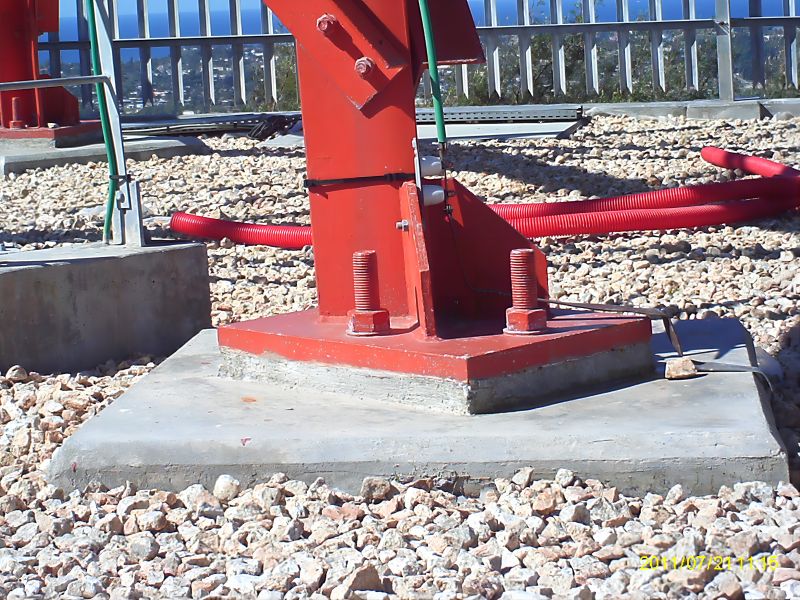
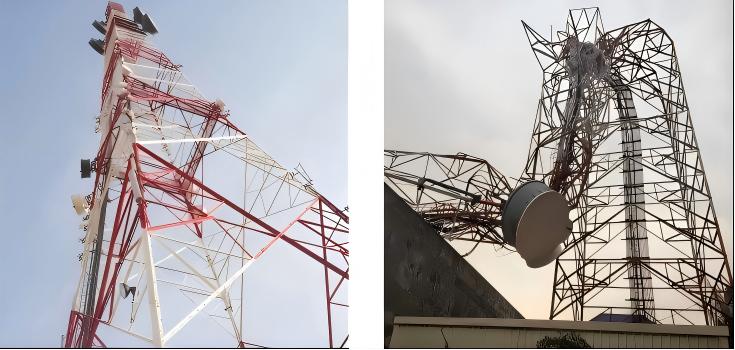
In the competitive landscape of telecommunication and power transmission infrastructure, the upfront engineering design of an angle steel tower is often celebrated for its structural elegance and load-bearing efficiency. However, the true determinant of project profitability and timeline success lies not only in what is designed but in how it is built. A design that looks perfect on paper can harbor prohibitive hidden costs in fabrication, logistics, and field assembly. This is where Design for Manufacturing and Installation (DFMI)—a proactive, holistic engineering philosophy—becomes the critical lever for cutting total project cost and mitigating risk.
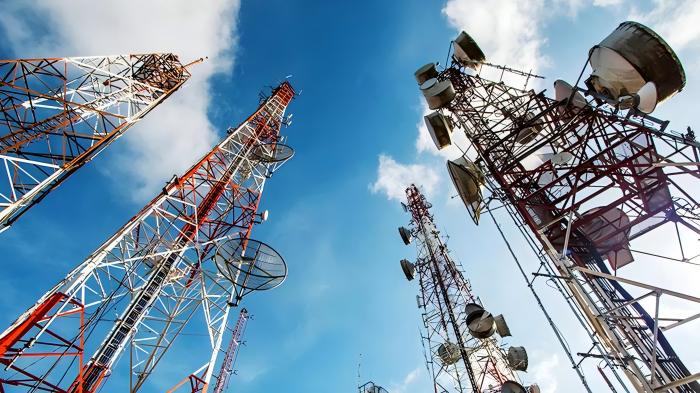

angle steel tower


DFMI moves beyond pure structural calculation to integrate the constraints and opportunities of the entaily chain: shop fabrication, transportation, and field erection. Its core principle is simple: optimize the design for the entire lifecycle from workshop to commissioning, thereby eliminating waste, reducing complexity, and accelerating deployment.


The Hidden Cost Killers in Traditional Tower Projects

Before applying DFMI, it's crucial to identify where costs and delays typically hide:

  1. Fabrication Complexity: Excessive unique part numbers, non-standard connection details, and intricate welding requirements drive up shop labor hours, increase material handling, and elevate the risk of error.

  2. Logistical Inefficiency: Components designed without regard to standard trucking dimensions, weight limits, or container sizes lead to costly oversized shipments, complex securing schemes, and multiple trips.

  3. Installation Bottlenecks: Designs that are difficult to sequence, align, or bolt together on-site—especially under challenging weather or in remote locations—result in prolonged crane rentals, higher labor costs, and significant schedule overruns.

DFMI systematically attacks these areas through three pillars: Standardization, Modularization, and Installation-Centric Detailing.
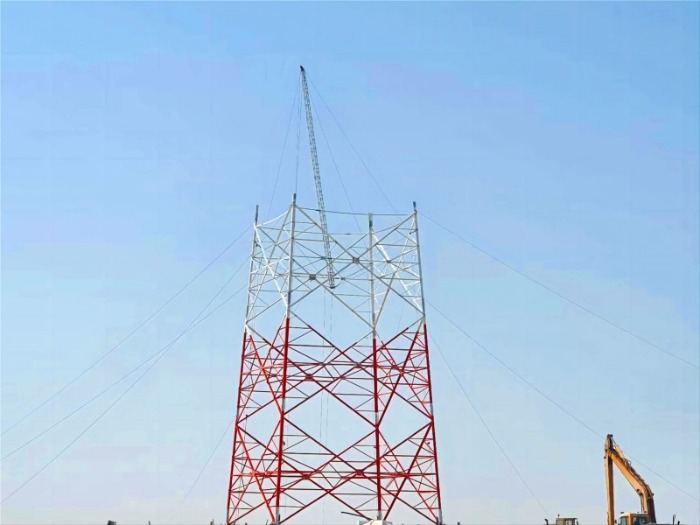

angle steel tower


Pillar 1: Standardization for Fabrication Efficiency

The goal is to reduce variation and simplify the bill of materials (BOM).

  • Standardized Connection Nodes: Instead of customizing each bolted joint, DFMI employs a library of pre-engineered, pre-calculated connection types (e.g., standard gusset plate details for specific force ranges). This allows for:

    1. Batch production of identical components.

    2. Use of jigs and fixtures for faster, more accurate assembly.

    3. Reduced engineering and drafting time for repetitive elements.

  • Minimized Part Proliferation: By rationalizing member lengths and cross-sections, the number of unique part codes can be drastically reduced. This simplifies procurement, inventory management, and quality control in the factory.

  • Design for Automated Processes: Details are tailored for efficient CNC punching/drilling and hot-dip galvanizing. This includes ensuring adequate hole clearances for galvanizing drainage, avoiding trapped air pockets, and designing for easy dipping and handling.


Pillar 2: Modularization for Optimal Transport and Handling

Here, design is governed by the logistics corridor from factory to site.

  1. Transportation Geometry: The maximum dimensions and weight of any shipping module are dictated by standard flatbed trailer or container specifications. DFMI breaks down the tower into the largest possible modules that still comply with these limits, minimizing the number of shipments and crane lifts.

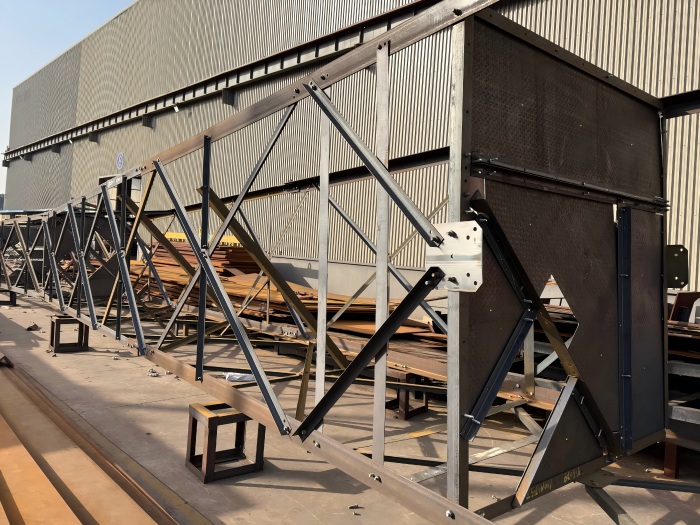
  2. Pre-Assembled Submodules: Where possible, smaller components are permanently joined in the controlled factory environment to form larger, rigid submodules (e.g., complete bracing panels, leg sections with pre-attached ladders). This shifts labor from the challenging field environment to the efficient shop floor, drastically cutting on-site assembly time.

  3. Integrated Lifting and Rigging Points: Lifting lugs or pick points are designed into major modules. Their location is calculated to ensure balanced, stable lifts, and they are fabricated as an integral part of the component, eliminating the need for unsafe and time-consuming field-attached slings.

angle steel tower


Pillar 3: Installation-Optimized Detailing

The design actively enables fast, safe, and error-proof field assembly.

  1. Bolted Connections Over Welding: While not always possible, prioritizing bolted connections for major field splices is a cornerstone of DFMI. This requires precision in hole alignment, achieved through match-marking and the use of drill jigs during fabrication. It eliminates the need for highly skilled field welders, expensive welding equipment, and time-consuming non-destructive testing (NDT) on-site.

  2. Self-Guiding and Self-Supporting Features: Components are detailed to fit together in only one correct way. This can include tapered spigots for leg alignment, unique bolt patterns to prevent incorrect assembly, and temporary connection points for torsional bracing during the erection sequence.

  3. Sequential Erection Clarity: The DFMI process produces clear assembly sequence drawings that guide the erection crew. The design itself facilitates this sequence, ensuring stability at every intermediate stage without requiring excessive temporary supports.


The Tangible ROI of DFMI

Implementing a rigorous DFMI approach yields measurable benefits across the project lifecycle:

  1. Reduced Fabrication Cost: Lower labor hours, less material waste, and higher workshop throughput.

  2. Predictable Logistics: Fewer shipments, lower freight costs, and simplified customs documentation for international projects.

  3. Accelerated Installation: Site work can be reduced by 30-50%, minimizing weather exposure and rental costs for heavy equipment.

  4. Enhanced Quality & Safety: Controlled factory production ensures higher, more consistent quality. Ergonomic and safer installation sequences reduce on-site risks.

  5. Lower Total Cost of Ownership (TCO): While DFMI may require slightly more upfront engineering investment, the savings across fabrication, logistics, and installation overwhelmingly deliver a superior project ROI.

angle steel tower


Conclusion: Engineering for the Real World

For angle steel tower projects, DFMI is not a luxury but a necessity for remaining competitive and profitable. It represents a shift in mindset—from the engineer as a pure analyst to the engineer as an integrator of the entire value chain. By designing with the fabricator's workshop, the truck driver's route, and the erection crew's wrench in mind, we move beyond creating merely adequate structures to delivering optimized assets where efficiency, cost, and reliability are engineered in from the very first sketch. In an industry where margins are tight and schedules tighter, DFMI is the definitive strategy for cutting the hidden costs that traditional design leaves on the table.


 Learn more at   www.alttower.com
Contact Us

In the demanding world of telecommunications infrastructure, where the failure of a single tower can disrupt networks for millions, the choice of support structure is a critical engineering decision. When the application involves heavy loads—such as massive 5G MIMO antennas, large parabolic microwave dishes, or the combined equipment of multiple network operators—standard designs often reach their limit. For these mission-critical, high-capacity scenarios, the 4-legged angle steel tower stands apart, offering a level of stability and load-bearing capacity that is truly unbeatable. This superiority is not accidental; it is the direct result of fundamental structural mechanics and deliberate design optimization.


angle steel tower


The Geometry of Strength: A Foundation of Inherent Stability

The core advantage of the 4-legged, or quad-legged, design lies in its geometry. This configuration creates a structure with exceptional torsional rigidity and a highly efficient load path.

  1. · Superior Moment Resistance: The wide, rectangular or square base formed by the four legs provides an enormous lever arm to resist overturning moments caused by high winds or asymmetric antenna loading. This is quantified in engineering as a high "polar moment of inertia."

  2. · Optimal Load Distribution: Vertical loads from equipment weight and ice accumulation are channeled directly down the four primary legs. More importantly, lateral forces from wind are transformed into predictable axial loads (tension in one leg, compression in the opposite) within the tower's robust bracing system. This efficient distribution prevents localized stress concentrations that can lead to fatigue or failure.

  3. · Redundant Load Paths: Unlike a monopole, which is a single, critical element, the 4-legged lattice design is a highly redundant system. The network of horizontal and diagonal bracing members between legs creates multiple pathways for forces to travel, ensuring structural integrity even in the unlikely event of a minor component issue.


angle steel tower


Engineered for Extreme Environmental Loads

Heavy-load applications are defined not just by the weight of the equipment but by the severe environmental forces the tower must withstand. The 4-legged design is uniquely suited for this challenge.

  1. · Conquering Wind Loads:
    High winds are the dominant dynamic force on any tall structure. For a tower laden with large, sail-like antennas, this force is magnified. The 4-legged lattice tower combats this through aerodynamics and strength. Its open-frame design allows wind to partially pass through, significantly reducing the overall wind pressure coefficient compared to a solid-sided monopole of equivalent capacity. The triangulated bracing system then effectively transfers these reduced but substantial forces down to the massive foundation, minimizing sway and preventing the destructive dynamic vibrations that can affect radar or microwave signal precision.

  2. · Supporting Massive Ice Loads:
    In cold climates, radial ice accumulation on antennas, cables, and the tower itself can add tons of extra weight. The 4-legged tower's design inherently accommodates this. Its formidable structural capacity is calculated with significant ice-loading scenarios in mind (as per standards like TIA-222 or EN 1993-3-1). The tower's ability to handle this immense additional dead load, combined with the increased wind drag from iced profiles, is a key factor in its selection for harsh environments.


self support tower


The Ideal Host for Multi-Operator and High-Capacity Sites

The modern telecommunication landscape is defined by shared infrastructure and dense equipment arrays. This is where the 4-legged tower transitions from a strong option to the only viable one.

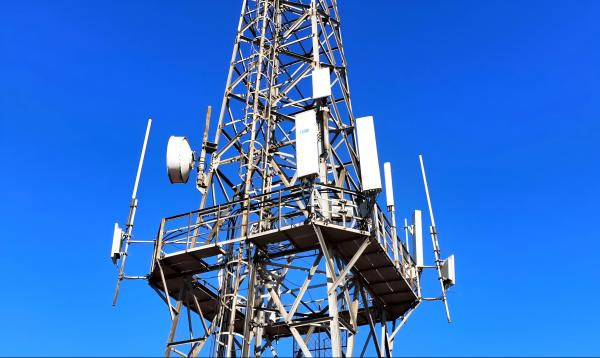
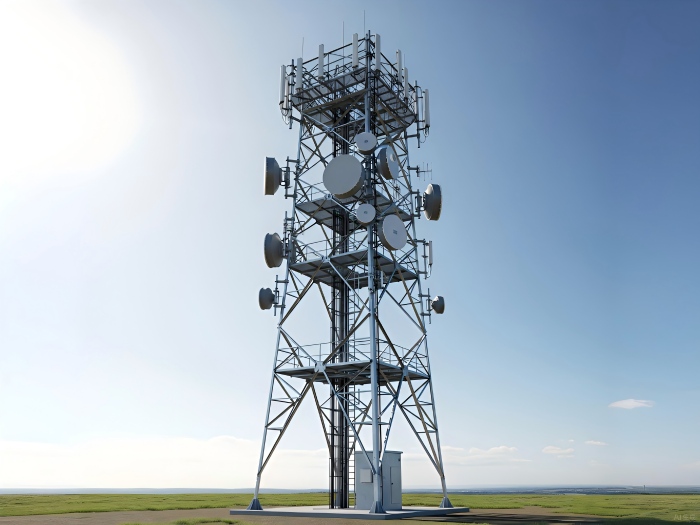
  1. · Unmatched Platform Real Estate: The four-cornered structure provides abundant space for mounting platforms at multiple elevations. This allows for the clear vertical and horizontal separation of antennas from different operators (a practice known as "sectorization"), which is crucial to prevent radio frequency interference. A single 4-legged tower can comfortably host the complete suite of 2G, 3G, 4G, and 5G equipment for three or more carriers, alongside multiple microwave backhaul links.

  2. · Heavy Antenna Support: Next-generation equipment, such as 5G Massive MIMO antenna arrays and full-band radios, are notably heavier and bulkier than their predecessors. The robust structural nodes and connection points of a 4-legged tower are designed to handle these concentrated loads safely, without the deflection or creep that could misalign sensitive microwave signals over time.

  3. · Future-Proofing and Expansion: The lattice framework is inherently modular. Adding new platforms, extending height, or reinforcing specific sections to carry next-generation equipment is a straightforward engineering task. This scalability protects the long-term investment in the site.


self supporting towers


Conclusion: The Benchmark for Mission-Critical Infrastructure

When the requirement is for absolute reliability under the heaviest equipment loads and most severe environmental conditions, the decision is clear. The 4-legged angle steel tower delivers unbeatable stability through its optimal geometric efficiency, superior load distribution, and immense structural redundancy. It is the engineering benchmark for hosting multi-operator networks, large-scale microwave hubs, and future technologies, ensuring that vital communication links remain operational for decades. In the world of heavy-load applications, it is not merely a choice but the definitive solution for stability and longevity.

  • Cities often prefer monopole telecom towers for a variety of reasons, especially in the context of the 5G era, where the demand for reliable and high-speed wireless communication infrastructure is increasing rapidly. Here are some key factors that contribute to the preference for monopole telecom towers in urban environments and their significance in the 5G era:
  •  
  • Aesthetics and Design:
  • Sleek and Unobtrusive Design: Monopole towers have a slim and unobtrusive profile compared to traditional lattice towers or guyed masts, making them visually appealing and less disruptive to the urban landscape.

  • Customizable Appearance: Monopoles can be designed with various finishes, colors, and concealment options to blend in with the surrounding environment, including disguising them as flagpoles, trees, or architectural features for improved aesthetics.

  •  
  • Space Efficiency and Flexibility:
  • Vertical Space Utilization: Monopole towers require a smaller footprint and can be installed in areas with limited space, such as rooftops, parking lots, or alongside roads, making them suitable for dense urban environments.

  • Easy Installation: Monopoles are easier and quicker to install compared to lattice towers or guyed masts, allowing for expedited deployment of communication infrastructure in urban areas where speed is crucial.


  • monopole telecom tower

  • Functionality and Performance in the 5G Era:
  • Support for 5G Technology: Monopole towers are well-suited for accommodating 5G antennas and small cells, which require a dense network of antennas for high-speed connectivity, low latency, and improved coverage in urban settings.

  • Improved Signal Propagation: The single vertical structure of monopole towers can enhance signal propagation and coverage for 5G networks, providing better connectivity and network performance in densely populated areas.

  •  
  • Regulatory and Community Considerations:
  • Compliance with Regulations: Monopole towers often comply with local zoning and regulatory requirements for height restrictions and aesthetics in urban areas, facilitating the approval process for tower installations.

  • Community Acceptance: The aesthetic appeal and compact design of monopole towers can lead to greater community acceptance and support for the deployment of communication infrastructure, reducing potential opposition from residents or local authorities.


  • angle steel antenna tower

  • Integration of Smart Technologies:
  • Smart Infrastructure Integration: Monopole towers can be equipped with smart technologies, such as IoT sensors, environmental monitoring devices, and energy-efficient features, to create a connected and sustainable urban environment.
  •  
  • Conclusion:
  • In the 5G era, monopole telecom towers offer a balance between functionality, aesthetics, and efficiency, making them a preferred choice for cities seeking to enhance their communication infrastructure while maintaining the visual appeal of their urban landscapes. By leveraging the advantages of monopole towers, cities can support the rapid deployment of 5G technology, improve connectivity, and create a modern and sustainable urban environment that meets the evolving needs of residents and businesses.


Learn more at www.alttower.com


Contact Us


telecom tower supplier

keyboard_arrow_up