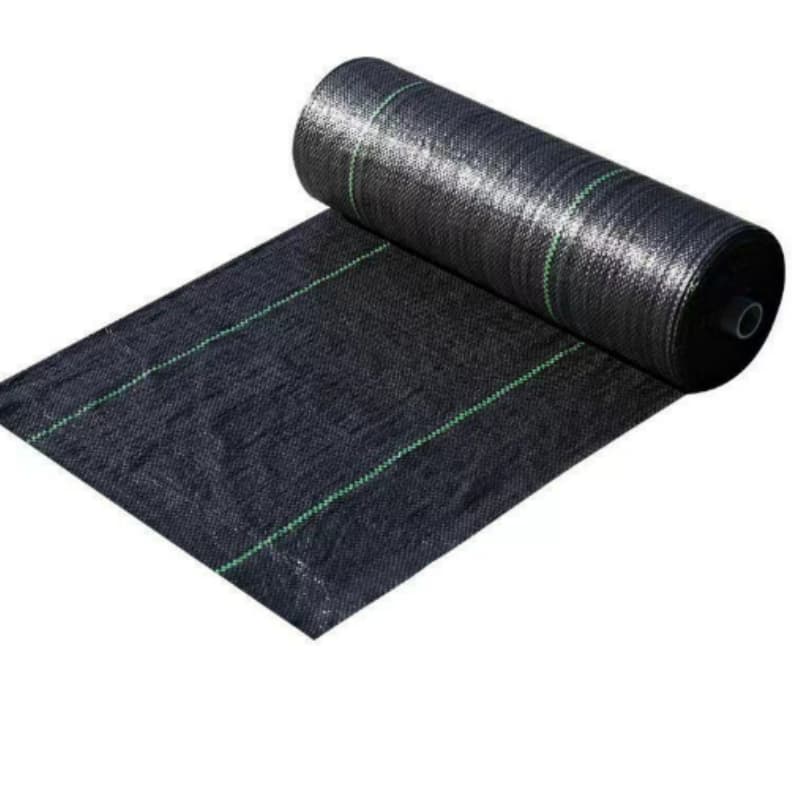
Heavy-Duty Weed Barrier |140gsm Woven Polypropylene|Commercial Blueberry Plantation
Specific Application Scenario:
On a 4-hectare highbush blueberry farm in Washington State, USA, with well-drained sandy loam soil and annual rainfall of approximately 1000 mm, the farmer faced three major challenges: 1) High annual cost of replenishing bark mulch; 2) Weed breakthrough during the rainy season, limiting herbicide use; 3) Excessive evaporation from drip irrigation.
Experimental Protocol and Quantitative Comparison (5-Year Data):
The farm was divided into two comparison zones. Zone A continued using traditional hardwood bark mulch (10 cm thickness). Zone B was installed with our 140 gsm woven polypropylene weed barrier fabric. Key metrics over five years are compared below:
|
Comparison Dimension
|
Zone A: Traditional Bark Mulch | Zone B: Heavy-Duty Landscape Fabric | Data Source & Impact |
|
Initial Material & Installation Cost
|
$2,000/hectare | $3,500/hectare | Initial investment for Zone B is 75% higher. |
|
Annual Maintenance Cost
|
High: $1,200/hectare/year (mulch replenishment + manual weeding) |
Very Low: <$100/hectare/year (edge inspection only)
|
Over five years, Zone B's cumulative total cost is already lower than Zone A's. |
|
Weed Control Efficacy
|
Moderate. Requires an average of 3 mechanical or manual weeding sessions per year. |
Excellent. Nearly 100% suppression of inter-row weeds, only requiring attention around plants.
|
Zone B saved over 90% of weeding labor. |
|
Soil Moisture Retention
|
Fair, but bark itself absorbs and evaporates moisture. |
Superior. After 7 consecutive rainless days, soil moisture at 15cm depth was 22% higher in Zone B than in Zone A.
|
Directly reduced irrigation frequency by 15%, saving water and stabilizing the root zone. |
|
Impact on Blueberry Yield
|
Baseline yield. |
Average yield increase of 12%. Due to reduced root competition and stable moisture, fruit uniformity was also higher.
|
At local prices, this translates to an additional ~$3,600/hectare/year revenue for Zone B, quickly offsetting the initial investment. |
|
Service Life & Disposal
|
Requires significant replenishment every 1-2 years; fully decomposes and needs clearing after 5 years. |
Expected lifespan of 8-10 years. Testing after 5 years showed tensile strength retention exceeding 85%.
|
Zone B avoids the cyclical issue of large-scale organic waste disposal. |
Conclusion and Procurement Advice:
For high-value perennial crops (e.g., blueberries, raspberries, wine grapes), investing in high-quality heavy-duty woven weed barrier fabric is a high-return agricultural infrastructure investment. The return is not only visible in reduced weeding and water costs but, more importantly, in enhanced crop yield and quality. When procuring, key questions for suppliers should be: the product's weight (gsm), ultraviolet (UV) stabilizer content, and whether they provide durability data specific to agricultural chemicals.