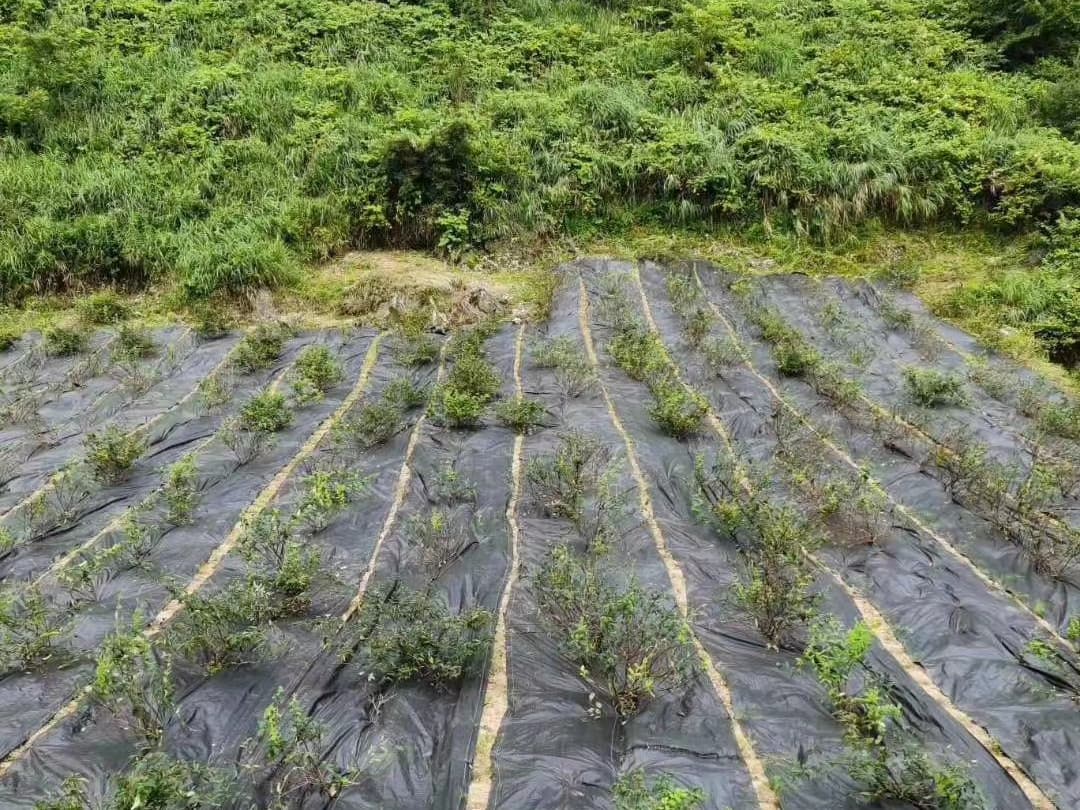
When faced with different brands of weed barrier fabric that "look similar," how do you judge their true quality? This article provides guidance from both professional procurement and on-site inspection perspectives.
Part 1:4 Core Laboratory Metrics Suppliers Must Provide
This demonstrates "Expertise and Authoritativeness" in E-E-A-T. A reliable weed barrier manufacturer should provide third-party test reports.
1:Mass Per Unit Area (Weight, gsm): This is the most basic yet metric. For example, a product labeled 150 gsm might only be 130 gsm. Weight directly correlates with lifespan and strength. Action: Request the weight tolerance range per roll from the supplier (e.g., 150 gsm ±5%).
2:Ultraviolet (UV) Stability Data: Look for the "Tensile Strength Retention after UV Exposure" test. For instance, after 1500 hours of xenon-arc aging per ASTM G154 (simulating 1-2 years outdoors), strength retention should be > 50%. Quality products use carbon black masterbatch, not just a surface coating, for UV resistance.
3:Tensile Strength & Elongation at Break: For woven fabric, machine and cross-machine tensile strength (kN/m) are key. For nonwoven, grab strength (N) and puncture/CBR strength (N) are more important. This determines its ability to withstand mulch weight and installation traffic.
:4:Permeability Performance: Pay attention to Vertical Permeability Coefficient (m/s) and Equivalent Opening Size (O90). Poor permeability leads to waterlogging; overly large openings allow weed penetration. Quality landscape fabric typically has an O90 between 0.1-0.2 mm.
Part 2: 3 On-Site Quick Tests You Can Perform
Even without a lab, you can perform these checks upon delivery or before purchase:
1:"Tear and Inspect" Test: Take a small sample and tear it forcefully in both directions. Low-quality nonwoven fabric will tear loosely like cotton, with sparse fibers. High-quality fabric requires more force, shows significant fiber interconnection at the tear edge, and has a dense structure. For woven fabric, check for even, tight weaving without obvious thin or thick spots.
2:"Light and Water" Simple Test: Drape the fabric over a bright LED flashlight. Low-quality fabric may show obvious light spots (large openings) or very uneven light transmission. Then, drip a few drops of water onto the fabric. High-quality fabric should allow rapid penetration; water droplets should not sit on the surface for long.
3:"Check Edges and Packaging": High-quality product rolls have neatly cut edges that do not fray. Packaging should have clear information: brand, specifications, production batch, and date. Unbranded bulk products or those with blurry labels carry high risk.
Conclusion:
Don't be fooled by "price per roll" alone. By combining "requesting reports for metrics" and "performing hands-on quality checks," you can effectively filter for high-quality landscape fabric that will truly perform long-term, avoiding the costs and landscape damage caused by premature material failure. Choosing a weed barrier supplier that transparently provides this data and testing methodology is the first step to project success.